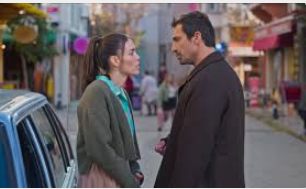
To Love, to Lose Review 2026 Tv Show Series Cast Crew Online
To Love, To Lose, Netflix’s 2026 Turkish-language romantic drama originally titled Ayrılık da Sevdaya Dahil, is one of the most talked-about international series of the year, and for good reason. From its release on January 15, 2026, the show immediately positioned itself as a compelling blend of love, melodrama, and gritty realism, providing a storytelling experience that challenges many of the usual tropes of romance dramas while offering emotional depth and narrative tension that linger long after the credits roll. It’s a series that takes viewers beyond the surface of a star-crossed romance and into the murky intersections of duty, debt, power, and sacrifice, making it one of Netflix’s boldest entries in its global slate yet.
At its core, To Love, To Lose tells the story of Afife, a determined screenwriter tasked with saving her family’s restaurant from crippling debt, and Kemal, a hardened enforcer for a loan-sharking family whose life revolves around collecting what is owed — by any means necessary. Their first encounter is not steeped in chemistry but in tension; Afife confronts Kemal with defiance and desperation, railing against a debt she believes her family cannot repay. Kemal, stoic and unwavering, represents the unyielding force of obligation and consequence, and it is this collision of worlds that sets the stage for the show’s central emotional arc. As they are drawn together through circumstance rather than choice, what begins as a fraught dynamic gradually morphs into an examination of how love and personal ethics can emerge in the least expected places.
What distinguishes To Love, To Lose from more formulaic romance dramas is its insistence on portraying love not as an escape from reality but as something that must be weighed against harsh truths and moral ambiguity. The series unfolds at a deliberate pace that mirrors the emotional restraint of its characters. Afife is not an idealized heroine; she is pragmatic, flawed, and incredibly human in her fears and hopes. She is driven not by whimsy but by necessity — the need to protect her family’s legacy and to cling to whatever dignity she can muster in the face of overwhelming pressure. Kemal, on the other hand, is a man shaped by violence, duty, and a rigid sense of order. His transformation is not sudden or overly romanticized; rather, it emerges from subtle shifts in his interactions with Afife — moments of vulnerability, glances that linger too long, and exchanges where empathy slowly begins to eclipse obligation.
The world of To Love, To Lose is not a fairy-tale setting. Instead, it is textured with the grit of economic hardship and familial strife. The series confronts the viewer with the social reality of debt — not as a plot device but as a force that shapes choices, relationships, and generational trajectories. This thematic weight gives the show a grounded quality that is rare in romantic dramas. Afife’s struggle to keep her family’s restaurant afloat becomes a lens through which the story interrogates broader questions about honor, responsibility, and the true cost of love. The show asks: Can love survive when every choice seems like a sacrifice? And perhaps more poignantly: Should love be asked to endure at all costs? These questions permeate every major arc and give the narrative a mature, reflective tone.
Narratively, the series uses its ensemble cast to enrich the central romance. Afife’s family members, struggling under the weight of their financial troubles, add layers of emotional texture that deepen viewer investment in her plight. Their fears, hopes, and clashes provide a backdrop against which Afife’s own inner life is revealed. Meanwhile, characters from Kemal’s world — other members of the loan-shark network, family friends, and rivals — serve to complicate his emotional trajectory, reminding viewers that his emerging feelings for Afife come at great personal risk. These supporting arcs do more than fill screen time; they amplify the series’ core examination of what it means to choose love in a world ruled by power and consequence.
Visually and tonally, To Love, To Lose is striking in its restraint. The cinematography often favors muted palettes and restrained compositions that reflect the emotional constraints of the characters. There are no sweeping gestures of romance — no grand statements or flashy set pieces — but rather a focus on the minutiae of everyday life: lingering gazes over dinner tables, the weary slump of shoulders after a long day’s labor, and moments of quiet introspection captured in long, unbroken takes. This subtlety may not satisfy all viewers, especially those accustomed to more overt displays of passion or drama, but it is precisely this measured approach that allows the emotional core of the series to resonate with greater authenticity.
One of the show’s most compelling strengths lies in its ensemble performances. İbrahim Çelikkol’s portrayal of Kemal is nuanced and multidimensional. He embodies a man who is outwardly unbreakable yet internally conflicted, torn between his allegiance to his family’s criminal enterprise and the unexpected vulnerability that emerges through his connection with Afife. Emine Meyrem delivers a similarly nuanced performance as Afife, balancing resilience with heartache, pragmatism with yearning. Their chemistry is not a blaze of passion but a slow burn, crafted through shared glances, reluctant conversations, and moments where silence speaks louder than words. The interplay between these characters is where the series finds its emotional heartbeat — a place where love is expressed less in declarations and more in incremental, often painful, shifts in understanding.
Even with its many strengths, To Love, To Lose is not without its imperfections. Some viewers may find the pacing exceedingly deliberate, especially in early episodes where the narrative seems content to linger on mood and character introspection rather than plot propulsion. There are moments where the weight of the show’s thematic ambitions — love versus duty, emotional risk versus personal survival — can make the progression feel more like a slow unraveling than a steadily building arc. Yet, this pacing is arguably a deliberate artistic choice rather than a flaw, reinforcing the series’ insistence on realism over melodrama. The emotional beats are not rapid crescendos but quiet ebbs and flows that ask for patience and attentiveness from the audience.
What makes To Love, To Lose compelling as a cultural text is how it situates its intimate story within broader social and economic pressures. The series does not shy away from depicting the consequences of debt, the burden of family expectations, and the stark realities of survival in a world where choices are constrained by money and status. In doing so, it invites viewers to consider how love functions not as an isolated emotion but as something entangled with every aspect of life. Afife and Kemal’s relationship is emblematic of this entanglement: it is fraught, uncertain, and often painful, yet it persists because it speaks to something larger than both of them — the human desire for connection, understanding, and redemption.
Ultimately, To Love, To Lose is a series that offers more than a conventional romantic narrative. It is a meditation on the costs of love and the ways personal bonds are shaped, constrained, and amplified by the world in which we live. The show does not promise a fairy-tale ending; instead, it acknowledges that love can be both beautiful and destructive, healing and wounding. It presents affection not as a cure but as a force that can illuminate the deepest parts of ourselves — even when it hurts. This complexity is what makes the series a standout in the 2026 television landscape: it does not seek to comfort but to challenge, to provoke thought as much as emotion, and to remind viewers that the heart’s path is rarely linear or easy.
For audiences seeking a romance that refuses to simplify human experience, To Love, To Lose delivers a story that lingers — one defined not by the ease of its love but by the endurance of its questions. It is a series that respects the intelligence and emotional maturity of its viewers, inviting them into a narrative that is as thought-provoking as it is heart-wrenching. In doing so, it stakes its claim not merely as a romance but as a poignant reflection on what it truly means to love and, inevitably, to lose.