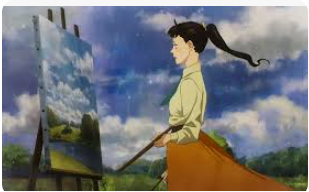
Love Through a Prism Review 2026 Tv Show Series Cast Crew Online
Love Through a Prism, the 2026 Netflix animated series from acclaimed manga creator Yoko Kamio (best known for Boys Over Flowers) and animated by WIT Studio, arrives as a richly layered coming-of-age romance set in early 1900s London that transcends the simple love story its premise might suggest. At its heart, the series follows Lili Ichijoin, a spirited Japanese exchange student who leaves home with a singular dream: to become a great painter. When her parents stipulate that she must achieve top marks at the prestigious Saint Thomas Art Academy within six months or return to Japan and abandon her ambitions, Lili’s journey becomes one of intense emotional and artistic growth. Initially driven by pressure and determination, her path soon intersects with that of Kit Church, a gifted yet emotionally distant aristocratic student whose natural talent and aloof nature both intimidate and fascinate her. What starts as competitive rivalry gradually evolves into something far more complex and intimate, exploring not just romance but the deep bonds forged through shared passion and vulnerability.
From the very first episode, Love Through a Prism excels at weaving its thematic threads together with a delicate sense of pacing and atmosphere. The early 20th-century London setting, meticulously brought to life through WIT Studio’s lush animation and careful world-building, gives the story a timeless quality that feels both historical and immediately relatable. The cobbled streets, grand academy halls, and sweeping countryside landscapes are rendered with painterly attention to detail, often feeling as if each frame itself were a piece of art. This visual richness perfectly complements the show’s narrative focus on artistic ambition, creating an immersive backdrop against which Lili’s personal and emotional challenges unfold.
The emotional core of the series lies in its nuanced character portrayals. Lili is not a flawless heroine; she is ambitious, earnest, and, at times, frustratingly impulsive. Her struggle to communicate her feelings—especially where Kit is concerned—feels authentic and grounded. Kit, meanwhile, is fascinating precisely because of his contradictions: a passionate artist who is nevertheless emotionally reserved, shaped by privilege yet still grappling with his own insecurities and expectations. Their dynamic is filled with tension, missteps, and genuine moments of connection that prevent the romance from feeling simplistic or saccharine. Instead, Love Through a Prism depicts love as something that grows organically through understanding, adversity, and the courage to expose one’s vulnerabilities.
What truly elevates the series beyond a typical romance is how deftly it balances the personal with the societal. Issues of class and cultural difference are woven into the story with sensitivity. Kit’s aristocratic background creates not just a personal contrast with Lili but also a broader commentary on social expectations and the constraints they can place on individual expression. Lili’s status as a foreign student adds another layer, portraying her not just as an outsider in terms of culture and nationality, but also in how her pure, unfiltered approach to art and life unsettles the rigid norms of the academy. These tensions fuel some of the series’ most compelling scenes, where personal ambition collides with social rigidity, and where genuine connection transcends deeply entrenched boundaries.
Alongside the central romance, the supporting ensemble contributes significantly to the story’s texture. Characters like Dorothy, Lili’s upbeat and grounding friend, offer more than comic relief; they serve as emotional counterpoints that enrich the narrative’s exploration of friendship, loyalty, and the varied forms love can take. Through these relationships, the series highlights how the pursuit of artistic dreams can forge powerful bonds that go beyond romantic attachment, underscoring a broader sense of community among those who strive for creative expression.
Visually and technically, Love Through a Prism showcases why WIT Studio remains a standout in contemporary animation. The fluidity of motion, the interplay of light and shadow, and the meticulous rendering of textures—from the fabrics of period costumes to the sun-dappled fields outside London—create a world that feels alive and tactile. The show’s aesthetic often mirrors the characters’ internal states: scenes of intense emotional upheaval are suffused with vibrant color and expressive framing, while moments of quiet introspection linger with a softness that invites contemplation. The soundtrack, including the theme song “star flower” by Chilli Beans, enhances this emotional resonance, blending seamlessly with the series’ evocative tone.
Despite its many strengths, the series is not without its flaws. Some critics and viewers have noted pacing issues, particularly in later episodes where significant developments are introduced and resolved rapidly, creating moments that feel slightly rushed or underexplored. A notable narrative beat introduced late in the season, for example, arrives with emotional weight but lacks sufficient build-up, diluting its potential impact. These pacing inconsistencies do not undermine the overall experience, but they do suggest that a tighter narrative structure could have elevated the series even further.
Nevertheless, these shortcomings are outweighed by the show’s many achievements. Its ability to balance introspective character work with broader thematic concerns—such as ambition, cultural identity, and the nature of artistic creation—makes it much more than a simple romantic anime. Love Through a Prism invites its audience to consider how personal dreams intersect with societal expectations, and how love, in its many forms, can be a catalyst for growth, empathy, and transformation. It is both a celebration of youthful idealism and a poignant reminder of the courage required to pursue one’s passion, even in the face of uncertainty and self-doubt.
The diverse voice cast, led by Atsumi Tanezaki as Lili and Koki Uchiyama as Kit, delivers performances that bring depth and nuance to their respective roles, further enhancing the emotional heft of the series. Their portrayals help anchor the story’s more dramatic moments, making the characters’ joys and heartbreaks feel genuinely earned. The decision to produce a high-quality English dub—directed in London for authenticity—also broadens the series’ accessibility, inviting a wider global audience to connect with its story and characters.
Beyond its narrative and artistic merits, Love Through a Prism resonates because it speaks to universal themes that extend beyond its early 20th-century setting. Its exploration of artistic ambition, the pursuit of dreams against daunting odds, and the transformative power of human connection ensure that it appeals not only to fans of romance and historical drama but also to anyone who has ever faced uncertainty on the path to self-realization. The series reminds viewers that the journey toward one’s goals is rarely linear, and that the friendships and relationships formed along the way can be as influential as the destination itself.
In conclusion, Love Through a Prism stands out as a remarkable addition to the landscape of animated romance dramas. Its richly developed characters, lush visual world, and thoughtful engagement with themes of love, art, and identity combine to create a rewarding and memorable viewing experience. While not without some narrative pacing issues, the series offers a compelling story that lingers long after the final episode, leaving audiences both satisfied and hopeful for what might come next. Whether you are drawn to its historical setting, its exploration of artistic passion, or its heartfelt portrayal of love’s complexities, Love Through a Prism marks a significant achievement in storytelling that truly lives up to the promise of its evocative title