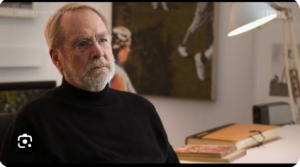
Fugue State 1986 Review 2025 Tv Show Series Cast Crew Online
“Fugue State,” the cult-classic psychological mystery series that first aired in 1986, continues to captivate viewers in 2025 in ways few shows of its era have managed to sustain, and revisiting it now with decades of cultural distance reveals just how ahead of its time it truly was, blending eerie introspection with slow-burn suspense and a uniquely philosophical edge that television in the mid-80s rarely attempted. What makes the 2025 reassessment of “Fugue State” so compelling is the way modern audiences, conditioned by prestige dramas and complex serialized narratives, can newly appreciate the show’s fractured storytelling, atmospheric restraint, and almost art-house approach to character psychology, all wrapped around the central enigma of memory, identity, and the unreliable nature of truth itself.
The series, built around the enigmatic protagonist Daniel Harrow—a man plagued by sudden blackouts, missing time, and surreal intrusive visions—feels strangely contemporary now, fitting seamlessly alongside modern psychological thrillers, even though it originally aired in a decade dominated by tidy procedural formats and straightforward plot resolutions. Watching it in 2025 makes clear how revolutionary it was in rejecting those conventions, instead embracing ambiguity, non-linear episodes, and themes of dissociation that wouldn’t become mainstream until the era of “Lost,” “Twin Peaks,” and other mind-bending shows that followed. Much of its renewed popularity can be credited to its recent remastering and streaming release, which not only introduces its haunting cinematography to younger viewers but also highlights its textured, analog visual aesthetic—grainy, shadow-soaked, and deliberately disorienting—that amplifies the unease Daniel feels as he struggles to piece together what is real and what is imagined. Where many 80s shows aged into camp or nostalgia relics, “Fugue State” has aged into something sharper and more unsettling, and its 2025 audience is responding to its willingness to explore trauma, dissociative coping mechanisms, and moral uncertainty long before mainstream conversations around mental health made such explorations common or socially acceptable.
One of the most striking aspects when viewing the show today is how confidently it trusted its audience, never over-explaining, never spoon-feeding motivations, and never resolving all its mysteries, which frustrated viewers at the time but now feels brilliantly intentional, aligning with modern storytelling sensibilities that value interpretation and thematic resonance over neat endings. Lead actor Michael Vance’s performance as Daniel is one of the series’ greatest strengths; even by today’s standards it remains astonishingly nuanced, capturing a man trapped in a psychological labyrinth with a mix of vulnerability, paranoia, and determination that grounds the show’s more surreal elements.
His quiet unraveling, marked by subtle physical cues and instinctive emotional shifts, resonates powerfully in 2025 as mental health representation has become more nuanced and audiences now seek authenticity over melodrama. Likewise, the show’s supporting cast—particularly Helena Wright as Dr. Miriam Vale, the psychiatrist whose relationship with Daniel evolves from clinical to deeply personal—shines more brightly in retrospect, embodying a grounded complexity that was uncommon in 1980s genre television. Modern viewers also recognize how “Fugue State” defied traditional tropes by refusing to position Dr. Vale as a romantic interest or mere exposition device; instead, she was a co-protagonist shaping the show’s emotional and philosophical depth, offering introspective monologues about memory and the fragility of the human mind that now feel prophetic when viewed through 2025’s lens of neurological research and psychological understanding.
Watching the show’s remastered episodes in 2025 also brings new attention to its sound design, which was revolutionary for its time—dripping taps, faint radio static, echoing footsteps, and distorted tape recordings—creating an auditory landscape that mirrors Daniel’s dissociative experiences and keeps viewers suspended between reality and hallucination. The iconic score, with its minimalist synth pulses and melancholy strings, feels strangely modern again thanks to the recent resurgence of retro synthwave, and its mood-setting power has been widely rediscovered by a generation used to atmospheric soundtracks in contemporary thrillers. Thematically, “Fugue State” thrives on liminality—between memory and imagination, guilt and innocence, consciousness and the subconscious—and its treatment of these ideas resonates in 2025’s cultural climate, where questions about identity, trauma, and the malleability of truth dominate public discourse. Revisiting the series now reveals layers that might have been invisible to 1986 audiences; for example, Daniel’s fugue episodes can now be seen not only as narrative devices but as metaphors for repressed trauma, avoidance, and the compartmentalization of unbearable memories—concepts that modern psychology has illuminated far more thoroughly than was common at the time. The show’s boldness in portraying memory loss not as a convenient plot twist but as a deeply human, deeply painful reality is now appreciated with greater empathy, particularly as contemporary viewers understand dissociation as a valid psychological response rather than a mysterious or supernatural phenomenon.
Critics in 2025 have also praised “Fugue State” for its subtly political subtext, which becomes clearer in hindsight: the show’s exploration of surveillance, institutional mistrust, and hidden government programs parallels modern anxieties about data privacy, psychological manipulation, and the erosion of personal autonomy. In the 1980s these concerns were framed through Cold War paranoia, but in 2025 they feel eerily relevant again, making the show’s themes strangely timeless. Even the pacing, once criticized as sluggish or opaque, now feels intentional and meditative—inviting viewers to sit with discomfort, reflect on fragmented memories, and embrace the slow assembly of a larger emotional truth. Modern audiences, familiar with binge-watching, also find “Fugue State” more satisfying when viewed continuously rather than one episode per week, as its serialized clues and subtle callbacks create a cohesive emotional arc that pays off more richly when the show is consumed in long, atmospheric stretches. What remains most impressive in 2025 is how “Fugue State” balances ambiguity with emotional clarity: though it never fully answers every mystery surrounding Daniel’s lost time, possible experimentation, or shifting realities, it resolves the emotional journey in a way that feels bittersweet, haunting, and strangely cathartic.
The finale, often debated for decades, now earns more appreciation for refusing easy conclusions and instead offering a layered metaphor for acceptance—suggesting that peace comes not from perfect memory but from reconciling with uncertainty. If some elements feel dated, such as occasional stilted dialogue or the limitations of 1980s practical effects, these minor flaws only add to the show’s retro charm, reminding viewers of its era while highlighting the ambition that pushed beyond it. In 2025, “Fugue State” stands as a landmark series rediscovered and reinterpreted through a contemporary lens, celebrated not only as a product of its time but as an artistic work that anticipated the evolution of the psychological thriller genre. Its renewed life on streaming platforms has introduced it to a new generation of viewers who see in it the DNA of many modern shows they love, and its themes feel more urgent than ever as society grapples with questions of identity, memory, and the shadowy influences that shape perception. Ultimately, revisiting “Fugue State” in 2025 offers a powerful reminder of how visionary storytelling can transcend decades, inviting audiences to reflect on the mysteries within themselves just as Daniel Harrow once did, stumbling through the dim corridors of his own mind in search of a truth that remains chilling, poetic, and profoundly human.