Camp Rock 3 2026 Movie Review
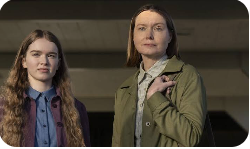
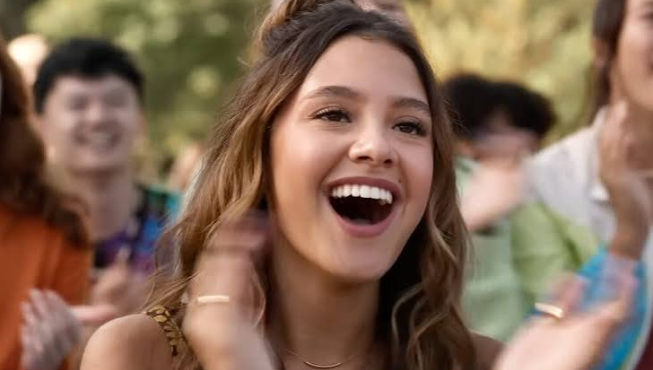
Camp Rock 3 arrives in 2026 as a nostalgic return to one of Disney Channel’s most recognizable musical franchises, and surprisingly, it understands that the best way to continue the series is not to recreate the past exactly, but to introduce a new generation of young performers while keeping the heart of the original movies alive. Released on Disney Channel on August 13 and arriving on Disney+ on August 14, the film brings back Kevin, Joe, and Nick Jonas as Connect 3 while introducing Liamani Segura, Malachi Barton, Lumi Pollack, Hudson Stone, Casey Trotter, Brooklynn Pitts, and Ava Jean as the new campers. Demi Lovato also makes a special appearance as Mitchie Torres, giving longtime fans an emotional connection to the earlier films. The result is a bright, energetic, family-friendly musical that is unlikely to surprise viewers with its story but succeeds at delivering exactly what many people want from a Camp Rock movie: catchy songs, youthful performances, friendship, romance, competition, comedy, and plenty of nostalgia.
The basic premise is familiar but effective. Connect 3 returns to Camp Rock after losing the opening act for its upcoming reunion tour, giving the campers an opportunity to compete for a chance to perform alongside the famous band. Sage, played by Liamani Segura, becomes the central character as she arrives at camp determined to make her musical dreams a reality. Along the way, she encounters other young performers with their own ambitions, insecurities, and personalities. Fletch, played by Malachi Barton, brings a more rebellious energy, while Rosie, played by Lumi Pollack, is a talented but initially reserved musician who must learn to express herself more confidently. The competition creates the familiar conflicts expected from a Disney Channel movie, but the story is ultimately more interested in personal growth than in determining who is simply the best performer. Disney describes the film as a coming-of-age musical in which friendships are tested and unexpected alliances and romances develop as the campers compete for their place on the tour.
One of the biggest challenges for Camp Rock 3 is the enormous shadow cast by the original 2008 movie. The first Camp Rock became an important part of Disney Channel culture, particularly because it brought together Demi Lovato and the Jonas Brothers at a moment when all of them were becoming major young stars. A third movie arriving roughly 18 years after the original inevitably creates expectations that are impossible to satisfy completely. The new film does not attempt to pretend that time has not passed. Instead, it uses the age difference between the returning stars and the new campers as part of its appeal. The Jonas Brothers are no longer the young musicians dreaming about their future; they are established performers returning to the camp as mentors and stars. That change gives the movie an unexpectedly sweet quality because the franchise itself has grown older along with its original audience.
The Jonas Brothers are one of the film’s strongest nostalgia elements, although viewers expecting them to dominate the entire story may be disappointed. Joe, Nick, and Kevin return as Shane, Nate, and Jason Gray, the members of Connect 3, but their screen time is limited compared with the new cast.This is actually a smart decision. If Camp Rock 3 had been built entirely around the original stars, it might have felt like a reunion special rather than a genuine continuation. Their appearances instead function as a bridge between generations. They remind older viewers why they loved the franchise while allowing the new characters to establish their own identities.
The new cast is therefore extremely important, and Liamani Segura gives the film a confident center as Sage. Her performance has the enthusiasm and sincerity necessary for a Disney musical, and she makes Sage easy to root for. The character is ambitious without becoming unlikeable, and her determination is balanced by a desire to connect with the people around her. Segura also brings considerable vocal ability to the musical numbers, which is essential because the movie depends heavily on performance sequences. Her casting feels less like an attempt to find another Mitchie Torres and more like an effort to establish Sage as her own character. That distinction helps the film avoid becoming simply a remake disguised as a sequel.
Lumi Pollack is another standout, particularly because Rosie’s storyline provides one of the movie’s more relatable themes. Rosie begins as a talented cellist who is uncomfortable stepping outside the expectations placed upon her. Her journey is essentially about discovering that technical ability is not enough if an artist is afraid to reveal their personality. The film uses her character to communicate one of its central ideas: music is not merely about performing perfectly but about expressing who you are. Pollack reportedly prepared for the role with cello lessons, and that commitment helps make the musical aspect of the character feel more convincing.
Malachi Barton brings a different energy to the movie as Fletch, the seemingly tough and rebellious musician who gradually reveals a more sensitive side. This character type is hardly new, and the film does not reinvent the familiar “bad boy with a heart of gold” formula. Nevertheless, Barton has enough charisma to make the character entertaining. His chemistry with the other campers helps keep the competition from feeling too serious. Like many characters in the Camp Rock universe, Fletch eventually learns that being authentic is more important than maintaining an image.
The supporting characters contribute plenty of comedy and youthful energy. Hudson Stone’s Desi, Sage’s brother, creates additional conflict and sibling tension, while Casey Trotter’s Cliff brings a hyperactive musical personality to the group. Brooklynn Pitts and Ava Jean also add different personalities to the camp ensemble. The movie moves quickly between these characters, which is both a strength and a weakness. On one hand, the large cast gives Camp Rock the feeling of a real community filled with different performers. On the other hand, a 92-minute movie simply does not have enough time to give every camper a fully developed storyline. One contemporary review points out that the film has numerous characters and musical sequences competing for limited narrative space.
The screenplay is probably the weakest part of Camp Rock 3. Viewers who are looking for complex storytelling or genuinely unpredictable character development will find very little here. The competition structure is straightforward, and most conflicts are resolved in the cheerful, uncomplicated manner typical of a Disney Channel Original Movie. There are rivalries, misunderstandings, romantic tension, family disagreements, and moments of self-doubt, but none of these conflicts become particularly dark or difficult. That is not necessarily a flaw for the movie’s intended audience, but older viewers may find the story overly predictable.
At the same time, predictability is part of the franchise’s identity. Camp Rock has never been a series built around complicated plot twists. Its appeal comes from music and emotional accessibility. The third movie understands that perfectly. Rather than attempting to transform the franchise into a serious teen drama, it remains colorful, optimistic, and uncomplicated. The film wants its audience to finish watching with a smile rather than a sense of emotional exhaustion. For younger viewers, that approach will probably work very well.
The music is another major reason the movie succeeds. Disney has confirmed that the soundtrack combines new original songs with material connected to the earlier films and Connect 3, while incorporating influences ranging from pop and country to K-pop, R&B, hip-hop, and folk. The musical numbers are energetic and designed to move the story forward while giving the new performers opportunities to demonstrate their abilities. Some songs are likely to become instant favorites among younger viewers, although longtime fans may still prefer the iconic songs from the original films.
The movie also benefits from its willingness to reference the franchise’s past without constantly copying it. There are familiar elements, including performance competitions, camp friendships, rehearsals, and large musical sequences. Even some visual and stylistic choices deliberately evoke the earlier movies. Yet director Veronica Rodriguez appears to have made an effort to give the new film its own personality. Interestingly, Rodriguez even established a “no fedora” rule during production, jokingly distancing the new movie from some of the more questionable fashion choices associated with the original era. That small detail captures what the film is trying to do: remember the past while acknowledging that 2008 was a very different moment in pop culture.
Demi Lovato’s return as Mitchie Torres is arguably the emotional highlight for longtime fans. Her cameo was kept secret before release, and Lovato herself discussed how difficult it was to keep her participation hidden. Her presence is not simply a marketing trick; it gives the movie a sense of continuity. Mitchie represents the beginning of the franchise, while Sage and the other new campers represent its future. Seeing Lovato return allows the film to connect those two periods without forcing Mitchie to become the central character again.
Maria Canals-Barrera’s return as Connie Torres adds another layer of continuity. Her presence reinforces the idea that Camp Rock is more than a location—it is a community with a history. The film is particularly effective when it treats the original characters as part of the camp’s mythology rather than trying to make them the stars of every scene. The new campers have heard the stories, watched the performances, and grown up with the legacy of people like Mitchie. That concept gives Camp Rock 3 an interesting generational quality.
Visually, the movie is exactly what audiences would expect from a modern Disney musical. The camp is bright, colorful, and polished, and the performance sequences are larger and more energetic than those of the earlier films. The production has the advantage of modern filming techniques, choreography, and musical production, which makes the new songs feel more contemporary. At times, however, the polished presentation can make the movie feel slightly manufactured. The original Camp Rock had a particular late-2000s Disney Channel charm, and some viewers may miss the rougher, more spontaneous feeling of the earlier production.
Another strength is the film’s emphasis on self-expression. Beneath the predictable competition plot, Camp Rock 3 repeatedly argues that success should not require young people to change themselves to fit someone else’s expectations. The campers have different musical backgrounds and personalities, and their greatest achievements come when they learn to trust their individual voices. That message is hardly revolutionary, but it remains appropriate and meaningful for the young audience at which the movie is primarily aimed.
The movie also handles romance in a restrained way. There are hints of attraction and developing relationships, but the story does not allow romance to overwhelm the central themes of friendship and music. This keeps the movie accessible to younger viewers while still giving older children and preteens something emotionally engaging. As expected from a family-oriented Disney production, the film stays remarkably clean and wholesome.
For adult viewers who grew up with the original Camp Rock, the experience will probably depend heavily on expectations. If you approach the film expecting another cultural phenomenon on the scale of the original, you may be disappointed. The third installment does not have the same novelty that made the first film special. It cannot recreate the moment when Demi Lovato and the Jonas Brothers were emerging as defining stars of the Disney era. It also cannot reproduce the exact feeling of watching the original as a child or teenager. Time has changed both the audience and the entertainment landscape.
However, if you approach Camp Rock 3 as a nostalgic family movie designed to introduce the franchise to a new generation, it works considerably better. The film is cheerful, musical, easy to follow, and packed with positive messages. A recent review similarly described it as a light revival that offers nostalgia for older fans while remaining accessible to younger viewers, even while criticizing its predictable storytelling. Another review praised the movie for preserving the emotional spirit of the original while allowing new performers to take center stage.
Ultimately, Camp Rock 3 is not a groundbreaking musical movie, and it does not need to be. Its greatest accomplishment is understanding what made the franchise appealing in the first place. Music, friendship, confidence, youthful ambition, and the excitement of performing remain at its center. The Jonas Brothers and Demi Lovato provide the nostalgia, while Liamani Segura and the new cast provide the future. The film may be formulaic, but it is also sincere about its desire to pass the microphone to another generation.
For longtime fans, the most enjoyable moments will probably be the appearances from the original stars and the references to the earlier movies. For younger viewers, the new campers and their songs will likely be the main attraction. Parents who remember the original Camp Rock may find themselves enjoying the experience for a different reason: it offers a rare opportunity to share something from their childhood with their children. That generational connection is arguably the movie’s greatest strength.
In the end, Camp Rock 3 is a pleasant, nostalgic, music-filled return rather than a major reinvention of the franchise. Its story is predictable, its characters sometimes feel familiar, and its large ensemble occasionally struggles to receive enough development. Nevertheless, the performances are energetic, the songs are catchy, the message is positive, and the returning stars give the movie genuine sentimental value. Disney has not tried to make Camp Rock 3 something it was never meant to be. Instead, it has created a comfortable continuation that respects the original while allowing new performers to take over the spotlight. For viewers seeking sophisticated drama, this may feel too lightweight, but for families, young Disney fans, and adults who still have affection for the original movies, it is an enjoyable trip back to camp. Camp Rock 3 may not recreate the magic of 2008, but it successfully proves that the franchise still has enough music, heart, and nostalgia to welcome another generation through its doors.