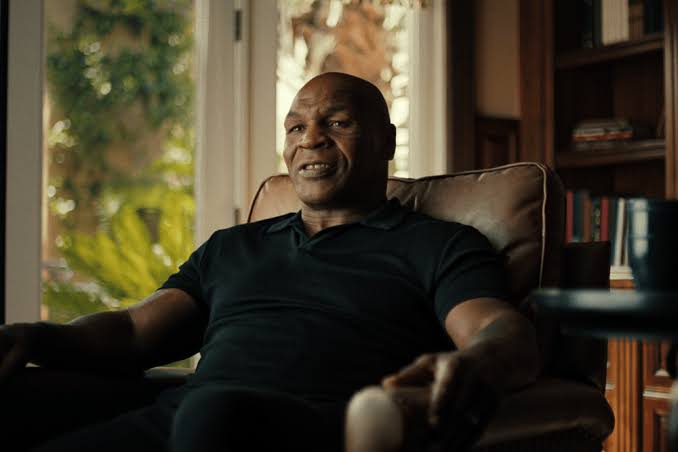
Mike Tyson: Return of the Mike Review 2026 Tv Show Series Cast Crew Online
Mike Tyson: Return of the Mike (2026) offers a different look at one of the most recognizable figures in sports history. Known for his explosive power in the boxing ring and a public life filled with extraordinary highs and painful lows, Mike Tyson steps onto the stage with a microphone instead of boxing gloves. The Netflix comedy special presents Tyson as a storyteller willing to revisit the strange, uncomfortable, and often unbelievable moments that have shaped his life. Rather than focusing on his athletic achievements alone, the performance explores the personality behind the legend, revealing a man who can turn personal chaos into comedy while reflecting on the experiences that made him famous.
Directed by Kiki Tyson and filmed at the Seminole Hard Rock Hotel & Casino in Hollywood, Florida, Return of the Mike marks Tyson’s first stage performance since his 2013 show, Undisputed Truth. That earlier production introduced audiences to a more theatrical version of his personal story, while this special appears designed around a looser and more comedic approach. Tyson’s reputation gives the performance an unusual starting point. Audiences arrive with expectations shaped by decades of boxing highlights, controversial headlines, interviews, and public appearances. The challenge is to move beyond those familiar images and discover whether Tyson can hold the stage through humor and storytelling alone.
The special’s greatest appeal lies in Tyson’s willingness to make himself the subject of the joke. Many celebrities use stand-up or personal storytelling to reinforce a carefully managed public image. Tyson’s persona has never been especially easy to control, and that unpredictability becomes part of the performance. He revisits moments from his career and personal life with a willingness to laugh at the contradictions between the intimidating champion and the person who exists outside the ring. The comedy works best when Tyson acknowledges the absurdity of his own reputation rather than simply repeating stories that audiences already know.
Tyson’s stage presence is naturally different from that of a conventional stand-up comedian. He does not rely solely on polished delivery or rapid-fire punchlines. His appeal comes from the contrast between his imposing physical presence and his often self-deprecating approach. The pauses, expressions, and unexpected turns in his storytelling become part of the humor. Tyson has spent much of his life being described by others, and the special gives him an opportunity to shape the narrative in his own voice. That does not mean every story is equally effective, but the performance has an authenticity that is difficult to manufacture.
One of the most interesting aspects of Return of the Mike is the way it draws comedy from the gap between public image and private experience. Tyson became famous as a fearsome heavyweight champion, a man whose reputation could dominate a room before he even spoke. Yet the special explores a more complicated personality, one shaped by insecurity, impulsive decisions, personal struggles, and the difficulty of living under constant public attention. Tyson’s willingness to discuss these contradictions gives the show a more personal dimension than a straightforward collection of celebrity anecdotes.
The special also revisits the strange moments that have become part of Tyson’s public mythology. His career has produced countless stories that seem almost too unusual to be true, and his ability to tell them with humor gives the performance much of its energy. These moments are not simply included for shock value. They reveal how Tyson’s life has repeatedly moved between extraordinary achievement and unexpected chaos. The comedy emerges from the recognition that a person can become a global icon while still struggling to understand himself.
Tyson’s reflections on addiction and mental health give the special a more serious emotional foundation. These subjects are difficult to discuss, particularly when they involve a public figure whose life has been examined through headlines and controversy. Tyson approaches them through humor, but the underlying experiences remain significant. The laughter does not erase the seriousness of what he describes. Instead, it becomes a way of approaching painful memories without allowing them to dominate the entire performance. The special’s most affecting moments occur when the comedy briefly gives way to a more direct recognition of the difficulties Tyson has faced.
The theme of self-image is especially relevant to Tyson’s story. For much of his career, he was known through a collection of powerful labels: champion, fighter, celebrity, controversial figure, and larger-than-life personality. Those labels can become difficult to escape, particularly when the public continues to expect the same character long after a person’s circumstances have changed. Return of the Mike explores the tension between the image people remember and the person Tyson believes he has become. The performance suggests that growing older involves learning how to live with the past without allowing it to define every moment of the present.
Kiki Tyson’s direction gives the special a personal quality. As Tyson’s wife and a creative collaborator, she brings a perspective that differs from the approach of a detached director. The production is built around Tyson’s voice and personality, allowing the stories to remain the focus. The setting creates the atmosphere of a live performance, with the audience’s reactions providing a sense of immediacy. The special does not need elaborate visual effects or complicated staging. Its success depends on whether Tyson can create a connection with the audience through his words, timing, and willingness to reveal parts of himself.
The live audience is an important part of the experience. Comedy depends on rhythm, and the reactions in the room help shape the pace of Tyson’s stories. A laugh can give him space to build toward another punchline, while a quieter moment can make a personal reflection feel more intimate. The performance’s energy comes from the exchange between Tyson and the audience, even when the stories themselves move into uncomfortable territory. The atmosphere makes the special feel less like a documentary interview and more like an evening in which Tyson is attempting to entertain people directly.
The title Return of the Mike suggests a comeback, but the special is not a return to the boxing ring. It is a return to the stage and to a form of storytelling that allows Tyson to explore his life in a different way. The title also carries a playful quality, acknowledging the public’s familiarity with his name while presenting a version of him that may feel less predictable. The performance is not about proving that Tyson remains the same person audiences remember. It is about showing how he can use that history as material for a new kind of entertainment.
The special’s comedy may not appeal equally to every viewer. Tyson’s humor is often raw, irreverent, and connected to experiences that can be uncomfortable. Some stories may feel more entertaining because of their outrageousness than because of their construction as traditional stand-up material. Viewers expecting a tightly structured comedy set with constant punchlines may find the performance closer to personal storytelling. However, that approach is part of its identity. Tyson’s life is the material, and the interest comes from hearing how he chooses to interpret it.
Return of the Mike also raises questions about the relationship between humor and accountability. When a public figure turns controversial experiences into comedy, audiences may respond in different ways. Some may appreciate the willingness to discuss difficult subjects openly, while others may feel that humor risks simplifying the consequences of past behavior. The special’s effectiveness depends partly on how viewers approach Tyson’s perspective. It offers a personal account, not a complete or neutral history of his life. The distinction is important because a storyteller’s version of events can be revealing without being the final word.
The strongest moments are likely to be those in which Tyson’s humor reveals something unexpected about his personality. His intimidating public image has often overshadowed his vulnerability, and the special gives him room to explore that contrast. The audience sees a man who can laugh at his own behavior while also acknowledging that some experiences were painful or damaging. That combination creates a more complicated portrait than either a celebration of his fame or a conventional account of his controversies.
The special’s relatively compact runtime helps maintain its focus. Rather than attempting to cover every major event in Tyson’s life, it concentrates on stories and reflections that work within the rhythm of a live performance. The result is a more personal experience than a comprehensive biography. It does not need to explain every chapter of Tyson’s career because the audience already brings considerable knowledge of his public history. The performance can therefore concentrate on the details, contradictions, and personal interpretations that make the stories feel fresh.
Ultimately, Mike Tyson: Return of the Mike is an entertaining and revealing stand-up special built around the unpredictable personality of its central performer. Tyson’s greatest strength is his willingness to turn his own history into material, mixing outrageous stories with reflections on addiction, mental health, fame, and self-image. The special is not a traditional comedy showcase, and its appeal depends heavily on the audience’s interest in Tyson himself. Yet its personal nature gives it a distinct identity.
For viewers interested in Mike Tyson beyond his boxing career, Return of the Mike offers a chance to hear him speak in a different setting. The performance is raw, occasionally uncomfortable, and frequently amusing, with its most memorable moments emerging from the contrast between Tyson’s intimidating reputation and his ability to laugh at himself. It does not erase the complexities of his past, nor does it attempt to provide a complete account of his life. Instead, it presents a man using comedy to revisit the experiences that have shaped him.
As a Netflix comedy special, Mike Tyson: Return of the Mike is a distinctive addition to Tyson’s public story. Its greatest value lies in the opportunity to see a familiar figure in an unfamiliar role. The boxing champion becomes a storyteller, the intimidating celebrity becomes the punchline, and the public image gives way to a more personal performance. Whether viewers find every story hilarious or not, the special offers an engaging look at the strange, difficult, and often contradictory life of Mike Tyson.