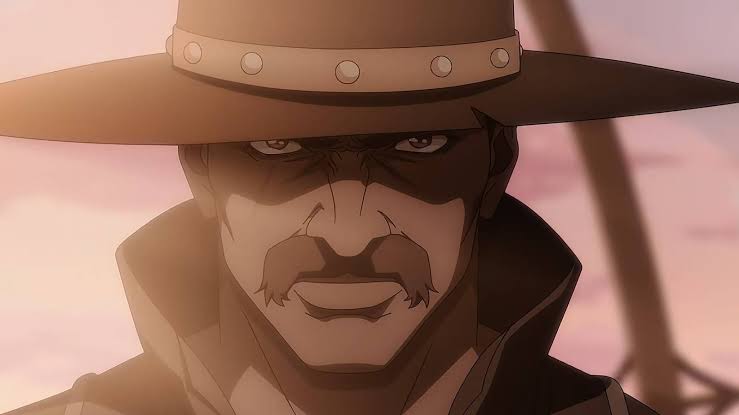
Bass x Machina Review 2026 Tv Show Series Cast Crew Online
Bass X Machina (2026) is a bold and imaginative animated Western that combines the rugged atmosphere of the American frontier with steampunk technology, supernatural danger, and a story rooted in the complicated legacy of justice. Developed by LeSean Thomas and produced by Studio Mir, the six-episode Netflix series reimagines the legendary lawman Bass Reeves in an alternate version of the post-Civil War West. Brian Tyree Henry voices Bass, a bounty hunter whose mechanical arm and violent past make him a formidable figure in a land where law and morality rarely follow simple rules. Yet beneath its explosive action and unusual world-building, Bass X Machina is a story about family, trauma, revenge, and the difficult choices people make when survival becomes their greatest responsibility.
The series introduces Bass as a man who has learned to operate in a brutal world. The frontier is filled with outlaws, dangerous machines, and supernatural forces, while the remnants of war continue to shape the lives of ordinary people. Bass is capable of extraordinary violence, but he is not presented as an uncomplicated hero. His work requires him to make difficult decisions, and his past continues to influence the way he sees justice. When the US Army summons him to Fort Hope for one final assignment, he is asked to locate a missing scientist and prevent a new conflict that could threaten the fragile future of the country. The mission becomes much more complicated than expected, forcing Bass to confront old wounds and question the price of the justice he believes in.
The premise immediately gives the series a distinctive identity. Western stories have traditionally explored lawlessness, violence, and the struggle to establish order, but Bass X Machina adds mechanical inventions and supernatural elements that change the familiar landscape. Steam-powered technology exists alongside horses, revolvers, dusty towns, and remote settlements. The result is a world that feels recognizable yet strange. Its machines are not simply decorative additions to the setting; they influence the balance of power and create new dangers for the characters. The series uses this alternate history to explore familiar Western themes through a more imaginative lens.
Brian Tyree Henry gives Bass a compelling voice performance, bringing together toughness, exhaustion, humor, and emotional vulnerability. Bass is a man who has survived extraordinary hardship, and Henry communicates that history without making the character seem emotionally empty. His voice carries the weight of someone who has learned to keep moving even when the past remains painful. Bass can be intimidating when facing enemies, but his quieter moments reveal a father and husband who wants to protect the people he loves. This contrast gives the character depth and prevents the action from becoming an empty display of violence.
Bass’s mechanical arm is one of the series’ most memorable features. It gives him a physical advantage in combat, but it also represents a painful part of his history. The arm is not simply a convenient superhero-style upgrade. It is connected to trauma, exploitation, and the ways powerful people can use others for their own ambitions. Bass’s relationship with the technology is complicated because it makes him stronger while reminding him of what was taken from him. The series uses this element to explore the uncomfortable relationship between progress and human suffering.
The story’s family dimension is just as important as its action. Bass is not only a bounty hunter or a legendary figure; he is a husband and father who understands that his work can place his loved ones in danger. His desire to protect his family gives the central mission emotional weight. Every violent decision carries the possibility of consequences beyond the immediate conflict. The series repeatedly asks whether a person can pursue justice without becoming consumed by the violence required to achieve it. Bass’s struggle is especially compelling because he knows that the same instincts that help him survive may also threaten the life he wants to preserve.
Tati Gabrielle voices Dana, a young engineer who becomes an unexpected companion during Bass’s journey. Dana brings intelligence, curiosity, and technical skill to the story, offering a different perspective on the world. Her ability to understand and work with machinery makes her valuable in situations where Bass’s strength and experience are not enough. Their partnership creates opportunities for humor and character development, particularly because the two approach problems in very different ways. Dana is not merely a sidekick who follows Bass’s instructions. She has her own goals, fears, and personal history, and her presence helps broaden the series beyond the central hero.
Dana’s identity and family background also add emotional complexity. The world of Bass X Machina may contain fantastical machinery and supernatural threats, but its social divisions remain connected to real historical prejudice. Dana’s experiences reveal how people are forced to navigate expectations and discrimination in a society that claims to be moving toward progress. Her story gives the series an opportunity to examine identity, belonging, and the cost of hiding parts of oneself in order to survive. These themes make the alternate-history setting feel connected to the realities that inspired it.
Janelle Monáe voices Glory, Bass’s wife, and brings a strong presence to the character. Glory represents the life Bass is trying to protect, but she is not simply an emotional motivation for his adventures. Her relationship with Bass reflects the difficult balance between family responsibility and the demands of a dangerous profession. The series’ attention to their relationship helps create a sense of life beyond the battlefield. Bass’s choices matter because they affect people who have their own hopes and fears, not simply because they determine whether he wins a fight.
The supporting cast gives the world additional texture. Cree Summer voices Ahni, while Chaske Spencer plays Lighthorse, and Currie Graham voices Rivenbark. These characters contribute to the political, cultural, and emotional conflicts surrounding Bass’s mission. The series is especially interested in the different ways people respond to violence and historical trauma. Some characters seek control, others pursue revenge, and some attempt to protect their communities from forces they cannot fully understand. Their conflicting motivations make the world feel larger than a simple struggle between a hero and a villain.
The antagonist, Rivenbark, is particularly important to the series’ exploration of revenge. His history and ambitions reflect the danger of allowing grief to become a justification for destroying others. Bass has also experienced devastating loss, but the series places him in a position where he must decide whether pain will define his future. This contrast creates a meaningful moral conflict. Bass is not necessarily better because he has suffered less; he is challenged to choose what kind of person he wants to become despite what has happened to him.
The action sequences are among the series’ most exciting elements. Studio Mir’s animation gives the fights a strong sense of movement and impact, combining traditional Western gunplay with mechanical weapons and unusual opponents. The steampunk technology creates opportunities for inventive combat, while the supernatural threats push the characters into situations that cannot be solved through ordinary tactics. The action feels most effective when it reveals something about the characters. Bass’s fighting style reflects his experience and emotional state, while Dana’s technical ingenuity allows her to approach danger in a different way.
The animation also gives the series a distinctive visual identity. The landscapes range from dusty deserts and rocky canyons to industrial settlements and strange, technologically advanced environments. The contrast between natural scenery and mechanical construction reinforces the series’ central idea: this is a frontier where the future has arrived unevenly, bringing both opportunity and danger. The character designs and machinery help distinguish the world from more conventional Western settings, while the overall visual style maintains a sense of grit and physical consequence.
The supernatural elements add another layer of unpredictability. The series does not rely solely on technology to create danger; it also introduces forces that challenge the characters’ understanding of the world. These encounters expand the story’s sense of mystery and give the setting a mythic quality. The supernatural threats can sometimes feel more symbolic than fully explained, but they contribute to the series’ atmosphere and help distinguish it from a straightforward historical Western. The combination of machines, folklore, and frontier violence creates a world where the rules are constantly shifting.
The six-episode format gives Bass X Machina a focused structure, but it also creates limitations. The story moves quickly through its central mission, introducing several characters, historical ideas, and conflicts within a relatively short runtime. This keeps the series energetic, but some supporting characters and world-building elements could benefit from more development. Certain emotional transitions happen faster than expected, and the audience may wish for additional time to explore the communities and relationships affected by the larger conflict. The compact format makes the story accessible, though it occasionally leaves the world feeling larger than the season can fully explore.
The series’ historical inspirations are important to its identity. Bass Reeves was a real lawman whose life and legacy have become part of American frontier history. Bass X Machina does not attempt to present a straightforward biographical account. Instead, it uses the historical figure as the foundation for an alternate-world story that incorporates science fiction and fantasy. This creative approach allows the series to explore themes of race, power, justice, and historical memory while building a distinctive fictional universe. Its strongest moments occur when the fantastical elements illuminate rather than distract from those themes.
The soundtrack contributes significantly to the show’s atmosphere. Janelle Monáe performs the theme song, “Honor Killing,” which helps establish the series’ blend of Western style and modern musical energy. The score supports both the action and the emotional scenes, giving the show a sense of momentum without overwhelming its quieter moments. The music is particularly effective in connecting the series’ historical influences with its futuristic setting. It helps make the world feel cohesive despite the unusual combination of genres.
Bass X Machina’s greatest strength is its willingness to combine entertainment with meaningful questions. It is a violent action series, but it also considers the consequences of violence and the way trauma can shape a person’s understanding of justice. Bass is not asked simply to defeat enemies; he must decide how much of himself he is willing to sacrifice and whether his actions will protect or endanger the people he loves. The series recognizes that the desire for justice can become complicated when it is mixed with grief, anger, and a need for revenge.
The show’s treatment of history and identity gives it additional depth. Its alternate frontier may be filled with robots and supernatural beings, but the social prejudices of the period have not disappeared. The series suggests that technological progress does not automatically lead to moral progress. New inventions can create opportunities, but they can also be used to reinforce existing inequalities or exploit vulnerable people. This idea gives the steampunk setting a purpose beyond visual novelty and makes the world’s conflicts feel more relevant.
Ultimately, Bass X Machina is an imaginative animated Western that combines stylish action, unusual world-building, and a thoughtful central character. Brian Tyree Henry’s performance gives Bass emotional weight, while Tati Gabrielle and Janelle Monáe help create a compelling family and partnership dynamic. Studio Mir’s animation brings the mechanical frontier to life, and the series’ mix of historical inspiration, science fiction, fantasy, and Western storytelling gives it a distinctive identity. Its short season leaves some characters and ideas underdeveloped, but the overall experience remains engaging.
For viewers who enjoy adult animation, action-driven storytelling, and genre combinations that take creative risks, Bass X Machina offers a memorable ride. It may not fully explore every idea introduced by its world, but it succeeds in creating a compelling setting and a hero whose struggle is about more than survival. The series leaves the audience with a powerful question: when a person has been shaped by violence and loss, can they still choose a future defined by compassion rather than revenge? That question gives Bass X Machina its emotional foundation and makes it more than a stylish animated Western.