A Dog’s Perfect Christmas 2026 Movie Review
A Dog’s Perfect Christmas is shaping up to be a warm, emotional holiday film built around one of cinema’s most dependable sources of comfort: the bond between people and their dogs. Directed by Cathryn Michon and based on the novel by W. Bruce Cameron, the Netflix movie brings together a family facing grief, illness, and the quiet distance that can grow between loved ones. Rather than relying only on Christmas decorations and cheerful seasonal traditions, the story appears interested in the emotional meaning of the holiday itself—how people find their way back to one another when life becomes difficult. With Dennis Quaid, Milo Ventimiglia, Brooke Lena Johnson, Mary Steenburgen, and Thomas Haden Church among its cast, the film has the ingredients for a heartfelt family drama with a generous dose of canine charm.
At the center of the story is Winstead, a wise basset hound who narrates the film and observes the changing fortunes of the Goss family. Voiced by Thomas Haden Church, Winstead is more than a cute animal companion; he is the emotional guide through a household struggling to remain connected. His perspective gives the story an opportunity to view human problems with a mixture of affection, simplicity, and gentle humor. Dogs do not understand every complication that troubles people, but they often recognize loneliness and sadness long before anyone is willing to talk about them. That contrast could give the film some of its most touching moments, allowing Winstead’s observations to reveal the family’s pain without turning every scene into a heavy emotional speech.
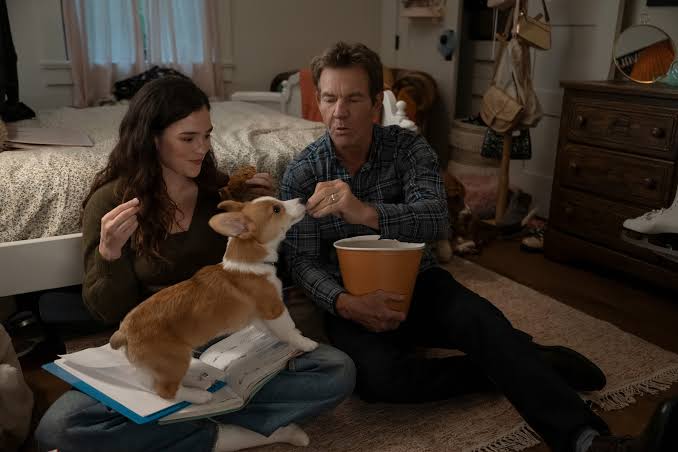
Dennis Quaid plays Sander Goss, a grandfather whose grief following the loss of his wife has made him increasingly irritable and withdrawn. The character’s sadness seems to have settled into his everyday behavior, affecting the people who still need him. Sander’s relationship with his teenage granddaughter Ello is particularly strained, as the two appear to be dealing with their own feelings while struggling to understand each other. Quaid is well suited to a role that requires both gruff humor and emotional vulnerability. His performance will likely be most effective when the character’s affection emerges through small gestures rather than grand declarations. A family film about grief can easily become overly sentimental, but a character who hides his pain behind an awkward attitude offers a more recognizable starting point.
Brooke Lena Johnson plays Ello, the teenager caught between the ordinary frustrations of growing up and the serious problems unfolding around her. Her relationship with Sander provides the film with an important generational perspective. Ello is not simply a young character who needs to learn a lesson from an older relative; she is also someone whose feelings deserve to be understood. The tension between her and Sander could give the story a welcome degree of emotional honesty, especially if the film allows both characters to make mistakes. Family relationships rarely repair themselves through one perfect conversation. They usually improve through patience, shared experiences, and the willingness to keep trying even after an argument.
The family’s situation becomes more difficult when Ello’s mother, Juliana, falls ill and is placed in an induced coma. This medical emergency changes the household’s emotional balance and forces its members to confront uncertainty. The crisis gives the Christmas setting a more meaningful purpose: the holiday is no longer simply an occasion for celebration, but a deadline against which the family’s worries and hopes are measured. The film’s central challenge will be to handle this serious situation with sensitivity while still maintaining the warmth expected from a seasonal family movie. If the drama gives the characters enough room to process their fear, the story could offer an affecting reminder that even joyful traditions can become complicated when someone is missing.
A lively Corgi puppy named Ruby enters the story at a moment when the Goss family needs a new source of energy. Ruby’s arrival seems to create opportunities for the characters to spend time together, gradually shifting their attention away from conflict and toward shared affection. The puppy’s role is not simply to provide adorable scenes, although those are likely to be plentiful. Ruby represents the possibility of a fresh beginning, particularly for Ello and Sander, whose relationship has become weighed down by grief and frustration. The contrast between Winstead’s older, thoughtful personality and Ruby’s youthful enthusiasm could also provide a charming dynamic. One dog understands the family’s history, while the other helps them imagine a future that still has room for happiness.
The movie’s animal-centered storytelling naturally invites comparisons with W. Bruce Cameron’s earlier adaptations, including A Dog’s Purpose and A Dog’s Journey. Those films often used a dog’s perspective to explore loyalty, loss, and the lasting influence of companionship. A Dog’s Perfect Christmas appears to continue that tradition while placing its emotional focus on a family trying to survive a difficult holiday season. The connection to Cameron’s previous work gives the film a recognizable foundation, but its success will depend on whether the Goss family feels distinct and fully developed rather than simply serving as another vehicle for familiar tearjerker moments.
Cathryn Michon’s direction will be especially important in balancing the film’s emotional and comedic elements. The premise contains several potentially heavy subjects, including bereavement, family conflict, and a serious medical emergency. At the same time, the presence of Winstead and Ruby creates space for playful scenes and lighter moments. The strongest version of this film would allow humor to emerge naturally from the characters and their interactions with the dogs, rather than using jokes to interrupt every difficult moment. Christmas stories often work best when they acknowledge that happiness and sadness can exist together. A family may laugh at the dinner table while still worrying about someone they love, and a small moment of affection can feel meaningful precisely because the surrounding circumstances are so uncertain.
The supporting cast also adds promise. Milo Ventimiglia plays Hunter, while Mary Steenburgen appears as Claire, a character who begins spending time with Sander. Steenburgen’s presence could help bring a gentler and more hopeful dimension to Sander’s life. A new relationship after loss is a delicate subject, particularly in a family story, and it will be interesting to see whether the film treats that development with patience. The possibility of companionship should not erase the memory of someone who has died. Instead, it can suggest that love and grief are not mutually exclusive, and that moving forward does not mean abandoning the past.
The film’s Christmas atmosphere seems designed to support its emotional themes rather than merely decorate them. Seasonal movies frequently rely on familiar imagery—lights, presents, snow, family meals, and festive music—but those details become more effective when they reflect what the characters are experiencing. In this story, Christmas appears to be a reminder of the family’s previous happiness as well as an opportunity to create new memories. The holiday can intensify the sense of absence, but it can also encourage people to reach out when they might otherwise remain isolated. That emotional contrast gives the setting a useful dramatic purpose.
One of the film’s most appealing qualities may be its understanding of how pets influence family life. Dogs rarely solve practical problems, but they can change the atmosphere of a home. They encourage people to go outside, share routines, laugh at unexpected behavior, and offer affection without demanding explanations. Winstead and Ruby appear to help the Goss family reconnect through these simple experiences. Their presence could make the story’s emotional message feel less like a lesson and more like something the characters discover through daily life. The film will likely appeal especially to viewers who recognize how a beloved pet can become a steady source of comfort during a difficult period.
There is also a welcome note of reassurance for viewers who worry about emotionally devastating dog movies. The director has reportedly confirmed that no dogs die in the film, a detail that may help animal lovers approach the story with greater confidence. That does not mean the movie will avoid sadness; the family’s circumstances are clearly serious. But the reassurance suggests that the film intends to focus on healing and togetherness rather than using the loss of an animal as its main emotional shock.
The main risk for A Dog’s Perfect Christmas is that its familiar ingredients could become too predictable. A grieving grandfather, a teenager struggling with family changes, a medical crisis, a new puppy, and a holiday deadline are all well-established elements of sentimental family storytelling. The film will need specific character moments and believable emotional development to make these elements feel fresh. If every disagreement is resolved too quickly or every scene is designed to produce a tear, the story could lose some of its sincerity. On the other hand, if the screenplay allows the family to remain imperfect and gives its characters time to rebuild trust, the familiar structure could become a strength rather than a weakness.
The film’s greatest potential lies in its modest message. It does not appear to promise that every problem can be solved by Christmas or that grief disappears once a family gathers around a tree. Instead, its premise suggests that connection can begin with small acts: spending time together, caring for a pet, listening to someone who has been difficult to understand, or allowing another person to offer help. Those ideas are simple, but they are often the most meaningful part of holiday storytelling.
Overall, A Dog’s Perfect Christmas looks like a heartfelt family drama with the potential to deliver humor, warmth, and emotional comfort. Dennis Quaid’s gruff grandfather, Brooke Lena Johnson’s teenage granddaughter, Thomas Haden Church’s canine narrator, and the energetic presence of Ruby the Corgi give the movie a promising ensemble. Its themes of grief, family responsibility, companionship, and renewed hope could resonate with viewers looking for a seasonal film that offers more than uncomplicated cheer. The story may follow a familiar path, but its focus on the healing influence of dogs and the difficult work of staying connected gives it an appealing emotional center. For audiences who enjoy sentimental Christmas movies and stories about the bond between humans and animals, A Dog’s Perfect Christmas could become a comforting addition to the holiday watchlist when it arrives on Netflix.