The Pet Cemetery Murders: A Ghost Story Review 2026 Tv Show Series Cast Crew Online
The Pet Cemetery Murders: A Ghost Story is a haunting, unsettling, and fascinating true-crime documentary series that combines a brutal murder investigation with paranormal claims, family secrets, and the dark history of rural Louisiana. Directed by Philip Cairney, this three-part HBO documentary explores the 1985 murder of Dorothy Lou Thompson, a woman who owned a pet cemetery near New Orleans. What initially appears to be a conventional cold-case investigation gradually develops into a much stranger story involving alleged ghostly encounters, suspicious deaths, troubled relationships, and a community haunted by its past. The documentary stands out because it does not rely exclusively on the usual elements of modern true-crime television. Instead, it builds an eerie atmosphere around a real murder and examines how memories, rumours, personal beliefs, and historical events can become intertwined when a crime remains unresolved for decades. Dorothy’s story is particularly disturbing because her life was already surrounded by tragedy before her disappearance. Her body was eventually discovered in the Mississippi River, bound with chains, and investigators struggled for years to establish exactly what had happened to her. The case was reopened years later, and information from witnesses helped investigators move closer to the truth. The series uses this complicated history to create an engaging mystery that is both emotionally troubling and genuinely unusual.
One of the strongest aspects of The Pet Cemetery Murders: A Ghost Story is its central subject. A pet cemetery might initially seem like an unusual setting for a murder documentary, but it becomes an important part of the series’ identity. A cemetery is traditionally a place of remembrance, grief, and respect for the dead. Here, however, the location becomes associated with violence, secrets, and unsettling stories that have persisted for years. The contrast between the cemetery’s original purpose and the disturbing events connected to it gives the documentary much of its power. Dorothy Thompson’s connection to the property also makes the story more complicated than a straightforward murder investigation. Her personal history, family relationships, and circumstances surrounding the cemetery provide important context for understanding the people involved. Rather than presenting the location merely as a spooky backdrop, the documentary uses it as a symbol of the painful memories and unresolved questions that have shaped the surrounding community. The Louisiana bayou setting further strengthens this atmosphere, making the story feel isolated and mysterious without requiring the filmmakers to manufacture unnecessary horror.
Dorothy Lou Thompson is at the heart of the documentary, and her life provides the emotional foundation for the investigation. She was not simply a name in an old police file but a complicated person whose experiences were connected to difficult relationships and personal struggles. The series gradually reveals details about her past, encouraging viewers to consider the circumstances in which she lived and the people who surrounded her. Her disappearance in 1985 and the later discovery of her body transformed an already troubled story into a deeply disturbing criminal case. The documentary raises questions about the conflicts in Dorothy’s life, the individuals who may have had reasons to harm her, and the circumstances that allowed the investigation to remain unresolved for so long. One of the more effective elements of the storytelling is its recognition that a murder victim’s life cannot be reduced to the final moments of their existence. Understanding the victim’s background is important, but it should not become an excuse for the violence committed against them. By exploring Dorothy’s history alongside the investigation, the series attempts to give her story a human dimension beyond the crime itself. This approach makes the documentary more emotionally engaging than a programme concerned only with identifying a killer.
The murder investigation is another major strength. The passage of time created significant challenges for investigators, as memories became less reliable, witnesses had to reconsider what they knew, and important details became increasingly difficult to establish. The documentary explores how a case that had remained cold for years eventually began to move forward when new information emerged. Detective John Doran and the other people connected to the investigation help explain the process of revisiting the evidence and examining testimony that might previously have seemed unimportant. These investigative elements provide a useful counterbalance to the more mysterious aspects of the story. Although the title promises a ghost story, the underlying case still depends on evidence, witness accounts, and the painstaking work of determining what happened. This balance is essential because it prevents the documentary from becoming a purely supernatural entertainment programme. Instead, it invites viewers to follow the investigation and assess the information as it emerges. The revelations surrounding the case provide the series with genuine momentum, particularly for audiences who enjoy documentaries in which a decades-old mystery gradually becomes clearer through new testimony.
The supernatural element is undoubtedly the documentary’s most unusual feature. According to the accounts presented in the series, witnesses claimed that Dorothy’s ghost appeared to them and encouraged them to speak to the police. These reports add a disturbing dimension to an already extraordinary case. The idea that a murder victim might somehow influence the investigation after death is naturally compelling, particularly when the crime has remained unresolved for years. However, the documentary is most effective when it allows these claims to remain questions rather than treating them as established facts. A witness may provide valuable information while explaining its origin in a way that other people find difficult to believe. This distinction is important for anyone watching the series from a sceptical perspective. There is a difference between investigating what a witness knows and proving that a supernatural encounter actually occurred. The documentary’s unusual premise encourages viewers to consider both possibilities without requiring them to accept every paranormal explanation. For some audiences, the ghost stories will be the main attraction; for others, they will be interesting examples of how people interpret frightening or unexplained experiences. Either way, they give the series an identity that separates it from many familiar cold-case programmes.
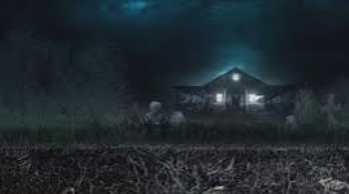
The direction and atmosphere also deserve praise. Philip Cairney makes effective use of interviews, archival material, the surrounding landscape, and the unsettling history of the cemetery to create a distinctive mood. The Louisiana setting contributes significantly to the experience, with its waterways, marshes, and secluded locations providing an appropriate visual background for a story about violence and buried secrets. The atmosphere is eerie without requiring constant dramatic music or exaggerated visual effects. Instead, the documentary allows the setting and the testimony of its participants to do much of the work. The interviews give viewers an opportunity to hear different perspectives, while historical material helps establish the broader context of the case. This approach feels more restrained than some true-crime programmes that depend heavily on dramatic reconstructions, repetitive cliff-hangers, and sensationalised narration. The series benefits from allowing people to describe their memories and beliefs in their own words. Their accounts are sometimes disturbing, sometimes difficult to interpret, and occasionally extraordinary, but they collectively create a portrait of a community where the past continues to influence the present. The result is a documentary that feels closer to a dark investigative podcast brought to life than to a conventional horror series.
Another interesting dimension is the relationship between the murder and the wider history of the land. The documentary explores the disturbing history associated with the area, including accounts of historical violence and the 1868 St. Bernard Parish Massacre. These details broaden the story beyond Dorothy’s murder and suggest that the cemetery exists within a landscape shaped by generations of conflict and suffering. The historical material gives the series additional depth because it raises questions about the way communities remember, conceal, or reinterpret difficult events. The land becomes more than a location where a crime happened; it becomes a place where different layers of history overlap. Nevertheless, the historical connections also require careful consideration. The existence of past violence does not establish that a location is cursed or that supernatural forces are responsible for later events. The documentary is more persuasive when it uses history to illuminate the community and its experiences than when viewers are tempted to interpret every tragedy as evidence of something paranormal. Despite this limitation, the historical dimension contributes to the series’ distinctive character and provides a broader perspective on the environment surrounding the investigation.
The documentary’s greatest weakness is its three-episode format. Although the case contains enough unusual details to sustain interest, certain aspects of the story could have been presented more concisely. Some viewers may feel that the investigation and its central revelations would have worked more effectively in a feature-length documentary. The gradual release of information can create suspense, but it can also make the narrative feel stretched when particular questions receive more attention than the available evidence can comfortably support. The paranormal stories are intriguing, yet they sometimes threaten to overshadow the practical investigative work that gives the case its importance. Viewers who prefer tightly structured crime documentaries may find that the series spends too much time establishing an atmosphere and revisiting competing accounts. The historical material, meanwhile, introduces fascinating subjects that could benefit from more detailed exploration. These issues do not make the documentary unsuccessful, but they prevent it from becoming an entirely satisfying investigation. Its strengths lie more in its unusual atmosphere and collection of stories than in offering a consistently rigorous or comprehensive examination of every question surrounding the case.
Another consideration is how the documentary handles the distinction between fact, recollection, and speculation. True-crime programmes have a responsibility to treat real victims and their families with sensitivity, especially when discussing personal struggles, allegations, and suspicious deaths. A compelling narrative should not turn a person’s suffering into entertainment at the expense of accuracy. In this series, the most valuable material comes from the investigation and the accounts that help explain how the case progressed. The supernatural claims are certainly memorable, but they should be evaluated separately from the evidence supporting the murder investigation. Not every unexplained event requires a paranormal explanation, and not every story passed between neighbours is necessarily reliable. At the same time, dismissing witnesses simply because their experiences sound unusual would be an equally unhelpful approach. The documentary’s subject is interesting precisely because it sits at the intersection of crime, belief, memory, and community history. Viewers who maintain a critical perspective will probably gain the most from its combination of investigative details and strange testimony.
Overall, The Pet Cemetery Murders: A Ghost Story is an engaging and atmospheric addition to the true-crime documentary genre. Its greatest achievement is the way it combines a genuine murder investigation with an unusual setting, a troubled personal history, and reports of alleged supernatural encounters. Dorothy Lou Thompson’s story provides a disturbing foundation, while the interviews and historical details give the series a broader perspective on the community surrounding the cemetery. The documentary is not without flaws: its pacing can feel uneven, some of its historical threads deserve greater development, and its paranormal elements may be more persuasive to believers than to sceptics. Nevertheless, it succeeds in making a decades-old case feel compelling and distinctive. The series is particularly suitable for viewers who enjoy cold cases, eerie locations, unexplained stories, and documentaries that leave room for questions rather than offering easy answers. It is less suitable for those seeking a purely evidence-driven procedural with little interest in folklore or supernatural claims. My verdict is that the series is worth watching for its unusual premise, unsettling atmosphere, and fascinating investigation, even if it does not fully justify every minute of its three-part format. Rating: 3.5 out of 5 stars.