The New Stanford Prison Experiment Review 2026 Tv Show Series Cast Crew Online
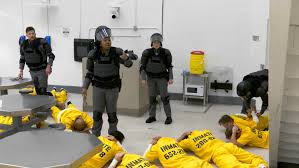
The Stanford Prison Experiment was a notorious psychological study conducted in 1971, in which participants were assigned the roles of prisoners and guards. This Netflix series attempts to revisit the concept, asking whether power corrupts and how people behave when placed in positions of authority. On paper, there’s plenty of potential here. Unfortunately, the execution leaves an awful lot to be desired.
I went into this with genuine interest, but it quickly became apparent that the programme was far more interested in manufacturing drama than exploring human behaviour. Every minor disagreement is accompanied by dramatic music and close-ups, as though somebody refusing to return a microwave is a pivotal moment in the history of civilisation. The participants frequently seem to be playing to the cameras, and the whole thing feels so artificial that I wouldn’t have been particularly surprised to discover someone behind the scenes shouting instructions.
The casting and structure don’t help. The women are placed in privileged positions from the outset, which undermines the very premise the series is supposed to be exploring. Later changes to the power structure feel arbitrary, and the programme seems determined to make a point without doing the groundwork necessary to support it. We’re repeatedly told that we’re witnessing something profound, but telling the audience that something is meaningful doesn’t magically make it so.
Character development is practically non-existent. Some participants receive an extraordinary amount of attention, while others remain on the sidelines until the production suddenly decides they’re relevant. By that point, it’s difficult to care. Chris, in particular, becomes an unintentionally entertaining presence, delivering motivational speeches with the enthusiasm of a man addressing a room full of potential recruits. He might have been considerably more interesting on the other side of the bars from the off. Meanwhile, Chet appears to be auditioning for the role of Supreme Leader, and occasionally looks as though he’s about to demand his own crown.
The biggest problem is that the series cannot decide whether it wants to be a serious psychological study or reality television. It attempts to have it both ways, but ends up doing neither particularly well. The original experiment was controversial for reasons that extended far beyond a few theatrical outbursts. Here, the supposed hardship is so sanitised that the most pressing concern sometimes seems to be whether somebody will get their dinner or their privileges back. Big Brother has offered more revealing observations of human behaviour, and at least it never pretended that a dispute over kitchen appliances was a breakthrough in psychology.
After more than five hours, I was left wondering what the point of it all had been. There’s little insight, minimal character development and an abundance of manufactured tension. The whole thing feels like an expensive balloon that’s slowly losing air, desperately trying to maintain the appearance of something impressive. There’s more depth in the silver foil on top of a tub of Pringles.
I went in expecting an intriguing examination of power and came away feeling as though I’d been sentenced to a particularly tedious stint in the Big Brother house. Netflix, if this was an experiment, I’m not entirely convinced the viewers were the ones being studied. I wish I’d shouted “Pineapple” in episode one.