The Carpenter’s Son 2025 Movie Review
Released in November 2025, The Carpenter’s Son is a bold and provocative cinematic take on the childhood years of the figure of Jesus Christ, reimagined through the lens of a psychological/biblical horror narrative. Writer-director Lotfy Nathan draws inspiration from the apocryphal Infancy Gospel of Thomas, a second-century text that portrays Jesus’s early years with uncanny powers and sometimes disturbing episodes. The film stars Nicolas Cage as the strict, devout father figure (Joseph, the carpenter), FKA Twigs as the mother, and Noah Jupe as the boy who will become the Christ figure. Right from its conceit the film stakes itself on subversion: taking a well-known religious story and trading piety for dread, myth for mythic dread.
From a visual and tonal perspective, The Carpenter’s Son is daring. Shot on 35 mm film and set in a remote village in Roman-occupied Egypt, it leans heavily on mood, atmosphere, and striking religious iconography: dust-blasted landscapes, looming storms, leprous villagers, spectral visions and an undercurrent of supernatural threat. The decision to depict Jesus’s youthful years—not the canonical public ministry but the formative hidden years—creates space for ambiguity and horror. As one review notes: “the tropes and themes that we find in slasher movies, body horror, folk horror and zombie apocalypses were kick-started by the Bible.” In that sense, Nathan is tapping into an ancient tradition of religious dread, but translating it into a modern genre framework. The result is a film that keeps you on edge, unsettled, occasionally mesmerized by its strange visual language. Cage’s towering presence, his pious rage, his brittle fear of his own son’s powers, give the movie a magnetism even when the story is uneven.
Yet despite this visual and conceptual ambition, the film is uneven in execution. The narrative structure is episodic and dream-like, often drifting between sequences of domestic conflict (between father, mother, son) and abrupt flurries of supernatural violence or odd visions. Reviewers have pointed out that the film’s pacing can become a problem: what should feel like mounting dread instead sometimes dissolves into lethargy. The A.V. Club wrote that “it takes dedication to make a dull movie where Nicolas Cage plays Joseph and Jesus gets into a fist-fight with Satan.” The mixture of genres—coming-of-age, religious epic, horror thriller—does not always cohere; the moments of suspense feel diluted by stretches of exposition or by scenes that play like high-budget Sunday-school visuals rather than full-throated horror.
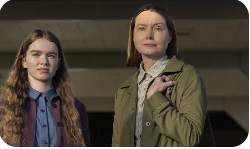
Characterisation is similarly mixed. Cage, as Joseph, brings his usual committed intensity; the arbitrary eccentricities of his performance fit the film’s off-kilter tone. He plays a father burdened by prophecy, fear and devotion, with a strictness that borders on cruelty and a desperation that makes him compelling. Jupe, as the Boy, faces the unenviable task of playing both an innocent on the cusp of discovery and a being of unimaginable power. The film gives him some vivid moments—yanking a snake from a woman’s throat, telekinetically exerting force—but at times his performance feels underwritten or inconsistent, switching between naïveté and savior-complex with little in between. One review notes: “Jupe gets stuck playing a naïve boy … and an all-powerful force … depending on the scene.” FKA Twigs, while visually striking and ethereal in her part, is given little dramatic arc beyond maternal fear and wonder. Secondary characters, including the sinister child “Stranger” (Isla Johnston), exist as threatening symbols rather than fully fleshed players, which makes their arcs feel thin and their motivations less compelling.
Thematically, The Carpenter’s Son has much to consider. At its heart is the question of power, responsibility and identity: what does it mean to be divine yet human, to possess supernatural gifts but live under earthly limitations? The father figure resists the boy’s power for fear of what it might incite; the boy resists his father’s teachings because he senses a destiny beyond mere carpentry and obedience. The film also plays with temptation (the Stranger attempts to lure the Boy toward a darker path), rebellion, religious orthodoxy and fear of the unknown. One reviewer remarks: “Little by little, the Boy begins to realize he’s not like the other children in the village… The one figure who seems to know who or what he truly is is a threatening young girl … she keeps trying to tempt the Boy into embracing his dark side.” The setting of Roman Egypt, the constant moving from village to village, the sense of hiding from both human suspicion and demonic forces, all contribute to the sense of spiritual warfare. Whether this deeper undercurrent rises to full coherence is debatable, but the attempt is noteworthy.
One strength of the film is its willingness to embrace ambiguity and to forego explicit theological exposition. The film does not simply retell the gospel in straightforward fashion; it picks up an apocryphal text, plays with its possibilities and leans into discomfort—both for believers used to reverent treatments, and for genre fans used to clear horror tropes. The visceral imagery—blood, leprosy, affliction, tunnels of gloom, visions of hell—makes a strong impression. As SlashFilm observes, the film uses “visions and nightmares to convey its horror, as danger and temptation lurk in every dusty corner.” The feeling of dread is heightened by a muted, earthy colour palette, sound design heavy on echo and whispers, and a general tone of unease rather than jump scares. That atmosphere is one of the film’s high points.
On the flip side, this same atmospheric emphasis can be its weakness: many sequences feel inert or under-driven. While the film is billed as horror, it often falls back into familial drama, prolonged dialogue scenes of the father admonishing the boy, the mother mediating, the boy wandering. Some viewers may find the slow build and minimal payoff frustrating. One critic writes: “It’s a bad movie … simply because it feels like you are watching paint dry for an hour and a half.” The resolution, when it comes, feels inevitable and somewhat predictable: the Boy accepts his power, confronts darkness, the father realises his limitations—but the film does little to surprise, twist or challenge the viewer beyond the initial novelty of its backdrop.
Another thematic area worth discussing is the film’s handling of religious content. For a mainstream studio-released film (via Magnolia Pictures in the U.S.), the choice to depict Jesus’s childhood full of supernatural horror is bound to provoke debate. Some may find the reinterpretation disrespectful or sensationalist. The German Wikipedia entry already records criticism that the portrayal is “blasphemous,” “sick” or an “affront to believers.” On the other hand, the filmmakers seem to have approached the material with seriousness: Cage stresses that “everybody approached this movie as though the material was something sacred … it was emotionally raw; it was vulnerable.” Whether this reverence is felt by viewers may depend on one’s beliefs and expectations. If you go into the film expecting a traditional biblical drama or straightforward horror flick, you may end up dissatisfied. But if you approach it as an art-horror piece with theological murkiness, the film has more to offer.
In terms of reception, early critical reviews are mixed. On aggregator sites like Rotten Tomatoes the consensus is lukewarm: though the idea is praised for being “interesting,” execution is questioned. Some critics emphasise that the film’s perspective is “cockeyed,” which undermines its ability to emotionally resonate. Others find meaningful value in the performances and the aesthetic ambition: IGN, for example, gave it a positive review noting deeply psychological hues. That range of responses indicates that the film will likely be divisive—some viewers will value its originality and mood, others will be frustrated by its uneven storytelling and requiring faith in its aesthetic rather than plot.
The performances deserve individual comment: Cage is predictably watchable; his intensity grounds what could have been a wildly incoherent film. His portrayal of Joseph is at once paternal protector, anxious keeper of secrets, and meek man under the divine burden of his son’s power. Jupe carries much of the film’s narrative weight and while he is uneven, there are moments of genuine curiosity and fear in his portrayal of the Boy coming to terms with his nature. FKA Twigs, though limited in screen time, brings a spectral maternal presence that fits the film’s tone. The film also makes bold choices in its visual design: the leper colony, the vision scenes of Hell, the moment of the snake being expelled from a woman’s throat—these stand out for their ambition, though some may find the execution less polished (for example, the Hell imagery feels more awkward than terrifying, according to some reviewers).
From a structural standpoint the film’s weaknesses emerge in its balance of exposition and action. At about 94 minutes (as per Wikipedia) it is relatively short, yet feels padded in places. Scenes of walking, waiting, action interrupted by long silences dominate the middle act. It sets up conflicts (the Boy’s powers, the Stranger’s temptation, Joseph’s fear) but the emotional arcs sometimes stall. The stakes feel large—divine vs demonic, family vs fate—but the payoff feels muted. The dramatic confrontation is filtered through allegory more than story, which can be either a strength or a liability depending on your taste.
In conclusion: The Carpenter’s Son is a film of considerable ambition and provocative idea. It may not fully deliver in terms of pacing, clarity or emotional payoff, but it stands out because it dares to do something unusual with a sacred figure and genre conventions. For viewers intrigued by religious horror with existential overtones, this film will have moments of fascination and strangeness. But for those expecting a tight narrative, strong character development and traditional horror thrills, it may disappoint. In the end, the film’s success lies less in the story it tells and more in the atmosphere it evokes—a dusty, haunted childhood of the divine, caught between obedience and power, prey to forces seen and unseen. If you approach it with patience and openness to mood over mechanics, it may reward; if you approach wanting conventional clarity, you might walk away scratching your head.