Summer of 36 Review 2026 Tv Show Series Cast Crew Online
There are television series that entertain, and then there are those rare productions that remind us why storytelling remains one of humanity’s greatest art forms. This outstanding limited series belongs firmly in the latter category. From its intricate plotting and extraordinary performances to its breathtaking scenery and thoughtful historical connections, every aspect of the production demonstrates a level of craftsmanship that is increasingly difficult to find in modern television. It is not simply a drama—it is an immersive experience that respects its audience’s intelligence while rewarding careful attention to every detail.
What impressed me most from the very first episode was the confidence of its storytelling. Rather than relying on constant twists, sensational cliffhangers, or exaggerated emotional manipulation, the series allows its narrative to unfold naturally. Every revelation feels earned. Every conversation serves a purpose. Every character, even those with relatively limited screen time, contributes meaningfully to the larger story. The result is a series that feels rich, layered, and emotionally satisfying.
The writing deserves enormous praise. The plot is intelligent without becoming inaccessible, complex without being confusing, and suspenseful without sacrificing emotional depth. Too often contemporary television mistakes complexity for quality by introducing endless subplots that ultimately lead nowhere. This series takes the opposite approach. Every storyline is carefully constructed, with each thread eventually connecting to create a complete and rewarding picture. Nothing feels accidental. Every decision made by the writers reflects careful planning and remarkable discipline.
The pacing is another remarkable achievement. In an era when many streaming productions either rush through important moments or stretch simple stories over far too many episodes, this limited series finds the perfect balance. It gives dramatic moments room to breathe while maintaining a constant sense of momentum. Each episode builds naturally upon the previous one, creating a compelling rhythm that makes it almost impossible to stop watching.
One of the series’ greatest strengths lies in its exceptional acting. Every member of the cast delivers performances that feel authentic, nuanced, and emotionally truthful. There are no weak links. The principal actors create characters who are deeply human, full of contradictions, vulnerabilities, strengths, and flaws. Their emotions never feel exaggerated or artificial. Instead, they communicate complex inner lives through subtle expressions, body language, and restrained dialogue.
The chemistry between the actors is equally impressive. Relationships develop organically rather than through forced dramatic devices. Friendships, romances, rivalries, and family dynamics all feel believable because they are grounded in genuine emotional interactions. Even moments of silence carry enormous weight, demonstrating that outstanding acting often depends more on what remains unsaid than on lengthy speeches.
The production design deserves special recognition. Every location, costume, piece of furniture, and architectural detail contributes to the authenticity of the world being portrayed. Nothing appears random or merely decorative. Instead, every visual element enhances the narrative while reflecting the cultural identity and historical period of the story.
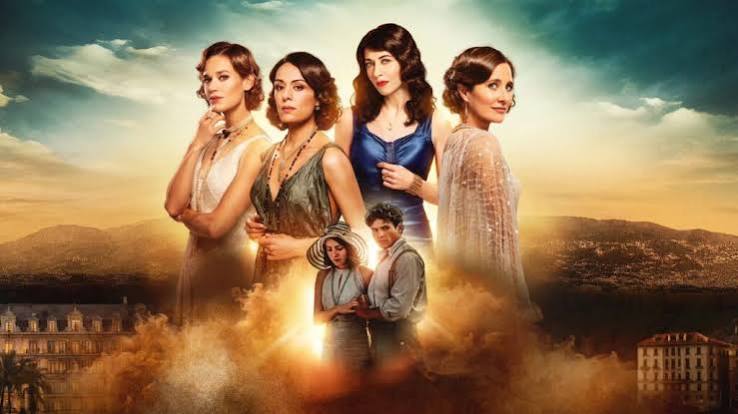
The scenery is simply breathtaking. France has long possessed some of the world’s most beautiful landscapes, cities, and historical architecture, but this series captures them with extraordinary elegance. Every frame feels carefully composed, almost like a painting. Whether depicting grand public spaces, intimate interiors, charming villages, or sweeping countryside, the cinematography consistently elevates the storytelling. The visual language of the series is sophisticated without becoming self-indulgent.
Lighting also plays a significant role in creating the show’s atmosphere. Warm natural light, carefully balanced shadows, and subtle color palettes create emotional resonance that perfectly complements the narrative. The cinematographers understand that beauty should never distract from the story but instead deepen the viewer’s emotional engagement.
Perhaps what impressed me even more than the visuals was the series’ thoughtful integration of historical context. Rather than using history merely as a decorative backdrop, the show treats historical events with seriousness and respect. The connections between personal stories and larger historical developments enrich every episode, reminding viewers that history is ultimately shaped by ordinary people facing extraordinary circumstances.
The writers clearly invested significant effort into researching the period. Historical details never feel like classroom lectures. Instead, they emerge naturally through conversations, social customs, political developments, and personal decisions. This subtle approach allows viewers to learn while remaining fully immersed in the drama.
One cannot discuss this production without acknowledging the unmistakable influence of French culture and artistic tradition. There is a distinctive elegance throughout the entire series that feels uniquely French. It is present not only in the visual aesthetics but also in the storytelling itself. The series values intelligence over spectacle, character over action, and emotional complexity over simplistic moral judgments.
French cinema and television have long demonstrated an appreciation for subtlety, and this series continues that tradition beautifully. Rather than dividing characters into heroes and villains, it presents individuals who make difficult choices under complicated circumstances. This moral ambiguity makes the story infinitely more compelling because it reflects the complexity of real life.
The dialogue deserves equal praise. Conversations feel natural while remaining intellectually engaging. Characters speak with purpose, and even seemingly ordinary exchanges reveal important emotional or narrative information. There is no unnecessary exposition, no repetitive explanations, and very little dialogue that exists solely to fill time.
The musical score also deserves recognition for its restraint and sophistication. Rather than overwhelming emotional scenes with excessive orchestration, the music enhances the atmosphere while allowing performances to remain at the forefront. Silence is used just as effectively as music, demonstrating remarkable confidence from the creative team.
Watching this series inevitably invites comparisons with many contemporary television productions, particularly large-budget American streaming dramas. One example that comes to mind is The Residence, created by Shonda Rhimes for Netflix. I have long admired Shonda Rhimes and genuinely consider myself a fan of her work. She has created some of television’s most entertaining and influential series, demonstrating remarkable talent for compelling characters, sharp dialogue, and addictive storytelling.
However, after experiencing this French limited series, the contrast becomes impossible to ignore. While The Residence offers fast-paced entertainment and an engaging mystery, its storytelling often feels content to skim the surface of its themes and characters. Plot developments frequently prioritize momentum over emotional depth, and many characters serve the mechanics of the mystery rather than existing as fully realized individuals.
By comparison, this series demonstrates what television can achieve when every creative decision is guided by patience, artistic confidence, and respect for narrative complexity. Instead of rushing from one surprise to another, it invites viewers to observe, reflect, and emotionally invest in every character’s journey. The mystery is important, but it never overshadows the humanity at the center of the story.
That distinction ultimately makes all the difference. Great television is not measured solely by how effectively it surprises its audience but by how deeply it moves them. This series succeeds because its emotional impact grows steadily with each episode. Long after the final credits roll, the characters remain vivid in the viewer’s memory.
Another admirable quality is the show’s refusal to underestimate its audience. It trusts viewers to notice visual details, understand subtle emotional shifts, and appreciate historical references without constant explanation. This confidence creates a far more rewarding viewing experience because the audience becomes an active participant in interpreting the story.
The editing also deserves praise. Every scene transitions smoothly into the next, maintaining narrative coherence while gradually increasing dramatic tension. Flashbacks and historical references are integrated seamlessly rather than interrupting the flow of the story. The overall structure reflects exceptional planning and editorial precision.
What makes this series particularly memorable is the harmony between all its creative elements. Outstanding acting alone cannot save weak writing. Beautiful cinematography cannot compensate for shallow characters. Historical authenticity means little without emotional resonance. Here, however, every department works together toward a shared artistic vision. The result is a production where writing, directing, acting, music, cinematography, editing, and production design complement one another perfectly.
The limited-series format also proves to be an ideal choice. Rather than extending the story unnecessarily across multiple seasons, the creators tell exactly the story they intend to tell. There is no artificial padding, no repetitive conflicts introduced merely to prolong the narrative, and no sense that commercial considerations have compromised artistic integrity. Every episode matters.
Perhaps the highest compliment I can offer is that this series reminded me why international television deserves far greater recognition. For too long, many viewers have automatically assumed that the most ambitious television comes primarily from Hollywood. Productions like this demonstrate that extraordinary storytelling flourishes around the world. French television, in particular, continues to produce sophisticated dramas that combine artistic ambition with emotional accessibility.
This series represents the very best of contemporary television: intelligent writing, unforgettable performances, magnificent cinematography, meaningful historical context, elegant production design, and emotionally resonant storytelling. It is ambitious without becoming pretentious, visually stunning without sacrificing substance, and intellectually engaging without losing its emotional heart.
To everyone involved in bringing this remarkable production to life—writers, directors, actors, cinematographers, costume designers, composers, editors, and the entire production team—thank you. You have created something genuinely special, a series that demonstrates television can still be both entertaining and profoundly meaningful.
And finally, thank you, France, for producing such an exciting, intriguing, touching, and exquisitely executed television series. It is a reminder that elegance, intelligence, historical richness, and emotional depth can coexist beautifully on screen. Summer of ’36 is not simply one of the finest limited series I have watched in recent years—it is a benchmark against which future historical dramas should be measured. It deserves international recognition and stands as a shining example of what exceptional television can achieve when artistry is placed above formula.