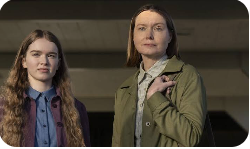
Fackham Hall 2025 Movie Review
“Committed to the bit” may be the perfect way to describe “Fackham Hall,” the new satirical historical comedy written by brothers Jimmy and Patrick Carr — in collaboration with Steve and Andrew Dawson and Tim Inman — and directed by Jim O’Hanlon.
Marrying the attention to detail and luxuriousness of a period drama like “Downton Abbey” or “Upstairs Downstairs” with the stupidity of a Monty Python or ZAZ film, “Fackham Hall” delivers just over an hour and a half of nonstop gags in the form of puns, wordplay, bodily humor, and slapstick stunts. And yet, it also somehow finds time for a dizzying amount of story.
Following a favorite BBC miniseries storyline, the 1930s-set film takes place primarily at a massive English manor. There, the put-upon oldest daughter of an aristocratic family has to choose between marrying out of duty or desire. After her flighty younger sister (Emma Laird) runs from the altar and into the arms of the local manure man, Rose Davenport (Thomasin McKenzie) becomes the next in line to marry their unappealing cousin (Tom Felton), the presumed heir to Fackham Hall. But that plan, worked up by Lord and Lady Davenport (Damian Lewis and Katherine Waterston), gets complicated when a handsome pickpocket named Eric (Ben Radcliffe) mistakenly lands a job at the estate and sets his sights on Rose.
The affair grows less decorous in farcical scenes of upstairs and downstairs life — kitchen staff toiling away on blunts, a trigger-happy shooting party, and cockney pub patrons breaking out in song — and the various side plots. At one point, the film takes a sharp turn into “Gosford Park” territory, introducing a murder, a diligent but hapless inspector to solve the crime, and more succession talk. But even before that, a dizzying gallery of characters pop in to satirize period drama tropes or — like a fictional J.R.R. Tolkien composing Orkish — British culture at large.
The film is bursting with witticisms, pop culture references, cheap gags, and signs scrawled with various puns, including “Tailor Swift,” to varying comic success. With nearly 280 jokes crammed in, according to the writers’ count, there’s barely time to digest the jest before it’s on to the next bid for a laugh.
That’s not to say that the film’s over-the-top approach to comedy doesn’t work, or that it hasn’t been done before. Much like “Airplane” or “The Naked Gun,” “Fackham Hall” succeeds because it effectively skewers its target genre, and its top-tier actors know how to deliver a joke to its furthest possible endpoint.
Like much of the supporting cast, Lewis and, especially, Waterston capitalize on the fact that they’re just as at home in a serious period drama as anything else, playing Lord and Lady Davenport straight enough to make their ridiculous behavior land. Meanwhile, McKenzie and Radcliffe share a winsome screwball chemistry, literally falling over themselves and each other to profess their love. But even with actors who understand comedic styles and timing, “Fackham Hall” wouldn’t work as well without the hall itself.
The effort put into bringing to life the bustling fictional manor, which is actually an ancestral home in Liverpool, is remarkable given that we’re talking about a film that thrives on bathroom humor. From the cramped servants’ quarters filled with everyday items to the gilded, richly carpeted upstairs spaces and the garments that go with each, the level of craftsmanship rivals that of a big-budget period drama, while still including farcical details, like a wonky melting snowman at the grand entrance, to keep it in a certain realm.
The relentless spoofing is, fortunately, buttressed by a convincing backdrop for marrying British comedy to the historical drama. It’s all lovingly shot by director of photography Philipp Blaubach and polished to a degree that might even send Julian Fellowes into admiration. Those aspects of the bit — relentlessly pursued from the opening credits to the final scene — keep the film moving and energized, with enough reason for the audience to still be looking around for jokes 100, 200, or nearly 300 in.