Dr. Seuss’s the Sneetches 2025 Movie Review
The animated adaptation of The Sneetches (2025) — titled Dr. Seuss’s The Sneetches — offers a visually vibrant, musically lively update of Dr. Seuss’s classic short story about the star-bellied and plain-belied Sneetches, set once again on the shores of a beach where difference and division dissolve into a shared community. The film, streaming on Netflix, is directed by Bronagh O’Hanlon, written by Dustin Ferrer, and produced by Brown Bag Films. While reviews and aggregate ratings remain sparse (for instance, on Rotten Tomatoes the page currently lists zero recorded reviews), the early commentary reveals a mixed but generally favourable reception.
One of the film’s major achievements is that it retains — and in some ways enriches — the original Seussian moral: that arbitrary distinctions (in this case, whether a Sneetch has a star on its belly or not) have no real bearing on value, and that unity, empathy and curiosity are stronger than exclusion and prejudice. Reviewers note that the film wisely keeps this core intact rather than subverting it; as one write-up puts it, “We meet two kids who become friends and start to realize everything they have been told was a lie.” The adaptation offers what the review calls “a touching tale … learning some important lessons.” It’s easy to scheme this film as a gentle respect for the original, but it also does enough to feel modern: the narrative introduces a larger arc (including a storm on the island that forces cooperation between the two groups) — a departure from the simpler allegory of the book — which brings both added drama and new opportunities for thematic emphasis.
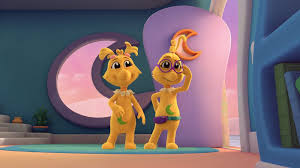
Visually, the film is bright, cheerful and well-executed in the modern digital animation style. While I won’t quote specific frame-by-frame analysis, reviewers generally found the aesthetic pleasing and appropriate for a family audience. The musical elements — the film being billed as an animated musical fantasy comedy — bring energy, and in places help lighten the heavier moral load. The voice-acting performances are serviceable, and the pacing, although extended compared with a short story adaptation, remains mostly engaging for younger viewers. That said, some adult viewers reported the film felt a bit slight for grown-up tastes: the moral is transparent, handling of the characters somewhat elementary, and the expanded plot occasionally lacks the brevity and charm of the original Seuss tale.
In terms of strengths, the film shines at what it sets out to do: bring Seuss’s message to a current generation in a format that invites young viewers, families, and educators to reflect on the idea of difference and belonging. The review from The Good Men Project acknowledges that “this was a pretty well done movie. A few modern twists were added, but these didn’t hurt the story in any real way.” Indeed, the addition of the storm forcing cooperation – while not in the original – works as a narrative device to illustrate how external pressure can bring even divided groups together, thereby reinforcing the film’s central theme of unity and shared humanity (or shared Sneetchness). The film thus turns the simple allegory into something with a bit more dramatic substance, which some viewers will appreciate.
Another strength is its accessibility: the film is clearly aimed at younger children and family viewing, and the storytelling, animation style, and moral clarity all support that aim. The review emphasises that it is a “great introduction to a kind of family movie” within the Seuss-universe.
For viewers wanting a gentle, visually engaging way to discuss inclusion and difference, this version of The Sneetches succeeds. It also works well for parents or educators who desire a conversation-starter: “What makes me think I’m different? What makes someone else different? How do we treat those differences?” could all emerge from a viewing.
However — and this is where the film is more uneven — there are several points of critique worth noting. First is the inherent challenge of adapting a short Seuss fable into a full-length or longer musical film format: the expansion risks diluting the simplicity and cleverness of the original. The Guardian in another Seuss context once noted that “Seuss’s books succeed because they are simple, funny, and don’t try too hard” and that adaptations tend to “muddy the simple moral message … by inserting unnecessary characters, pointless subplots, lame musical numbers and fist-gnawingly misguided jokes for the parents.” While that article was not specifically about this title, its point applies — and some reviewers felt this Sneetches film occasionally fell into those adaptation-pitfalls: the added storm plot may feel contrived; the musical numbers lean more adult-musical in style than the playful rhyme-structure of the original; and some of the ancillary characters feel underdeveloped, serving mostly as decorative rather than dramatic. One commentary pointed out that the modern twists, though harmless, didn’t “hurt” the story — but the implication is they also don’t fully elevate it.
Furthermore, adult viewers or longtime fans of the book may find the film lacking in the subtlety and rhythm of the original wording and imagery. The original fable’s strength lies in how efficiently it establishes the division, the interplay of star-and-plain bellies, the arrival of the entrepreneur, the folly of the Sneetches — all in relatively few words and images. Expanding that into a family film necessarily shifts tone: there’s more exposition, more character arcs, more spectacle. Some critics observe that the movie loses a bit of the “deadpan absurdity” and poetic simplicity that Seuss employed so well. The risk, of course, is that for younger viewers the expansion is fine — but for purists the charm might feel muted. In that sense, the film might work best as an introductory adaptation rather than a definitive reinterpretation.
Another limitation is that the film’s moral, while positive and well-handled, is displayed rather than deeply interrogated. Younger viewers will likely respond to the message of “we’re all Sneetches, no one kind is best,” and that is undoubtedly beneficial. But older children or adults may hope for a more nuanced exploration of structural inequality, power dynamics, or systemic prejudice beyond the simple binary of star-belly vs. plain-belly. The film does attempt to illustrate greed (through the entrepreneur figure) and show that the divide benefits someone who profits from it, but this aspect is less developed than it might have been. In the source story, this critique of profiteering and social hierarchy is tight and pointed; here it gets softened. Some reviewers wished the film had dug a little deeper, rather than staying comfortably in the “nice message for kids” lane.
The world-building, too, while competent, occasionally feels thin: the Sneetches’ society doesn’t always feel fully fleshed out, the motivations of characters beyond the two leads (the star-belly Stella and moon-belly Pearl) are lighter, and the conflict resolution — while satisfying — moves rather swiftly. Many viewers noted that the sweet conclusion (where differences are acknowledged and embraced) perhaps comes a little too quickly, rather than emerging naturally from a protracted struggle. In other words, the emotional stakes feel modest; the threat the two groups face is more symbolic than visceral, so while it works for its target audience, it lacks the emotional weight some family films claim.
On balance, the film’s tone remains upbeat and safe. That is clearly intentional, given its target demographic. What that means is that if someone approaches the film expecting a high-adrenaline spectacle or a deeply subversive take on prejudice, they may come away slightly underwhelmed. But if one is looking for a warm, colorful, entertaining introduction to these ideas, with musical flair, the film largely delivers. The Good Men Project review emphasises that it is “streaming now on Netflix” and positions it as a “pretty well done movie” for its audience.
In terms of educational or discussion value, the film is a good resource. For educators and parents, the updated version still retains the core Seuss message of tolerance and equality, and the more robust narrative gives room to pause and reflect: Why did the star-bellies and plain-bellies separate? What might be the real motivation behind distinguishing groups? Why did the Sneetches pay so much to apply/remove stars? What happens when differences are used for profit? Some of these questions are present more in the original text than is sometimes realized. The film offers an accessible medium to discuss these topics, perhaps even prompting older children to ask deeper questions about identity, status, division and collaboration.
What emerges clearly is that the film is unlikely to transcend its category and become a beloved adaptation for all ages in the way some Seuss works have done (for instance, Horton Hears a Who! achieved generally favourable reviews for its coherence and charm). Instead, it stands as a solid children’s film: enjoyable, visually appealing, morally uplifting, and well-made within its parameters — but not a masterpiece of depth or innovation. For fans of the source material, the film will likely be appreciated for bringing the story to screen in a respectful way, though some may prefer the original brevity and tone of the book. For first-time viewers or younger children unfamiliar with the original, this version may serve as a fine first encounter.
It’s also worth noting the release strategy and market context: as a streaming drop rather than a major theatrical event, the film aligns with current trends of children’s content being delivered directly to home viewers. This offers accessibility and convenience, though it also may limit the sense of event-ness or cultural impact. Because the critical sample is small (as of this writing the Rotten Tomatoes page shows no fully aggregated score) there’s less data on wider reception among critics and general audiences — though early commentary is positive enough to suggest the film will enjoy moderate success among its intended demographic.
If I were to summarise in one phrase: this is a gentle, colourful, family-friendly adaptation of The Sneetches that stays true to its source’s message and delivers it in a modern format — with some added narrative flourishes — but without digging deeply into the more complex layers of prejudice, status and exploitation that the story subtly evokes. The result is cheerful and worthwhile for young viewers and families, though less compelling for those seeking a richer or more challenging experience.
In conclusion: Whether you bring your children, or revisit it yourself, Dr. Seuss’s The Sneetches offers an engaging, morally clear and visually pleasant way to revisit one of Seuss’s most pointed social fables. It may not reinvent the wheel or become a touchstone of adult animation, but for what it aims to be — a family musical adventure with heart and message — it succeeds. For younger viewers, it may indeed inspire empathy, curiosity, and the sense that “we’re all Sneetches,” which is no small feat. For older viewers, it may serve as a reminder of the power of a simple moral story done well, and perhaps prompt them to revisit the original book, appreciate its spare elegance, and reflect on how far children’s media has come when it is possible to stream such meaningful content at home.