Cover-Up 2025 Movie Review
Trust doesn’t come easily for legendary journalist Seymour Hersh, and with good reason: you don’t spend a lifetime dragging safely guarded government secrets into the daylight without learning that truth has consequences. A Pulitzer Prize-winning investigative reporter who has made enemies in high places, Hersh carries his caution like armor, and “Cover-Up” makes that guardedness one of its key starting premises. The crawl suggests it only finally happened because Mark Obenhaus, who previously worked with Hersh on the Frontline film “Buying the Bomb,” could vouch for the crew. The film begins by admitting Academy Award-winner Laura Poitras (“Citizenfour”) spent almost 20 years trying to persuade Hersh to open himself up as a subject, and that frank admission immediately signals the doc’s key tension: access isn’t a given here, it’s negotiated, argued over, and always contingent.
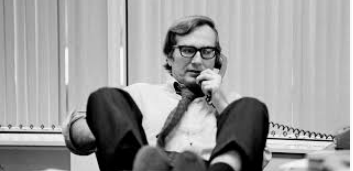
Inside that frame, the directors shape the documentary like a procedural about craft. With access to Hersh’s notes, plus primary documents and a dense weave of archival footage, it’s less interested in turning him into a myth than in showing the machinery: how sources surface, how evidence hardens, how the threat of retaliation hovers over every decision and how institutional rot means someone is always trying to cover the tracks. Hersh is punchy and prickly, profane, funny, suspicious, and fiercely principled; the film argues the job sometimes demands someone who refuses to be managed, because management is often just another word for control. In that sense, “Cover-Up” becomes not just a biography but an anatomy lesson, tracking the day-to-day power struggle embedded in investigative reporting.
The documentary’s backbone is the weight of Hersh’s legacy—work that forced the public to confront horrors and lies that institutions would’ve preferred to keep sealed. On one track, “Cover-Up” is an indictment of institutional violence and impunity inside the U.S. military and intelligence apparatus. Vietnam, Watergate, covert operations—chapter after chapter, the pattern repeats: secrecy, denial, then a bureaucratic shrug that pretends an internal review is the same thing as consequence. Hersh’s work on My Lai and Abu Ghraib lands here not as a victory lap but as moral evidence—journalism that forced the public to confront what was being done in America’s name. The film’s political thriller urgency comes from how it connects those dots: not a single scandal as an aberration, but a cycle sustained by incentives, secrecy, and the expectation that time will do what accountability won’t.
“Cover-Up” traces a familiar pattern across Vietnam, Watergate, covert operations, and beyond: secrecy, denial, then the bureaucratic shrug that treats an internal review like consequence. Hersh’s reporting on My Lai and Abu Ghraib lands not as legacy-polish but as moral evidence—journalism that forced the public to stare at what was being done in America’s name. And the film sharpens that threat by showing how power tries to manage the messenger: Henry Kissinger, then Nixon’s national security advisor, requests an audience with Hersh to butter him up and curry favor, the same access game where “scoops” are spoon-fed to reporters and printed as gospel.
But the doc’s nastiest indictment is reserved for The New York Times, arguing the obstacles to truth aren’t always external. Hersh describes a compromised culture of delay and caution, dressed up as responsibility—stories held, stalled, or softened under the guise of “national security,” sometimes until they’re no longer dangerous. Former Times editor Bill Kovach says it plainly: the paper “didn’t want to be beaten, but didn’t really want to be first,” and was “scared to death of being first on a controversial story that challenged the credibility of the government.”
That tension turns personal when Hersh pivots into corporate investigations in the 1970s and suddenly has to justify himself in memos—why investigate conglomerates at all? His Gulf + Western work becomes a case study in how modern corporations hide in complexity, and how the Times flinched because corporate America is also its ecosystem. Then comes the detonator: Hersh’s partner—Pulitzer-winning investigative reporter Jeff Gerth, who collaborated with him on corporate malfeasance stories—reads the Times’ own filings and finds an ugly conflict involving a top executive’s board-linked loan. Hersh explodes because you can’t posture as independent while taking money from the board, and the “my lawyer said it’s OK” defense sounds like every rationalization he’s spent his life exposing.
The doc’s rebuke of The Gray Lady feels, frankly, like a whole other Poitras documentary lurking in the margins—because once you start following that thread, you realize the cover-up isn’t only an act of government.
One of the film’s clearest ethos moments comes with Abu Ghraib. Hersh learns that CBS has the story too, but is hesitating, and he understands that the truth is too important to let personal victory come first—so he pressures them, effectively forcing the issue by threatening to publish and to expose CBS for sitting on it. Twenty-four hours later, it airs on “60 Minutes” with Dan Rather, and the documentary makes the point without sermonizing: sometimes the job isn’t just about finding the truth; it’s about preventing the institutional reflex from swallowing it whole.
Crucially, “Cover-Up” isn’t hagiography. It walks into the late-’90s JFK-book controversy around “The Dark Side of Camelot” and the specter of fraudulent letters, and it reframes what’s often flattened into “career-ending blunder”: Hersh didn’t even publish the material at the center of the uproar. The episode becomes a stress test of reputation—how narratives get weaponized, how perception becomes punishment, and how a reporter’s abrasiveness can be used as a substitute for engaging the facts. It’s a reminder that the culture loves the idea of a takedown, especially when it can be packaged as “character.”
And Hersh is allowed to be complicated: brilliant and complex, principled and stubborn to the point of combustion. There’s a scene where he melts down when the filmmakers reveal sensitive documents of his they’ve acquired—material that could potentially expose sources—and he threatens to quit the film on the spot. It’s not performative drama; it’s source protection as a sacred duty, a line he refuses to cross, even if it blows up the documentary.
By the end, the movie’s harshest argument isn’t only that the government lies—it’s that ecosystems are built to manage the damage of those lies, from intelligence agencies to newsrooms to corporate interests that fear the truth like it’s an extinction event. “Cover-Up” makes the eventual loss of a figure like Hersh feel immediate, not because he’s perfect, but because the conditions that produced a figure like him are being engineered out of existence. And the posture he represents is disappearing: the willingness to be unpopular, to be doubted, and to keep digging anyway.