Mononoke the Movie: Chapter III – The Curse of the Serpent 2026 Movie Review
Mononoke the Movie: Chapter III – The Curse of the Serpent continues the visually distinctive and psychologically complex world of the Mononoke franchise, bringing its supernatural atmosphere, traditional Japanese influences and exploration of human emotions into another cinematic chapter. As the third instalment of the film trilogy, it carries the expectations of audiences who have followed the enigmatic Medicine Seller and his encounters with spirits born from human suffering. The Mononoke series has always distinguished itself through its unusual animation, elaborate visual compositions and stories that explore the darker corners of human nature. This chapter continues that tradition, using supernatural horror as a way to examine fear, guilt, resentment and the consequences of unresolved conflicts. Rather than relying exclusively on frightening encounters or conventional horror techniques, the film belongs to a tradition of psychological storytelling in which the supernatural reflects the emotional and moral struggles of human beings.
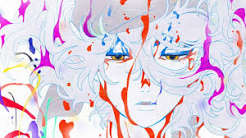
One of the most recognisable characteristics of the Mononoke franchise is its striking artistic identity, and The Curse of the Serpent continues to invite attention through its distinctive approach to animation. The world of the Medicine Seller is far removed from the familiar visual language of conventional animated films. Its elaborate patterns, unusual colour combinations, stylised environments and theatrical compositions create an atmosphere that can feel simultaneously beautiful and unsettling. The animation is particularly suited to a supernatural narrative because it allows ordinary spaces to become strange and threatening without depending on realistic imagery. Traditional Japanese artistic influences are an important part of the franchise’s visual vocabulary, giving its environments an almost dreamlike quality. The decorative details also contribute to the film’s atmosphere, suggesting that the world on screen is governed by mysterious forces that cannot always be understood through ordinary reasoning.
The visual design is more than a decorative element because it is closely connected to the psychological dimensions of the story. In the Mononoke universe, the appearance of supernatural beings is often inseparable from the emotions and circumstances that bring them into existence. This relationship between imagery and storytelling gives the franchise a distinctive identity. The elaborate backgrounds, expressive character designs and striking contrasts between colours can communicate uneasiness even before a scene becomes explicitly frightening. The serpent imagery suggested by the film’s title also fits naturally into a world where supernatural symbolism can represent human fears and hidden conflicts. Such imagery invites viewers to consider the relationship between the visible world and the emotional experiences concealed beneath it. The resulting visual language is likely to appeal particularly to audiences who appreciate animation as an artistic medium rather than simply as a means of presenting a conventional narrative.
At the centre of the franchise remains the Medicine Seller, whose mysterious personality and unusual methods make him different from the protagonists of traditional horror films. He is neither a conventional hero who defeats every enemy through physical strength nor a detective who solves mysteries through purely rational investigation. His encounters with supernatural entities involve discovering the Form, Truth and Reason associated with the mononoke. These elements give the stories their distinctive investigative structure, turning seemingly inexplicable supernatural incidents into complicated examinations of human behaviour. His calm manner and enigmatic presence create an interesting contrast with the fear and emotional turmoil experienced by the people around him. The character’s unusual approach to supernatural problems also allows the narrative to explore questions of responsibility, morality and the relationship between human actions and their consequences.
The Medicine Seller’s presence is especially important because he provides continuity throughout the franchise while allowing each supernatural mystery to develop its own identity. His role is not simply to rescue people from frightening situations. Instead, his investigations frequently reveal that the apparent monster is connected to human suffering, secrets or unresolved wrongdoing. This approach changes the audience’s expectations of horror. The central question is not merely how a supernatural creature can be defeated but why it has appeared and what circumstances have allowed it to exist. The result is a narrative framework in which horror becomes an opportunity to investigate complicated human relationships. The Medicine Seller’s restrained reactions also encourage viewers to concentrate on the disturbing circumstances surrounding him rather than expecting conventional displays of emotion from the central character.
The story of The Curse of the Serpent begins with an apparent return to peace following the previous supernatural incidents in the Ōoku. However, this calm proves temporary when Yukiko, the Emperor’s lawful wife, gives birth to a long-awaited male heir, only to lose the child shortly afterwards. The tragedy becomes the emotional foundation of the film. Yukiko’s grief is particularly significant because her position within the imperial household is closely connected to her ability to produce an heir. The loss of her child therefore represents more than personal sorrow. It also threatens her understanding of her place in the palace and the future she had imagined for herself. The film uses this tragedy to establish an atmosphere of uncertainty, in which private suffering gradually develops into a much larger supernatural crisis.
Yukiko’s character provides one of the story’s most important emotional perspectives. Her experience reveals the difficulties of living within a rigid social structure in which personal happiness is often secondary to institutional expectations. The Ōoku is a luxurious environment, but its apparent splendour conceals strict hierarchies, competition and considerable emotional pressure. Women living within its walls are expected to fulfil particular roles, and their identities can become inseparable from their relationships with the Emperor. Yukiko’s grief exposes the limitations of this arrangement. Her longing for a meaningful family life conflicts with the political and ceremonial responsibilities imposed on her. By focusing on her experience, the film gives its supernatural story a recognisably human foundation. The horror becomes more affecting when it is connected to the suffering of someone who has little freedom to determine the circumstances of her own life.
The supernatural mystery gradually becomes more complicated as strange events begin to disturb the palace. Unnatural tremors, mysterious scales and grotesque deaths suggest the presence of an enormous serpent-like spirit. The creature is not simply an unfamiliar monster introduced to provide excitement. Its appearance is associated with accumulated resentment and a history that extends far beyond the immediate tragedy. The Medicine Seller recognises that the spirit cannot be permanently defeated through ordinary methods. He must discover its Form, Truth and Reason before he can draw the Sacred Sword and complete the exorcism. This familiar structure gives the film a sense of continuity with earlier instalments while introducing a mystery with much broader historical implications.
The investigation takes the Medicine Seller into the hidden history of the Ōoku, revealing that the origins of the supernatural crisis lie approximately 150 years in the past. The story explores the establishment of the Inner Chambers under Ama-no-Tsubone, whose historical role becomes central to the film’s revelations. The relationship between the palace’s original foundations, the Mizorogi family and the tragedy unfolding in the present gradually becomes clearer. This historical dimension expands the narrative beyond the immediate experiences of its central characters. Instead of treating the haunting as an isolated incident, the film connects it to generations of concealed suffering and unresolved conflict. The revelation that the present crisis has roots in the institution’s distant past gives the supernatural investigation a larger thematic purpose.
However, the ambitious scope of the mystery also creates some narrative difficulties. The film introduces several interconnected secrets, historical revelations and supernatural developments within a relatively short running time. Each discovery adds another layer to the central mystery, but the rapid succession of revelations can make it difficult for viewers to absorb the emotional significance of individual events. Some of the relationships between characters and historical circumstances deserve more time to develop. The narrative’s complexity may be particularly challenging for viewers who have not watched the earlier two films. Although the central supernatural investigation remains understandable, the full significance of certain revelations depends on familiarity with the larger trilogy. The result is a story that can be fascinating while occasionally feeling crowded by the number of ideas it attempts to accommodate.
The film’s pacing is closely connected to this narrative ambition. The relatively brisk progression gives the supernatural investigation considerable momentum, moving from disturbing incidents to increasingly significant discoveries. The approach suits a story in which danger is spreading throughout an enclosed palace, but it also reduces the opportunities for quiet reflection. The most emotionally significant moments involve Yukiko’s grief and the historical suffering concealed beneath the Ōoku’s ceremonial appearance. Allowing these moments additional space might have strengthened their impact. Instead, the story frequently moves towards another revelation or supernatural confrontation before the previous development has had sufficient time to settle. This creates a noticeable contrast between the film’s intricate subject matter and its fast-moving presentation.
The direction by Tomoaki Koshida, with Kenji Nakamura serving as chief director, preserves the unusual visual sensibility that has distinguished the Mononoke franchise. The combination of stylised two-dimensional animation and three-dimensional elements creates an environment that frequently appears to move beyond the conventions of ordinary physical space. Elaborate backgrounds resemble traditional Japanese decorative art, while the compositions frequently resemble animated paintings. The visual approach allows the filmmakers to represent supernatural events in ways that would be difficult to achieve through conventional realism. Even familiar palace interiors can appear strange when viewed through the film’s elaborate patterns, distorted perspectives and constantly shifting compositions. These choices give the film a recognisable artistic identity while reinforcing its themes of concealed history and psychological instability.
One particularly notable aspect of the animation is its treatment of colour. Rich reds, golds and other vivid tones contribute to the palace’s ceremonial grandeur, while darker contrasts help establish an atmosphere of dread. The colours are frequently intense, and the compositions sometimes become deliberately overwhelming. Rather than maintaining a consistent naturalistic palette, the film uses visual contrasts to communicate emotional and supernatural disturbances. This approach can make individual sequences feel like moving illustrations from an elaborate mythological manuscript. The combination of decorative beauty and grotesque imagery also reflects the central contradiction of the Ōoku itself: an institution that appears magnificent on the surface but contains profound suffering beneath its polished exterior.
The serpent is particularly suited to this visual environment. Its immense scale and supernatural appearance offer the filmmakers an opportunity to expand the animation into more elaborate territory. The creature’s presence changes the atmosphere of the palace, turning its familiar spaces into locations of uncertainty and danger. Rather than relying solely on conventional creature design, the film draws on its established visual vocabulary to make the supernatural threat feel both mythological and psychologically disturbing. The serpent’s connection to accumulated resentment also gives its appearance symbolic significance. Its physical presence represents the return of conflicts that have remained concealed for generations. The animation consequently serves two purposes, delivering spectacular supernatural imagery while reinforcing the story’s broader themes.
The sound design and musical score are equally important to the film’s atmosphere. Taku Iwasaki’s music brings an energetic dimension to the supernatural confrontations, combining dramatic intensity with the film’s unconventional artistic style. The soundtrack avoids limiting itself to quiet, suspenseful passages, instead contributing to the sometimes chaotic energy of the action. The contrast between the unusual visuals and the forceful musical accompaniment creates an experience that is distinctly different from conventional animated horror. Sound effects also help establish the physical presence of supernatural events, particularly when the palace begins to experience unnatural disturbances. The music occasionally competes with the visual intensity for the viewer’s attention, but this excess is consistent with the film’s deliberately overwhelming aesthetic.
The voice performances contribute significantly to the characters’ emotional identities. Hiroshi Kamiya returns as the Medicine Seller, bringing a distinctive combination of composure and intensity to the mysterious protagonist. His restrained delivery suits a character who rarely reveals his thoughts directly. Atsumi Tanezaki voices Yukiko, whose emotional journey provides much of the film’s human drama. Her performance is central to communicating the character’s transition from anticipation and happiness to devastating grief and uncertainty. Miyu Irino, Kenjiro Tsuda and the supporting cast help give the palace’s complicated relationships their individual personalities. The vocal performances also help distinguish the different emotional perspectives within a story containing numerous characters and overlapping conflicts. In particular, the contrast between the Medicine Seller’s controlled manner and Yukiko’s emotional vulnerability gives the narrative an important dramatic balance.
Another significant element is the film’s examination of institutional power. The Ōoku is presented as a place where personal relationships are inseparable from social expectations, and where the consequences of decisions can extend across generations. Its elaborate ceremonies and strict hierarchy conceal inequalities that influence the lives of its inhabitants. Yukiko’s experience illustrates the emotional consequences of a system in which motherhood, status and political continuity are closely connected. The historical revelations deepen this examination by suggesting that the institution’s original foundations also contain troubling secrets. The film does not treat the supernatural crisis as something entirely separate from these social arrangements. Instead, the haunting becomes an expression of the conflicts that the institution has failed to resolve.
The themes of grief and resentment are especially prominent throughout the story. Yukiko’s loss provides the immediate emotional context, while the serpent represents a much older accumulation of suffering. These two dimensions of the narrative create a connection between individual tragedy and historical wrongdoing. The film suggests that suffering does not necessarily disappear simply because the circumstances that produced it have changed. Unacknowledged pain can continue to influence the present, sometimes in unexpected and destructive ways. This idea is consistent with the wider mythology of Mononoke, in which supernatural creatures emerge from intense human emotions. The film’s exploration of these themes gives its horror a moral and psychological dimension that extends beyond the spectacle of supernatural violence.
Nevertheless, the film’s approach to its central themes is not always equally effective. Its determination to connect personal tragedy with an extensive historical mystery sometimes makes the emotional narrative less immediate. Yukiko’s experience is compelling in its own right, but the introduction of additional characters, concealed relationships and historical explanations can distract from her individual struggle. The film also has to accommodate the Medicine Seller’s supernatural investigation, the palace’s political tensions and the demands of a climactic confrontation. Balancing all these elements within a single feature is a considerable challenge. Consequently, some of the revelations arrive before the audience has fully processed their implications, while certain emotional developments receive less attention than their significance might suggest.
The final act brings these different narrative strands together through an increasingly intense confrontation between the Medicine Seller and the serpent god. The Sacred Sword remains central to the resolution, since drawing it requires the Medicine Seller to uncover the supernatural entity’s Form, Truth and Reason. The battle provides the visual spectacle expected of the trilogy’s conclusion, with the serpent representing an exceptionally formidable supernatural opponent. The confrontation also places the Medicine Seller in an unfamiliar position of vulnerability, creating a different dynamic from his earlier encounters. However, the accumulation of revelations and the introduction of further developments during the climax can make the resolution feel less focused than the buildup suggests. The emotional and supernatural conclusions do not always receive the same amount of attention, leaving some viewers with a sense that the story is moving towards its ending too quickly.
As the final instalment of the film trilogy, The Curse of the Serpent also carries the responsibility of connecting the previous chapters. The progression from the newly arrived maid in The Phantom in the Rain to the elite concubines in The Ashes of Rage, and finally to the Emperor’s highest-ranking wife, provides a broader perspective on the women who inhabit the Ōoku. Each chapter examines different experiences within the same restrictive environment, gradually revealing more about its social and supernatural foundations. The third film brings these strands towards a conclusion by investigating the history underlying the palace’s recurring hauntings. Its connections to the earlier films provide additional significance for returning viewers, particularly those who recognise the recurring themes and narrative details. However, its dependence on the trilogy’s larger story also means that it is less suited to viewers looking for a completely independent supernatural adventure.
The film’s greatest distinction remains its willingness to combine artistic experimentation with traditional supernatural storytelling. Its animation does not attempt to imitate live-action cinematography or the naturalistic visual conventions of mainstream anime. Instead, it embraces an expressive style that makes the supernatural feel inseparable from the world surrounding it. Its use of colour, elaborate backgrounds and unusual compositions creates a visual experience that is recognisably different from conventional animated horror. At the same time, its narrative retains familiar elements of mystery, tragedy and confrontation. This combination gives the film an identity that extends beyond its plot and makes its visual presentation a central part of its storytelling.
There are, however, differences between visual ambition and narrative clarity. The film frequently introduces impressive images and intriguing ideas, but its fast-moving structure occasionally prevents them from reaching their full dramatic potential. Some viewers may appreciate the continuous stream of discoveries and spectacular sequences, while others may find the abundance of information overwhelming. The same contrast applies to the conclusion: its scale and ambition are appropriate for the trilogy’s final chapter, but the numerous developments can make the emotional resolution feel hurried. These limitations do not eliminate the film’s artistic achievements, although they affect how successfully its different elements come together.
Overall, Mononoke the Movie: Chapter III – The Curse of the Serpent is a visually ambitious conclusion to the animated trilogy, combining supernatural horror, Japanese mythology, historical mystery and an exploration of human suffering. Its elaborate animation, distinctive soundscape and emotionally charged premise give it a strong artistic identity. Yukiko’s tragedy and the Medicine Seller’s investigation provide complementary perspectives on grief, resentment and the consequences of concealed wrongdoing. At the same time, the complicated historical revelations and rapid pacing occasionally weaken the emotional impact of the story, particularly during its final act. The film’s unusual visual approach and its exploration of the Ōoku’s hidden history make it a substantial entry in the franchise, even when its narrative becomes overly crowded. It is particularly relevant to viewers familiar with the previous chapters, although newcomers may also appreciate its striking presentation and supernatural atmosphere. As a conclusion, it brings the trilogy’s central mysteries towards resolution while retaining the distinctive artistic qualities that have defined Mononoke.
The film was released internationally on Netflix on September 29, 2026, following the earlier instalments in 2024 and 2025. Its principal creative team includes director Tomoaki Koshida, chief director Kenji Nakamura and screenwriter Yasumi Atarashi, with music composed by Taku Iwasaki. Reviews have also highlighted the contrast between its striking animation and its crowded conclusion, reflecting the different ways its ambitious storytelling can affect viewers.