The Price of Confession Review 2025 Tv Show Series Cast Crew Online
“The Price of Confession” in 2025 stands out as one of those rare television thrillers that arrive quietly but leave a lingering echo, the kind that pushes viewers to question how much truth they really want to hear—and how high the cost of revealing it can be. While the premise may appear simple on the surface—an acclaimed journalist entangled in a violent crime, a confession that may or may not be the truth, and a justice system eager to close the case—the execution of the narrative elevates it into something far more layered. It becomes a meditation on power, morality, and the manipulation of truth in a world that insists it values honesty yet punishes those who speak it. The series grips the viewer from its opening moments, not through cheap shock tactics but through a slow-building tension and a pervasive sense of unease that accompanies every scene. It is a show crafted to unsettle, to provoke, and to draw the audience into its morally murky waters so deeply that by the final episode, one can no longer easily distinguish hero from villain, truth from fabrication, or confession from coercion.
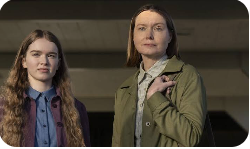
At the center of the show is the riveting performance by the lead actress, whose portrayal of a flawed, brilliant, and emotionally bruised journalist becomes the gravitational force around which the entire series orbits. Her character is written with an honesty rarely afforded to female protagonists in thrillers: she is neither saint nor seductress, neither purely victim nor aggressor. Instead, she occupies a messy, complicated middle ground, trying to navigate a world that wants simple labels and quick verdicts. Her confession—delivered early in the series but dissected throughout—is never allowed to settle comfortably as fact. Instead, it becomes a narrative puzzle piece that the show repeatedly turns over, revealing new edges and new shadows each time. The writing artfully uses her shifting emotional landscape to reflect the show’s larger themes about the instability of truth and the fragility of public perception in an age where narratives can be weaponized with terrifying ease.
The series excels in its atmospheric storytelling, using every frame to build a sense of claustrophobia and impending doom. The cinematography, drenched in cold tones and dim lighting, mirrors the psychological depth of the story. Interiors often feel tight and airless, reinforcing the sense that the protagonist is trapped not only by the legal system but by societal expectations, media scrutiny, and her own secrets. Exterior shots embrace an urban bleakness, highlighting how modern cities—supposed hubs of progress and transparency—can feel isolating and morally ambiguous. The visual language of the show speaks as loudly as its dialogue, from the subtle symbolism of mirrors and reflections to the recurring use of shadowed alleys and blurred windowpanes, suggesting constantly that the truth is always just out of reach.
Supporting characters are crafted with equal care, each one contributing to the densely woven narrative. The investigating officer brings a stern pragmatism to the story, his pursuit of justice complicated by personal biases and political pressure. He oscillates between empathy and suspicion, embodying the very conflict at the heart of the series: whether justice is about uncovering the truth or simply about choosing the most convenient one. Meanwhile, the protagonist’s circle—friends, professional rivals, estranged acquaintances—adds complexity to the emotional terrain. Their testimonies and recollections paint conflicting portraits of the central character, leaving the audience in a constant state of questioning. No one’s version of events is entirely reliable, yet none feels deliberately misleading. Instead, the show cleverly captures the way memory, trauma, and personal prejudices distort reality, making the path to the truth inherently unstable.
One of the show’s greatest strengths is its writing, which refuses to spoon-feed answers. Dialogue is sharp and often laden with double meanings. Conversations that seem straightforward on the surface unravel into deeper revelations upon reflection, and even minor scenes contribute to the overarching sense of mystery. The pacing is deliberate—some might even call it slow—but it is never dull. Instead, it gives the story room to breathe, allowing viewers the mental space to interrogate each twist rather than being overwhelmed by constant action. This methodical approach pays off in the final episodes, where the cumulative weight of small clues, emotional beats, and character choices collides dramatically, pushing the story to a powerful crescendo.
The narrative also takes a bold stance on social issues, weaving commentary seamlessly into the plot without feeling preachy or opportunistic. It delves into topics such as media sensationalism, gender bias, the exploitation of personal trauma, and the blurry moral boundaries in high-pressure professions like journalism. The show is particularly incisive in its critique of public outrage culture—how quickly society forms judgments based on partial information, and how irreversible the consequences can be for those caught in the spotlight. It asks difficult questions about the ethics of truth-telling: Does the public deserve to know every detail of a person’s life? When does transparency become a form of violence? And who gets to decide which version of the truth becomes the accepted narrative?
In terms of tone, “The Price of Confession” maintains a haunting intensity throughout. Even in quieter moments, there is a steady undercurrent of dread, as if danger is always just one step away. The background score amplifies this feeling, using minimalist arrangements and echoing motifs to heighten emotional impact. Silence, too, is used strategically—long pauses, unspoken glances, and still shots communicate volumes, adding to the series’ psychological depth. These stylistic choices give the show a cinematic quality, making each episode feel like a piece of a larger, intricately crafted film.
Thematically, the show is a masterclass in ambiguity. It does not simply reveal plot twists—it forces the viewer to participate in the act of interpretation. There are episodes where the protagonist appears unquestionably guilty, her motivations clouded by fear, guilt, or self-preservation. In others, she seems utterly victimized by a system too broken to allow for nuance. The oscillation feels intentional, as though the writers want the audience to experience the same uncertainty that haunts the characters within the story. This emotional and intellectual push-and-pull makes for a deeply engaging viewing experience, encouraging discussions long after the credits roll.
Critics of the series might argue that its slow pacing or heavy emphasis on psychological drama could deter viewers who prefer more action-driven thrillers. Indeed, the show is more concerned with exploring moral questions and emotional complexities than with delivering constant plot shocks. But this is precisely what sets it apart. Rather than relying on formulaic suspense, it builds tension from character development, ethical dilemmas, and the gradual unraveling of intertwined personal histories. For viewers willing to invest emotionally and intellectually, the payoff is immense.
Toward its conclusion, “The Price of Confession” does not bow to the pressure of providing neat resolutions or moral certainty. Instead, it leaves viewers with a carefully balanced ending—satisfying in terms of narrative closure yet intentionally open in its philosophical implications. The final scenes suggest that truth is not a singular entity waiting to be discovered but a shifting mosaic shaped by perspective, power, and circumstance. It challenges viewers to confront their own biases and assumptions, asking them whether they have been seeking truth or simply wanting a story that feels complete.
In its entirety, the show stands as a bold and nuanced addition to the 2025 television landscape. It is a story driven not just by mystery but by profound emotional and ethical questions—a rare blend of gripping entertainment and thoughtful commentary. “The Price of Confession” succeeds in being both a compelling psychological thriller and a resonant social critique, offering a narrative that refuses to be passively consumed. Its characters are deeply human, its themes timely, and its execution meticulous. For audiences seeking a show that not only entertains but challenges their understanding of truth, justice, and morality, this series delivers an unforgettable experience.