We’re Not Safe Here 2025 Movie Review
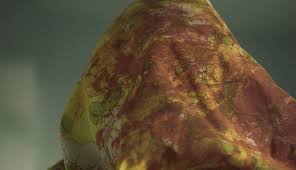
We’re Not Safe Here, the 2025 directorial debut of writer-director Solomon Gray, opens with a profoundly unsettling image—a figure draped in a blood‑soaked pillowcase, their identity and fate concealed behind an ominous hush—setting the tone for what promises to be a home‑invasion‑tinged horror story that ultimately unfolds as something more psychological than physical The film introduces us to Neeta (Sharmita Bhattacharya), a teacher by day and artist by night, grappling with creative block and mounting frustration so intense she stabs her blank canvas in fits of artistic despair—a visceral visual that captures her internal emptiness Into this fragile state walks Rachel (Hayley McFarland), a missing colleague whose sudden arrival and panicked state shatter the fragile security of Neeta’s home, provoking an uneasy dialogue that drives the early half of the film almost exclusively through Rachel’s disquieting narrative
Hayley McFarland’s performance as Rachel stands out: her wide‑eyed, haunted delivery commands the screen, binding the audience with her terror‑laden monologue even as the script occasionally veers into confounding details—like a story purportedly passed down from a deceased grandmother—that strain disbelief The camera’s stalking movements—peering around doorframes, through distorted glass—coupled with unnerving sound design, infuse Neeta’s once‑cozy domestic space with creeping dread Director Gray seems intent on blurring the lines between reality and psychological projection, creating an atmosphere where what’s real is always suspect, and what’s imagined feels intimately contagious
However, as the narrative progresses, the film increasingly succumbs to familiar horror tropes—nightmares within nightmares, hallucinations, more pillowcase‑headed apparitions—that, while still creepy in appearance, feel narratively thin and predictable Critics note that Gray gives away key visual clichés too early—such as showing the pillowcase figure before the buildup can fully register—undermining the intended suspense and building Though the premise evokes echoes of Smile, It Follows, and Ring, the film never quite settles into its own identity, instead hovering in the shadow of these better‑executed works
Despite structural missteps, some commentators appreciate Gray’s atmospheric strengths: Hope Madden praises the dreamlike terror the film achieves through sound design and set details—the cluttered, art‑cluttered home becomes a character in itself, every scribble and book contributing to the unease The wanderings of the camera and layers of ambient noise quietly reshape domestic familiarity into a sprawling labyrinth of fear Critics like Samantha McLaren admit that the first half’s restrained, dialogue‑driven approach—what might have been a liability—is instead where the film’s horror resides, largely carried by McFarland’s performance and the palpable dread in her voice Even Jonathan Berk concedes that visually there are strong, striking compositions and creative storytelling choices that hint at what Gray might achieve with better structural grounding
But these strengths are undercut by the film’s limited narrative ambitions. The bulk of the story unfolds within one location: Neeta’s house, where Rachel’s story gradually chips away at boundaries between listener and storyteller—particularly when Neeta begins experiencing the same haunting echoes—raising the question: is this supernatural contagion or psychological trauma manifesting?
disappointment mediaThe climax, rather than delivering catharsis, emphasizes ambiguity of fear itself as predator, with the ending suggesting that trauma, once shared, can become an inescapable shadow In the closing moments, Neeta is consumed by darkness—her artwork reduced to a single oppressive black canvas—while Rachel, ostensibly freed, may have only passed on the terror instead of banishing it
This unresolved denouement is divisive. For some, the lack of answers amounts to frustration: what began as a slow‑burn horror yields minimal payoff, leaving viewers unsatisfied by an ending that feels thin or incomplete Others, however, find merit in the open structure—Gray refuses to spoon‑feed closure, allowing the mind’s own shadows to take shape in the viewer’s imagination
We’re Not Safe Here runs 93 minutes and carries a PG‑13 rating for terror and some bloody images, including that unsettling pillowcase motif The film’s release across select theaters and digital platforms on August 22, 2025, marked it as a modest indie entry into the horror field—not destined for genre-defining acclaim, but worth noting for its atmospheric touches and solid lead performance That said, both Metacritic and Rotten Tomatoes had yet to publish any official reviews or ratings as of late August 2025, leaving broader reception still uncertain
In the end, We’re Not Safe Here is a film of contrasts—rich in mood and performance, but lean in story meat. Hayley McFarland’s Rachel anchors the film with her arresting delivery; the creeping sound design and the visual language of Neeta’s home craft a palpable dread; and Gray’s willingness to trust ambiguity over explanation gives the film a haunting, dreamlike quality. Yet the narrative’s overreliance on familiar horror beats, the premature reveal of shocks, and a finale that trades payoff for suggestion leave the film stranded between being compelling and incomplete. In real terms, it succeeds more as an atmospheric mood piece than as a satisfying horror narrative—an object lesson that scares may linger longer in silence and uncertainty than in the revealing glare of resolution. For those drawn to subtle horror, unsettled stories, and performances that feel dangerously intimate, We’re Not Safe Here may hold a shadowed fascination—but those seeking a coherent, heart‑pounding scare may find themselves adrift in its stylish half‑truths.