Udaipur Files: Kanhaiya Lal Tailor Murder 2025 Movie Review
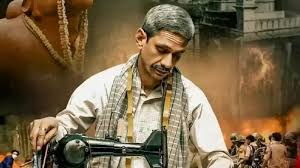
The cinematic adaptation of a real-life tragedy, Udaipur Files attempts to weave a gripping crime thriller from one of India’s most haunting acts of communal violence: the gruesome murder of tailor Kanhaiya Lal in Udaipur on June 28, 2022. The film, directed by Bharat S. Shrinate alongside Jayant Sinha and co-written with Amit Jani, Bharat Singh, and Sinha, portrays this harrowing event via the investigation of Ishwar Singh, an intelligence officer searching for buried motives beneath the horrific crime Captaining the screen is Vijay Raaz, portraying Kanhaiya Lal, flanked by Rajneesh Duggal as Ishwar and Preeti Jhangiani as Anjana Singh, lending gravitas to the attempt at dramatizing an event that still echoes in the public conscience
The film’s journey to the big screen was far from smooth. First slated for release on July 11, 2025, its debut was halted by a Delhi High Court stay, prompted by legal challenges and concerns over its impact on communal harmony and the right to a fair trial of the accused A petition by Maulana Arshad Madani of Jamiat Ulama‑i‑Hind raised objections to the depiction of sensitive religious themes, asserting the film contained “blasphemous” content and could inflame societal tensions; another petition came from one of the accused, warning the film’s portrayal could prejudice his trial The producers were even directed to screen the film for the petitioners and CBFC representatives before moving forward Following government revisional review—mandating six edits including a disclaimer and removal of potentially inflammatory scenes—the stay was lifted, and the film was eventually greenlit for Upon its release on August 8, 2025, across over 4,500 screens, Udaipur Files provoked strong public reactions. On X (formerly Twitter), audiences called it “truthful and powerful,” while netizens praised its bold narrative approach and emotional weight A premiere in Udaipur drew considerable emotional outpouring—Kanhaiya Lal’s sons attended, clutching a photograph of their father, openly sharing the family’s unresolved grief and continuing struggle for justice
Yet for all the public intensity, critical reception was sharply divided. Amit Bhatia of ABP News awarded it 3 out of 5 stars, noting that while Vijay Raaz’s performance and the weight of the tragedy provided reason to watch, the film ultimately fell short of doing justice to its subject
The Free Press Journal similarly rated it at 2 out of 5, calling it well-intentioned but flawed in screenplay, narration, music, and background score Hindustan Times was more critical—granting just 1.5 stars—calling the film unfocused, overambitious in juggling religion, politics, romance, and fragmented subplots, all while struggling under low production values Subhash K Jha of News 24 declared it one-sided, inflammatory, and provocative, suggesting its storytelling earns a tone that implicates an entire community
The film emerges as an unsettling gray zone: an earnest effort to spotlight atrocity, but one mired in controversy over narrative framing. Its intentions—to memorialize Kanhaiya Lal, to remind audiences of his brutal end, and to provoke reflection—are clear in the emotional reactions it inspired, especially among the family. The presence of that empty seat between Lal’s children, on which their father’s photograph rested, became a chilling symbol of both loss and unresolved justice
Yet the execution falters in balancing those emotional stakes with storytelling discipline. The screenplay’s attempts to weave romance, politics, religious symbolism, and investigative drama lead to a scattering of narrative focus. Critics found it overstuffed, unable to give real breathing room to characters beyond their symbolic roles. Production values—particularly music, pacing, and visual polish—were reportedly uneven, at times undermining rather than enhancing the film’s emotional impact
The political and social context amplified perceptions of bias. Former Rajasthan CM Ashok Gehlot accused the BJP of politicizing both the real case and the film’s narrative, arguing that justice remains elusive three years after the crime—and that the movie may be serving as a political tool rather than a conduit for healing Meanwhile, Kanhaiya Lal’s widow, Jashoda Sahu, penned an emotional letter to Prime Minister Modi, arguing that portraying the truth should not be treated as wrongdoing, and requesting that the ban be lifted so the public may “know the truth” and the family may find justice through visibility These developments reveal how the film’s meaning remains intertwined with ongoing political and legal struggles, further coloring its reception.
Amid so much intensity, Udaipur Files stands as a courageous, if deeply flawed, attempt to narrate a still-raw real-life tragedy. It is a public reckoning rather than a polished film; it carries the weight of memory, justice denied, and communal fault lines. Vijay Raaz’s performance anchors the film with authenticity, and the public outcry upon release—both in theaters and online—speaks to its emotional reach. But narrative and technical missteps dilute its impact, preventing it from achieving the quiet power of a restrained tragedy. The film attempts to do too much: document, indict, dramatize, memorialize—and in doing so, it loses focus.
Ultimately, Udaipur Files does not offer closure. It opens wounds—some maybe intentionally—and leaves viewers unsettled, wrestling with questions of faith, justice, political intent, and collective guilt. It draws attention to a horror too recent to be subsumed by history, demanding we confront—again—what it means to honor truth amidst ongoing divisions. For some, it may be too raw, too politically loaded, too uneven in craft to succeed as cinema. For others, its flaws pale next to the power of its emotional plea: that the dead cannot be forgotten, and that justice delayed is still justice demanded.