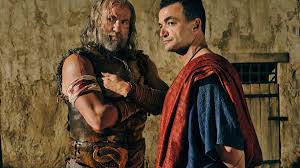
The Legend of Johnny Jones 2025 Movie Review
The Legend of Johnny Jones (2025) arrives as one of those films that feels like both an old-fashioned fable and a fresh modern reimagining, blending myth, grit, and raw humanity into a story that lingers far beyond the closing credits. Directed with a sweeping cinematic vision and grounded in meticulous storytelling, the movie follows the life of Johnny Jones, a figure who hovers between legend and man, myth and reality, a character whose journey becomes a mirror for the audience’s own struggles with ambition, legacy, and morality. The film does not just present Johnny as a hero or an outlaw; rather, it paints him with shades of complexity that reveal the cost of fame, the burden of choices, and the fragile balance between becoming a symbol and remaining a person. From the very first frame, the movie pulls viewers into a richly textured world where folklore collides with lived experience, and every scene carries both the weight of history and the spark of imagination.
The narrative unfolds through a layered structure, combining flashbacks, campfire tales, and direct depictions of Johnny’s odyssey, giving the sense that the audience is piecing together fragments of a larger myth. Much like how legendary figures from history are shaped by those who remember them, the film allows multiple voices to shape Johnny’s image: the loyal companion who saw him at his weakest, the rival who defined himself by trying to surpass him, the lover who both adored and despised him, and the community that both celebrated and feared him. This narrative choice injects a vibrant ambiguity into the story, forcing the viewer to question what really happened versus what was invented, and whether truth even matters when legend becomes larger than life. At the center of this interplay stands Johnny himself, played with remarkable charisma and restraint by the lead actor, who manages to convey equal parts vulnerability and unshakable confidence. His performance is nuanced, avoiding the trap of romanticizing Johnny’s darker decisions while also not stripping him of his magnetic, almost mythical aura.
Visually, The Legend of Johnny Jones is a feast, evoking the wide landscapes of American folklore while also plunging into the shadowy corners of human desire and desperation. The cinematography alternates between sweeping vistas that feel timeless and intimate close-ups that highlight the internal conflicts of the characters. The desert sequences in particular stand out, painted in golden hues that evoke both beauty and barrenness, symbolizing Johnny’s own pursuit of something greater than himself, even when it came at the cost of emptiness. The director uses silence and sound as powerfully as visuals; moments of hushed stillness speak louder than words, while bursts of music, both folk-inspired and modern, create an almost dreamlike quality that underscores Johnny’s journey as something simultaneously grounded in the past and resonant for the present.
Thematically, the movie is rich with explorations of legacy, morality, and the tension between truth and myth. Johnny Jones is not presented as a flawless hero but rather as a deeply flawed man who made choices that were sometimes selfish, sometimes brave, and often a mixture of both. The film does not shy away from his failings—betrayals, violence, and recklessness—but instead contextualizes them within the larger arc of his humanity. In doing so, it raises questions about how society constructs its heroes and villains, and whether the stories we pass down are shaped more by what we need than by what actually occurred. In one particularly striking scene, a group of townsfolk recount Johnny’s daring escapades with awe, while in the background, his former partner quietly shakes his head, remembering the blood and pain that those tales conveniently omit. This juxtaposition captures the heart of the film: the tension between mythmaking and reality.
Supporting performances elevate the film further. The rival-turned-reluctant-ally brings a raw intensity to the screen, serving as both foil and mirror to Johnny’s character. Their dynamic crackles with energy, embodying the eternal struggle between admiration and resentment, loyalty and rivalry. The love interest is far from a one-dimensional romantic subplot; instead, she is portrayed as a woman with agency, intelligence, and conflicting emotions, torn between the allure of Johnny’s charisma and the chaos it inevitably drags into her life. These relationships are what keep the story grounded, reminding us that legends are not built in isolation but in the ways people around them are touched, scarred, or inspired.
One of the most remarkable aspects of The Legend of Johnny Jones is its ability to maintain pacing across a nearly two-and-a-half-hour runtime. Rather than dragging or indulging in spectacle, it balances quieter reflective moments with bursts of action, giving the story a rhythm that feels almost like a ballad. The action sequences are gripping but not gratuitous, staged with clarity and weight rather than chaos. Every punch, every gunshot, every moment of violence carries consequences, both physical and emotional, ensuring that the audience never forgets the stakes. By refusing to glorify violence even as it depicts it, the film differentiates itself from standard genre fare, leaning instead into moral complexity.
What makes this film truly resonant, however, is the way it connects Johnny’s personal arc to broader human themes. His pursuit of immortality through legend reflects the universal human desire to leave a mark, to be remembered, to matter in the grand scheme of time. Yet the movie also exposes the emptiness of chasing recognition at the cost of authentic living. In its most poignant moments, the film slows down to show Johnny’s quieter struggles: his moments of doubt, his fleeting glimpses of peace, and his realization that the stories told about him may never capture the truth of his heart. This duality—between wanting to be known and fearing misrepresentation—makes Johnny deeply relatable despite his larger-than-life persona.
The script deserves praise for its lyrical dialogue, which manages to feel poetic without slipping into pretentiousness. Characters speak with a rhythm that suggests oral storytelling traditions, further enhancing the mythic tone of the narrative. The recurring motif of fire—campfires, burning landscapes, even the metaphorical fire of ambition—threads through the dialogue and imagery, symbolizing both creation and destruction. It’s in these carefully crafted details that the film earns its place as something more than entertainment: it becomes a meditation on storytelling itself, on why we tell tales, and how those tales shape our identity.
By the time the film reaches its climax, the audience is left with an emotional intensity that feels earned rather than manipulated. The final act does not opt for a neatly wrapped conclusion but instead leaves room for ambiguity, much like the legends it critiques and celebrates. We are left to wonder not only what truly happened to Johnny Jones but also whether it even matters. The legend has already taken on a life of its own, and in that sense, Johnny achieves the immortality he craved—even if the man himself is lost to history. This ending invites reflection, urging viewers to consider the legacies we leave behind in our own lives, whether in grand gestures or in the quieter imprints on those around us.
In terms of cultural relevance, The Legend of Johnny Jones arrives at a time when society is reexamining its myths and heroes, questioning the narratives we’ve inherited and the figures we’ve elevated. It feels both timeless and timely, drawing on archetypes of the past while speaking to contemporary audiences who are hungry for stories that acknowledge complexity rather than offering one-dimensional portrayals. Its blend of folklore, realism, and moral questioning positions it as not just a film, but an exploration of how culture itself is shaped.
Overall, The Legend of Johnny Jones stands out as a cinematic achievement, a film that is as entertaining as it is thought-provoking. With powerful performances, breathtaking visuals, and a narrative that embraces both myth and truth, it cements itself as one of the standout films of 2025. It is the rare kind of movie that appeals to both the heart and the mind, leaving viewers moved, challenged, and perhaps even inspired to reflect on their own stories, the legends they believe in, and the ones they might leave behind. In an era saturated with formulaic blockbusters and surface-level storytelling, this film dares to dive deep into the complexities of humanity, delivering an unforgettable experience that feels destined to endure in cinematic memory.