The Great Christmas Snow-In 2025 Movie Review
From the outset, the film presents itself as a feel-good seasonal offering: a man, Justin (portrayed by Joey Lawrence), freshly broken off from his engagement, retreats to a secluded winter cabin in hopes of some quiet reflection and recovery. But of course, serenity is disrupted: he finds himself snowed in with Jane (played by Amanda Fuller), the cousin of his ex-fiancée. As the blizzard rages outside, inside the cabin the romantic tension begins to build. The arrival of his ex-fiancée and her new partner only complicates matters further, forcing past grievances, unspoken feelings and second‐chance possibilities into the small space.
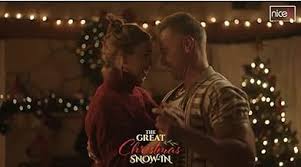
This setup ticks many of the cozy-Christmas-romance boxes: a picturesque snowy setting, enforced proximity (thanks to the storm), interpersonal awkwardness, and the promise of emotional transformation. From the visuals to the tone, the film leans into the warm holiday-cheer aesthetic: twinkling lights, snow-covered landscapes, crackling fires, and the “cabin in the woods” trope all evoke a safe, festive feeling. One review described the film as “like a cozy blanket on a cold night… sweet, simple and comforting.”
In terms of performances, the cast delivers what the genre promises. Joey Lawrence, long no stranger to lighter fare, is comfortable and affable, making Justin’s emotional map—hurt, wary, vulnerable, hopeful—believable enough to carry the story. Amanda Fuller brings Jane into relief as more than a mere foil or romantic interest: she is grounded and relatable, and their chemistry is one of the better-executed elements. According to audience commentary, “Melina Alves and Ricardo Chavez steal the show in particular with their perfect delivery and portrayals of their characters.” While I don’t have extensive details on every cast member’s turn, the general consensus is that the actors play the material cleanly, embracing the light-hearted spirit rather than striving for dramatic peak depth.
Where the film succeeds most is in its sheer friendliness. It knows what it is: a holiday romantic comedy meant to bring comfort, spark a smile, and reward the viewer with warm closure. For viewers looking for heavier thematic complexity or cinematic novelty, that’s not the promise—rather, the promise is safe, accessible, warm. One blogger writes: “The Great Christmas Snow-In… is clean and quite silly… I am happy to say that this movie is top-notch! The actors have great chemistry, the storyline pulled at my heartstrings, and the Door County setting is stunning! … one of those movies you can enjoy watching over and over!”
The setting – the snow-bound cabin – becomes almost another character. The blizzard, the isolation, the snow-silence all contribute to a suspended-in-time mood, and the cinematography takes advantage: wide snowy exteriors, cozy interiors with flickering lights, close-ups of characters softened by ambient light. The production design and lighting, as one viewer noted, “from the set design and wardrobe to the music and lighting, every detail adds to the magic.” In that regard, the film captures the very visual and emotional cues many holiday-film fans appreciate: the snow, the cabin, the forced time together, the flirtatious repartee and eventual healing.
Plot-wise, the film builds in predictable but satisfying ways. The enforced proximity allows old wounds and new possibilities to surface. Justin’s heartbreak and retreat allow character development; Jane’s presence forces him out of his spiral; the arrival of the ex-fiancée and her new boyfriend heightens conflict and forces choices. The script plays out familiar romantic beats—awkwardness, misunderstandings, turning points, revelations—but does so cheerfully and with sincerity. Because it embraces the formula rather than trying to subvert it, it succeeds on its own terms.
But that is also where some of the film’s limitations lie. For one: the film is very familiar. If you’ve seen a number of seasonal cabin-romances, you will recognise the tropes: the snowed-in scenario forcing connection, the ex showing up to complicate things, the gradual thawing of emotional distance, the final epiphany moment. The freshness comes less from the mechanics and more from execution, and some viewers did note that despite the setting, the “Christmas feeling” could have been stronger. One blogger commented: “Kept waiting for the Christmas part. … Just another ‘Christmas movie’ that really has no Christmas feel to it.” In other words: the film delivers romance very well, warmth very well, but for those seeking festive-specific hooks—elves, Santa, holiday village fairs, deeply themed Christmas‐mythology—it may feel a bit light.
Another weakness is pacing and depth. Because the film embraces the formula, character arcs are somewhat predictable and conflicts are resolved neatly rather than necessarily realistically. For example, the snowed-in scenario is a convenient device rather than something borne of deep realism, and the emotional journeys are lightly drawn. The representations of trauma (a broken engagement) and the process of moving on are more the foundation for the romantic connection rather than being explored in depth themselves. Some moments can feel scaffolded: miscommunication, accidental confessions, angry outbursts all happen in service of the romantic structure rather than as organically arising character dilemmas. If you pause to ask “would this happen in real life?”, the answer may be “perhaps, but maybe not so cleanly”.
The film’s balance of comedy and romance leans gently toward the latter, but the comedic beats are modest. There are some laugh-out-loud scenes (audience reviews mention them), but the humor tends to be mild rather than uproarious. That suits the cozy tone, but may under‐deliver if you’re expecting high-stakes or bend-the-genre comedy. One reviewer: “The cutest feel-good film perfect for the holiday season! … The perfect mix of comedy and romance.” if you enjoy mild humour with your holiday romance, you’ll be pleased; if you want belly laughs or wacky set-pieces, maybe less so.
In terms of themes, the film works with second chances, emotional healing, and re-discovering what one truly wants. Justin’s retreat is both physical (to the cabin) and emotional (from love, from pain) and his involuntary pairing with Jane triggers an awakening: the possibility that perhaps his original path (the engagement) was not aligned with his real self. Jane, in contrast, may be the grounded, present person who forces Justin to re-examine what he wants, not just what’s familiar. The arrival of the ex-fiancée and the new boyfriend acts as catalyst: confrontation with past choices, and a choice between continuation of retreat or a step forward. Thematically, it is a relatively light treatment of these—not deeply probing, but sufficient for the genre. It reflects the kind of hope that holiday films aim for: that even when things feel frozen (literally and figuratively), warmth can thaw, and second chances abound.
One area to praise is the inclusive feeling of the casting and characterisation. Several reviewers mentioned that the lead love interest (Jane) “didn’t fit the typical ‘skinny blonde’ mold we often see in holiday films. She felt like a real, relatable person with a normal body, and I could really see myself in her.” This is an encouraging shift, especially in a genre that too often relies on idealised prototypes. The film seems to embrace more realistic representation—even if still under the typical holiday rom-com gloss—and that adds resonance.
Another strength is re-watch value. Holiday romance films often aim for that: to be pulled out each December, to feel familiar and safe. As one reviewer put it: “Already starting to rewatch it.” The charm, the visual aesthetic, the emotional warmth: these give it a place in re-watch rotation for many viewers.
From a production standpoint, the film appears well-executed: the snow and cabin setting, the lighting and wardrobe, the cozy interiors all help, and the atmosphere works. The technical aspects don’t draw attention by being flashy, which is appropriate: the film wants you to relax in its world, not marvel at its cinematography. The pacing is moderate, not rushed, giving characters time to interact, reflect, and shift.
Now—what about its place in the grander catalogue of holiday films of 2025? It clearly slots into the “classic” vein: comfortable, romantic, snowy, heartwarming, family-friendly. It doesn’t push major boundaries, but it doesn’t need to. Its target audience—those wanting a gentle, festive uplift rather than edgy drama or high-concept twist—is well served. In a crowded field of holiday releases, the fact that multiple review-blogs flagged it as one of the better entries (“top-notch”, “instantly re-watchable”) suggests that among its peer group it stands out for sincerity and production value. However, it’s also worth noting that because the film plays so clearly to formula, some viewers may drift if they expect surprises. The comment that “events could have been anytime of the year” is telling: the Christmas-specific hooks are present but shallow, and the romantic cabin-in-the-snow scenario could have been transported to another season and still functioned. hat isn’t necessarily a fault—just a reflection of how genre films often operate—but it tempers the “festive” label somewhat.
If I were to place a balanced verdict: The Great Christmas Snow-In is a reliably pleasant holiday romance. It won’t upend your expectations of the genre, but it does what it promises with cheer, charm and warmth. It features likable leads, an attractive seasonal setting, and a cozy atmosphere. For viewers who appreciate the “snowbound cabin + ex’s cousin forced proximity + second-chance love” trope, this hits the spot. For viewers seeking more complexity, deeper conflict, or immersive Christmas mythology, it may feel lightweight.
Some recommendations for watching: If you’re planning a holiday-movie marathon and you want something comfortable, put on The Great Christmas Snow-In early in the lineup: it sets a warm tone, requires little suspension of disbelief beyond the snowy storm cabin device, and ends with a satisfying uplift. It’s ideal for viewers of all ages (family-friendly) and for those who want romance without too much angst. On the flip side, you might want to skip if you’re looking for something that feels very “Christmassy” in the sense of Santa, elves, major holiday rituals, or unique plot innovation. Also, if you prefer your romances to be more grounded or unpredictable, the predictable beats here might feel too safe.
In terms of emotional resonance: I found the film effective in delivering a gentle warmth. The snowy isolation of the cabin mirrors the emotional isolation of the protagonist; the forced shared space prompts not only romantic tension but introspection. The film uses the environment well: snow outside, fire inside, literal and figurative thawing. It evokes the feeling of a winter retreat, away from the noise of life, giving space to heal and connect. That emotional core is decent and carried out without too much baggage. It doesn’t wallow in sadness, but allows a measure of regret, retreat and renewal.
That said, the film could have deepened the emotional arcs a little more. For instance, while Justin’s broken engagement is the catalyst, the film leans more into the recovery-to-new-romance arc than fully exploring his emotional journey. Jane’s own internal world could have been richer, perhaps, though the genre constraints mean she is more a catalyst for Justin’s growth than a fully equal co-lead in terms of transformation. But this is a modest critique: for its aims, the film is competent and satisfies.
In conclusion: If you’re in the mood for a festive, light romance set in a snowy cabin, with likable characters, gentle comedy and warm resolution, The Great Christmas Snow-In delivers. It’s not a game-changer for the genre, but it doesn’t need to be. It embraces its formula, runs it well, and makes you feel good. For the holiday season of 2025, it is one of those safe bets you’ll likely enjoy going back to year after year.