She Walks in Darkness 2025 Movie Review
She Walks in Darkness (2025), directed and written by Agustín Díaz Yanes, is a slow-burning Spanish political thriller that plunges into the murky world of espionage, identity, and the long shadow of the Basque separatist group ETA. The film centers on Amaia (played by Susana Abaitua), a young officer of Spain’s Guardia Civil who abandons her previous life and assumes a deep undercover identity to infiltrate ETA’s networks and uncover hidden weapons caches in southern France and the Basque region.
From the outset, the film sets a tone of unease and claustrophobia: the viewer is led into a world where loyalties are uncertain, the line between self and role blurs, and the passage of years takes its toll. The narrative spans roughly a dozen years (1992–2004), a period of intense conflict and undercover operations in Spain. The use of archival news footage and real-life context helps root the story in a lived reality: we are not simply watching a thriller, but a story grounded in national trauma and the way intelligence work reshapes the lives of those who serve in its shadows.
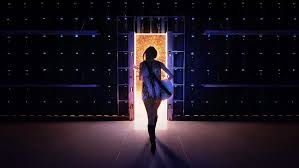
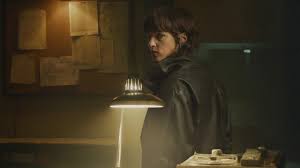
One of the film’s strengths lies in its atmosphere: Paco Femenía’s cinematography evokes the damp, grey, heavy skies of the Basque Country, the quiet tension of the safe houses, the furtive exchanges in cafés and apartments where a single glance or a tightened jawline signals far more than words. As Cineuropa’s review notes, at times the film “feels like a horror flick, such is the anguish and tension of its scenes.” There is little in the way of grand set-pieces; instead the drama is contained, internalized, the cost of espionage shown not in explosions but in the slow erosion of identity and personal life.
Abaitua’s performance anchors the film: navigating her dual existence, she must remain convincing to her ETA contacts while maintaining contact with her Guardia Civil handlers, while all the while sacrificing relationships, personal safety, even mental stability. Some critics point out that the character remains frustratingly underwritten at times — the fiancé she leaves behind, for instance, is barely defined — but Abaitua brings nuance nonetheless, the subtle oscillation between the woman she was and the woman she has to become. The supporting cast (Andrés Gertrúdix, Iraia Elias among others) bring reliable weight, though their characters occasionally lean toward archetypes: the dedicated handler, the hardened operative, the ideologue within ETA.
As a narrative, the film unfolds at a deliberate pace — it asks for patience. Some viewers will appreciate how the story slows the viewer down, compelling attention to detail, to dialog, to the toll of undercover life; others may find it too tedious or lacking in urgency. The review at MoviesR notes: “you will have to use your detective brain and watch attentively for the plot to make sense … if history is not your domain … this film requires attention and patience” Meanwhile DMTalkies is less charitable, asserting that the film is “incredibly boring” and uneven in writing. Thus, the film may divide audiences: those willing to engage deeply will find richness, while those seeking conventional thrills may feel under-served.
Thematically, She Walks in Darkness explores the nature of sacrifice, the cost of duty, the multiplicity of identity, and the creeping moral ambivalence of undercover work. Amaia leaves behind her previous life, her fiancé, her sense of normalcy; she must don a new persona and in so doing loses part of herself. As the film progresses, the boundary between her role and her true self blurs, and her empathy for some of those she is infiltrating grows. For example, she begins to sympathize with Begoña (Iraia Elias), a veteran of the cause who has also sacrificed family and self for the movement. The film underlines that in such clandestine operations the “enemy” is never entirely other, and the human cost of political violence affects all sides.
From a historical perspective, the film locates the viewer in one of Spain’s most troubled periods: the long campaign by ETA, the efforts of the Guardia Civil and other law enforcement agencies to infiltrate and dismantle the organization, the cross-border dimension into southern France, the political backdrop of Basque identity and Spanish state security. The director uses real footage and combinations of fact and fiction to evoke authenticity, rather than a sanitized version of events. This grounding lends the film weight, and at times the emotional impact of knowing that even fictional characters stand in for real lives adds to the gravitas.
Yet, the film is not without its limitations. Several critics highlight that while the film aims to be serious and ambitious, it sometimes fails to fully deliver the thrills of a spy film: pacing drags, tension ebbs, and the characters are drawn in broad strokes rather than deep internal landscapes. As noted on Rotten Tomatoes, some reviewers find the characters “one-dimensional” and the thriller lacks sufficient momentum. There is also a sense that the film perhaps errs on the side of caution: rather than taking strong editorial or moral positions, it opts for a more reserved tone, which some interpret as ethical restraint, others as missed opportunities for deeper probing.
Visually and technically, the film is polished: editing, production design, costume, art direction evoke the 1990s era convincingly; the sound design and photography envelop the viewer in ambient tension rather than relying on overt suspense cues. One reviewer praises how the external landscape — rainy nights, shadowy interiors, mist-encrusted Spanish-French border terrain — becomes almost a character in itself. However, the reliance on atmosphere and mood comes at the expense of dramatic propulsion: there are moments when the viewer asks: when will something happen? When will the infiltrator’s cover be blown? The film seems more interested in process, in the wait, in the cost than in cliffhangers.
Another element that might divide is the ideological framing. Some critics feel the film plays a conventional “state good / terrorists bad” line without fully interrogating the deeper political context of Basque separatism, societal grievances, or the moral ambiguities of intelligence operations. DMTalkies argues that “Agustín’s understanding of politics is ‘separatists bad, cops good’.” Others see the restraint as a strength: the film shows the horror of violence without moralizing or sensationalizing. It leaves the viewer to reflect on how straightforward the narrative of “enemy” can be when loyalty, identity, survival and system all intertwine.
Regarding emotional impact, while the film tries to show how the operation affects Amaia’s psyche, there is something of a missed opportunity: the broader cast and characters don’t always feel fully inhabited, the personal stakes (except for Amaia) sometimes feel peripheral, and the thriller mechanics occasionally overshadow the intimate human cost. Thus, while the toll on the operative is clear, the film could have dug deeper into the emotional wreckage and the aftermath of living two lives for years.
In sum, She Walks in Darkness is a film that offers more than surface-level thrills. It is a measured, somber exploration of espionage and identity, set in a real and fraught historical context. For viewers willing to engage with its methodical pace, its muted tone, its slow caustic burn, there is considerable reward: the tension builds not through spectacle but through observation; the danger is quiet, internal, psychological. The film may not satisfy those seeking non-stop action or blockbuster style pacing, but it presents a mature, textured take on the spy thriller genre. The performances are solid, the atmosphere immersive, the historical backdrop compelling.
My verdict: She Walks in Darkness is a thought-provoking, stylistically assured piece of cinema that occasionally stumbles in its momentum and character depth, but stands out for its ambition, tone and subject matter. It may not thrill in the traditional sense, but it haunts. If you are drawn to espionage stories that emphasize internal stakes and moral ambiguity, and you appreciate slow-burn tension over adrenaline, then this film will reward your patience. If you prefer crisp pacing and clear blockbuster suspense, you may find it wanting. Either way, it is a film worthy of attention and reflection.