Reflection in a Dead Diamond 2025 Movie Review
Hélène Cattet and Bruno Forzani have become two of the most distinctive voices working in contemporary European cinema. Their films Amer, The Strange Color of Your Body’s Tears, and Let the Corpses Tan fuse giallo, op art, pop-art comics, and sensory extremes into works that are completely and wholly their own. Their latest, Reflection in a Dead Diamond, is the most elaborate film yet, a kaleidoscopic thriller that is their take on a James Bond film, with influences ranging from Visconti’s Death in Venice and Christophe Honoré’s stage adaptation of La Tosca to the works of Andrzej Żuławski and the films of Satoshi Kon.
It’s Kon’s spiritual influence, with films such as Perfect Blue, Millennium Actress, and Paprika, that hovers most clearly over the film. Cattet and Forzani constantly shift time and characters, frequently change identities, and create narratives that seemingly compress into one another. The film’s narrative structure has a fundamental uncertainty about what memory is, what fiction is, and what performance is. At certain points there are meta-narratives which end as quickly as they begin. The filmmakers openly embrace this quick-paced and multifaceted structure; their edits are fast, aggressive, overwhelming, often intentionally difficult to follow. Split screens appear and vanish. Much like a diamond, the narrative has multiple faces and refracts into something new in each shot.
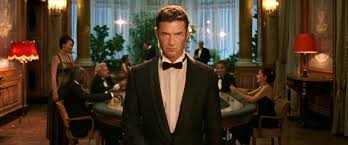
At the center of the film is John Diman, played by seventy-something Fabio Testi. “Diman” like “diamond,” is a pointedly symbolic name and a continuation of Cattet and Forzani’s meta-narrative play. Testi, who was cast after the directors saw his impressive late-career performance in Monte Hellman’s tremendous Road to Nowhere, brings a complex and strong performance to the film, even though he only plays the older version of the character. Opposite him, playing the younger John Diman, is Yannick Renier, the brother of acclaimed actor Jérémie Renier. Renier’s performance carries the right mixture of puzzlement, seduction, and sculpted beauty to embody the James Bond-esque Diman; he looks like a European model but also conveys the complexity and strength of a secret agent.
The opening shot sets the tone. Alcohol bitters and waves shimmer over a woman’s face and light reflects as if across the angular surfaces of a cut diamond. From there the film spirals outward: petroleum magnates threatened by assassination, execution by oil, corporate espionage, rings that function as razors or hypnotic devices, poisonous high heels, glittering dresses that record sound and emit bullets, a centipede crawling out of a mouth, sunglasses that pierce like X-ray eyes. A woman’s eye on the shore becomes pure abstraction.
The setting of the film is the Côte d’Azur, with its gorgeous beaches and natural beauty. Cattet and Forzani shoot the French Riviera as both hyper-luxury fantasy and lawless frontier: an environment where spies, magnates, assassins, and tourists all blur into one shimmering, poisonous mirage. The Riviera becomes a character as a coastline of waves that glitter like diamonds but are filled with the rot of the rich and envious. While the glamour is there, so is the toxicity.
The plot, or what can be called the plot, revolves around Diman’s orders from his boss to protect an oil magnate, Markus Strand (Koen De Bouw). Beneath this, however, lies a labyrinth of stories within stories, meta-movie transitions, hallucinations, characters doubling themselves, masks hiding faces, and faces hiding masks – characters pull off their faces to reveal a Russian doll-like existence, with multiple faces hiding under the original. Is the younger Diman even a spy or is he a projection, a cinematic imprint, a fictional role the older Diman may have once played? Or is he something Diman remembers incorrectly? At this point, it becomes obvious that understanding the plot is only secondary to the experience.
The multiplicity of female assassins, or rather, their faces under one another, deepens the film’s obsession with identity fragmentation. Every woman becomes the assassin Serpentik (Thi Mai Nguyen) because every woman might be wearing her mask. John begins to fear that the entire world is full of doubles. Even the diamonds he guards or exchanges become fake, which only makes sense if he is living not as a spy but as an aging actor reliving old roles inside a fractured memory chamber.
Cattet and Forzani shift reality when the narrative suddenly moves onto a movie set, where characters are shooting a film that mirrors the one we have been watching. A woman walks in on the filming of a scene and sees another woman pretending to be her. This kind of recursive meta-cinema would collapse under most filmmakers, but here it becomes another facet in the film’s diamond-like construction. This film’s deliberate slipperiness is grounded in its obsession with optical illusions and op art, as a direct continuation of the directors’ earlier work. Cattet and Forzani include animated panels to give the film a freer visual and narrative flow. The language of European comics permeates everything, especially through the involvement of artist Emanuele Barison, whose illustrations of the film’s comic segments allow it to breathe and function while providing a necessary narrative and emotional anchor.
For some, Reflection in a Dead Diamond may be frustrating or even outright boring. Cattet and Forzani are so committed to their style that character and plot almost evaporate, and there is barely an emotional thread in the film. However, none of that really matters. Character motivations blur, their identities shift, and the narrative changes so frequently that many viewers may feel distant. Those hoping for a coherent thriller may find the film to be tedious or hollow, but for the same reasons, those attuned to cinema as a sensory and structural experience may find the film to be tremendous. The refusal of an exacting narrative allows the film to operate as a surreal and hypnotic puzzle, which lets Cattet and Forzani succeed in making a satisfying and stylistic work. With Reflection in a Dead Diamond, the duo has crafted their most intriguing and multi-layered film, one that turns the spy-thriller genre into an intricate prism. It’s not just a James Bond film, but it’s a marvel of style, complexity, and cinema – and one of their strongest works yet.