One Hit Wonder 2025 Movie Review
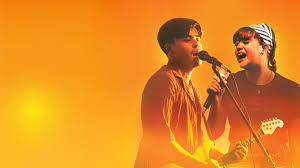
One Hit Wonder unfolds as a nostalgic ode to 1990s OPM (Original Pilipino Music)—a time capsule of cassette tapes, butterfly hair clips, and analog dreams—captured with affectionate precision in its production design: Coleman jugs, vintage soft drink bottles, period–appropriate money, and even background cameos of era icons imbue the film with a suffocatingly sweet sentimental charm Under the direction and writing of Marla Ancheta, the film charts the fated reconnection of two dreamers: Lorina (Sue Ramirez), whose voice once soared in a contest in 1984 before she relinquished her musical ambitions to follow a safe, academically oriented path, and Entoy (Khalil Ramos), an aspiring musician whose creative fire burns both for his legacy and for art out of filial devotion Their paths cross again a decade later in a record store, sparking a second-chance narrative that promises harmony in both melody and romance. Netflix sums it up simply: “When big dreams meet second chances, two dreamers Entoy and Lorina chase fame in the world of ’90s OPM. Will they make it?”
The film’s vibrant recreation of the mid‑’90s era—replete with nostalgic cues, from telebabad culture to the painstaking process of sending demos to record labels or hoping for radio airtime—resonates deeply with anyone yearning for a time before viral fame fell into the hands of algorithms and hashtags his sweetness, however, stands in stark contrast to the story’s execution, which critics have found often tepid. Ruchika Bhat of DMTalkies observes that despite Lorina’s nuanced duality—trying to balance dreams with pragmatic aspirations—her character remains underdeveloped, overshadowed by a romance that unfolds too quickly, built on montage magic rather than emotional substance Bhat points out that while Lorina’s grounded realism could have elevated the film, the script ultimately fails to follow through, settling for a bland, predictable arc rather than deep, character-driven storytelling
Entoy, the persistent musician, toes the line between endearing and intrusive: his decision to show up unannounced at Lorina’s workplace—pushing for a reconnection more rooted in his own nostalgia than mutual longing—flirts with creepiness, further undermining the romantic chemistry These two flawed characters are entrusted with a narrative that wants to explore themes of regret, reconciliation, and reinvention, but the storytelling feels half‑hearted: supporting arcs like Entoy’s relationship with his father—touched upon via poignant letters and generational pressure—are introduced but never fully explored Bhat’s verdict? Despite what seems like a promising premise, One Hit Wonder falls short—its romantic sparks sputter, its plot feels familiar, and its attempts at originality dissolve under uninspired execution, resulting in “a cookie‑cutter romance” that fails to deliver on its nostalgic promise
Yet the film’s structural and emotional shortcomings don’t overshadow its aesthetic appeal. The set design, wardrobe, and soundtrack (featuring beloved ’90s OPM tracks by Rivermaya, Eraserheads, Introvoys, Hungry Young Poets, and First Circle) draw genuine smiles for their authenticity and loving recreation of an era In interviews, the cast and director leaned into the nostalgic heartbeat of the film—reminiscence, they admitted, feels good, and there is beauty in reconnecting with past experiences, especially for viewers who lived through those analog days Khalil Ramos, who plays Entoy, elaborated on the emotional resonance of reliving a time when art felt more immediate—when you had to wait for a song to play on the radio or treasure a full vinyl playback before getting to your favorite track—highlighting how that tactile, intentional experience now triggers the same thrill as romantic nostalgia
Narratively, the film navigates between warmth and whimsy, but the pacing—nearly two hours—lags under the weight of predictable beats and underwritten character motivations The second-chance-at-stardom trope, while inherently compelling, misses its emotional mark here because viewers witness little growth or internal conflict from either lead; their chemistry relies too heavily on circumstance rather than a believable build-up of attraction. Crucially, Bhat laments that the romance feels forced, lacking the necessary tension or genuine connectivity that might have redeemed the film’s structural flaws
Still, in the final act, the film manages a modest emotional triumph: a concert reunion scene—where Lorina reclaims her voice under her father’s memory and reunites with Entoy—evokes bittersweet catharsis, blending melody and nostalgia into an uplifting moment that feels earned, even if its foundation is shaky The resolution mirrors its central theme: second chances granted not out of perfect timing, but out of persistence, maturity, and emotional readiness. Lorina’s return to the stage speaks to quiet resilience, while Entoy’s unwavering faith in her is less romantic heroism and more the manifestation of a shared longing to reclaim lost dreams.
In sum, One Hit Wonder is a love letter to a bygone era—lush in aesthetics, wistful in tone—but ultimately hamstrung by flat storytelling and unconvincing character arcs. It’s ideal for viewers craving a nostalgic trip back to the ’90s, peppered with memorable OPM tunes and vintage flair, but for those seeking a romance with depth and narrative momentum, it may feel like a missed note: sweet on the surface, but lacking the harmony to linger. A film that looks, sounds, and feels nostalgic—but needs stronger emotional resonance to transcend its glossy veneer. *