Nightmares of Nature Season 2 Review 2025 Tv Show Series Cast Crew Online
The second season of Nightmares of Nature, titled Nightmares of Nature: Lost in the Jungle, arrives on Netflix as a bold and chilling reinvention of what a nature documentary can be. Dropping on October 28, 2025, this three-episode run takes the series from its wood-bound first chapter into the heart of the Central American jungle, and in doing so, it heightens the tension, amplifies the danger, and shifts tone subtly but meaningfully. The structure remains compact—three ~45-minute episodes documenting survival from the perspective of small creatures—but the setting and cinematic ambition make this season feel like a refined evolution rather than a simple repeat.
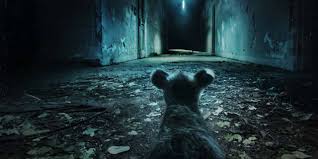
At the heart of the season are three protagonists: a young opossum, a newborn iguana, and a jumping spider, each selected to experience the immense pressure of a jungle ecosystem that seems designed to overwhelm them. The narrative framework places them in a dense rainforest where danger is omnipresent—but there’s an added twist: they discover an abandoned laboratory deep in the jungle, turning what could have been a pure survival-nature story into something that walks the line between documentary and horror-thriller. The result is a nature story told with the pacing, tension and visual cues more typical of a horror film than your standard wildlife special.
Visually and tonally, the series takes full advantage of its jungle setting. Reviewers note that the shift from the woods of season one to the “tropical peril” of season two raises the stakes dramatically. The rainforest becomes almost a character in itself—vast, vertical, confusing, filled with predators and threats from every layer—from forest floor to canopy. The abandoned laboratory motif gives the episodes structural focus: rather than simply wandering through a myriad of jungle threats, the protagonist animals are drawn (or find themselves drawn) toward this man-made interior space hidden in the wild, which lends the episodes a narrative anchor. It gives the viewer something to lean into, rather than purely episodic randomness. One review put it succinctly: “the lab built in the middle of the jungle … sets a tight perimeter for the animals’ objective and gives the action a lean, B-movie charge”.
Gazettely
Narration by Maya Hawke returns from the first season and remains one of the strongest components—her voice walking the line between matter-of-fact natural history and ominous foreboding, reinforcing the hybrid tone of nature-doc meets survival-horror. Meanwhile, the production team—led by executive producer Jason Blum and a collaboration between Blumhouse Television and Plimsoll Productions—embrace this dual identity. Writers and directors have leaned into horror aesthetics (sound design, jump-cut edits, tight framing), but without entirely surrendering factual integrity. In short, this is not a nature show pretending to be horror; it’s a nature show that acknowledges nature is horror.
One of the most impressive aspects of Lost in the Jungle is how the factual content is woven into the narrative with intelligence. It’s not just “look how scary these animals are,” but “here’s how they survive, here’s how the predator-prey dynamic plays out, and here are the physical/biological facts that make this environment so unforgiving.” For example, facts about the opossum’s resistance to venom become not just sidebar notes but plot turning points; likewise the group-forming behaviour of young iguanas is framed as a survival strategy against vultures. As one critic notes: “The series keeps the brisk, concentrated format … key facts lock into turning points rather than sitting outside the drama.” The result is a show that educates while entertaining, delivering verifiable animal behaviour under an elevated aesthetic.
That said, the season is not without its caveats. Some critics point out that fundamentally the concept hasn’t changed from season one—it is still three animals in peril, still a structured narrative, still the horror-documentary blend. While the setting shift is significant, the formula remains. For some viewers, this may feel like a limitation: if one enjoyed the first season’s setting and format, the second may feel like a retread albeit in wilder terrain. Additionally, the short three-episode format means that while the stories are tight and compelling, there remains a sense of what might have been left unexplored—other layers of the ecosystem, deeper character arcs (for the animals), or broader context about the human impact. Some creative liberties are also taken in the editing and presentation to maximise tension; while still rooted in fact, the show leans into drama. A review mentions “some creative liberties are taken to maximise dramatic tension.”
Gazettely
In terms of accessibility and audience, the show walks a fine line. According to the family-oriented advisory from Common Sense Media, the tone is creepy and intense—filled with dark imagery, predator-prey violence, jump-scares and ominous narration—and is described as “too scary for young elementary-aged kids” though likely fine for pre-teens who enjoy some edge. So while the show is educational and beautifully filmed, the horror aesthetics mean it isn’t necessarily light viewing. That said, for anyone drawn to nature’s darker side, or who appreciates the collision of documentary realism with horror movie tension, it hits a sweet spot.
From a production and technical standpoint, Lost in the Jungle raises the bar. Cinematography emphasizes extreme close-ups, tight framing, immersive sound design, and an editorial rhythm designed to sustain suspense. One critique summarises: “the camera places viewers inside tight spaces where small movements matter … editorial tempo sharpens the shock in moments like an opossum meeting a snake.” That said, this mode of filming carries risk: by emphasizing the horror-aesthetic, it may occasionally distract from the science or perhaps lean too heavily into theatricality for viewers expecting a conventional nature documentary. But it’s a conscious choice and one that pays off for many.
What particularly stands out is the sense of environment. The jungle of Central America is unfamiliar terrain to many viewers, and the show leverages that unknown to heighten unease—lush, claustrophobic, layered with sound and movement, full of hidden threats. The show effectively uses the environment as more than backdrop: the setting becomes the generator of tension. According to one review: “the rainforest supplies a crowded field of hazards that outstrip the temperate woods from the first season.” That change in scale from forest to jungle amplifies the sense that survival here is even tougher, more unpredictable, and more visually compelling.
In terms of narrative trajectory, the three episodes themselves are well-paced—each builds on the previous, layering danger, increasing stakes, and culminating in the trio of creatures approaching the labyrinthine abandoned lab. The lab motif is smart: it introduces an almost ghost-house dimension to the wild, combining man-made menace with natural peril. This gives the season a kind of dramatic arc, unlike many nature documentaries that proceed in looser, vignette-based fashion. Reviewers have praised this structure as giving the episodes “a clear waypoint” and “a tightened objective” for the protagonists. It is, in effect, narrative economy done right.
Another merit worth noting is the show’s commitment to authenticity. While the styling is horror-leaned, there’s no indication that animals are being unfairly manipulated or that unnatural harm is being deliberately inflicted for spectacle—at least according to critics. The series retains educational value and legitimate animal behaviour, even as it presents them in elevated form. That balance is one of its most significant achievements.
Turning to viewer reception and cultural positioning: early commentary suggests the show is being lauded for its fresh approach. One Dutch piece reports that viewers described it as “a small nature-docuseries with a touch of Halloween,” noting the strong 7.4 IMDb rating at time of writing. While that’s still early, the sentiment leans positive and curious. The show may appeal especially to viewers who are fatigued by gentle nature documentaries and want something with higher tension, spectacle, and narrative drive.
That said, the show’s target may not be everyone. If you’re expecting a traditional, soothing wildlife special—calming narration, wide sweeping landscapes, gentle rhythms—you might find Lost in the Jungle disconcerting, even unsettling. The show intentionally leans into peril, urgency and fear. That makes it an excellent pick for spooky season or for viewers who like their nature with a twist—but perhaps less ideal for casual daytime viewing. One reviewer, writing for Heaven of Horror, suggests that if season one was tough, this one “could be even tougher.”
Heaven of Horror
In comparing to the first season, “Cabin in the Woods,” the improvements are clear: the setting is richer, the threats more varied, the narrative tighter, and the horror-documentary hybrid feels more confident. Still, the core hook remains the same: animals in peril, survival in extreme conditions, narrated with urgency, filmed with cinematic style. For that reason, the show may feel somewhat structural similar to its predecessor—but for many, the elevated setting makes it feel fresh enough. As the review in Gazettely puts it: “Season 2 … is a successful evolution of its distinct, hybrid format.”
For nature documentary fans, especially those open to more stylised, edgy presentations, Lost in the Jungle is a compelling watch. It challenges the boundaries of the genre, proving that you can teach about ecosystems, behaviour and survival and still deliver visceral, suspense-laden storytelling. The risk of course is that the stylisation might overshadow some scientific depth; but if the aim is to engage a broader audience and convey the urgency and brutality of nature, it largely succeeds. For horror fans, it offers enough tension, lurking threat and dramatic payoff to satisfy—even though the monsters are real animals rather than supernatural entities.
On a final note, the show also invites reflection on our relationship with nature—not just as spectators of cute or majestic creatures, but as witnesses to life-and-death struggles where vulnerability is constant and the environment is implacable. By framing these animals as “heroes” on a survival journey, the series encourages empathy and awareness—while reminding us that we are distant observers of a world that is beautiful and unforgiving. The abandoned laboratory, a symbol of human intrusion, contrasts the wildness around it and prompts subtle consideration of how human and natural worlds collide.
In sum: Nightmares of Nature: Lost in the Jungle is a daring, well-crafted iteration of its unique genre hybrid—equal parts nature documentary and survival thriller. It heightens the danger, intensifies the visuals, and tells its stories with confidence. While it may not reinvent the concept entirely, it elevates it, and for viewers open to nature’s wildest side—with all its horror and wonder—it delivers a memorable, if somewhat brief, journey into the jungle’s heart.