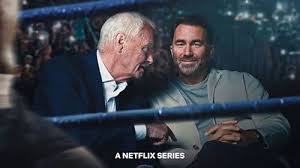
Matchroom: The Greatest Showmen Review 2025 Tv Show Series Cast Crew Online
Matchroom: The Greatest Showmen, the 2025 Netflix docuseries, gives viewers a front‑row seat into the high‑stakes world of sports promotion through the lens of Barry and Eddie Hearn, the father‑son duo behind Matchroom. Across six episodes, the show weaves together business ambition, personal legacy, triumphs and failures in boxing, darts, snooker, and more. It does so with the polish and narrative drive audiences have come to expect from producers behind Drive to Survive, yet even with its spectacle there are moments where the shine shows both its strengths and its limitations.
Right from the beginning, Matchroom frames itself as more than just a sports documentary. It sets up a “succession” drama: Barry Hearn, in his later years, wrestling with the question of who (if anyone) will fully take over, and how much that transition impacts the identity of the company he built. Eddie, for his part, is trying to prove not only that he can carry it forward, but that he can scale it to new heights. Their relationship becomes a backbone of the series — not always warm, often competitive, and naturally complicated by their differing visions of legacy, commerce, and sport.
Visually, the series does a solid job balancing backstage, boardroom, and in‑the‑arena moments. From Matchroom’s Essex headquarters to fight nights, snooker tournaments, international business negotiations, and events in places like Riyadh and Manila, the scope is wide. It feels global. The inclusion of high‑profile figures — like Katie Taylor, Ronnie O’Sullivan, Anthony Joshua, Luke Littler, and Conor Benn — ensures there are recognizable faces and established storylines that draw in more casual sports‑fans, not just boxing devotees.
One of the more compelling threads is how the show handles failure and risk, especially for Eddie. There are episodes where Matchroom suffers visible setbacks: losing matches to rival promoters, reputational risks, financial pressure, and the constant stress of living up to expectations (both public and familial). These moments ground the show; they deliver tension and, when done well, emotional payoff. Eddie’s ambition — especially in growing Matchroom’s reach, entering new markets, and exploring deals (including interest from investors in Saudi Arabia) — serves as both catalyst and conflict.
However, the series is not without its shortcomings. For one, despite its “fly‑on‑the‑wall” style, there are moments where drama feels curated or manipulated. Conversations often seem staged for tension; editorial choices emphasize friction in ways that occasionally feel manufactured. The storytelling sometimes drifts toward conventional documentary tropes — the triumphant comeback, the power play, the inheritance of legacy — which, while engaging, reduce nuance. Barry, while charismatic, is presented in ways that amplify his showmanship perhaps at the expense of deeper personal insight; Eddie, similarly, oscillates between hero and foil without always being fully humanized. Some of the subplots, though interesting, are under‑explored: the emotional cost of fame, or the internal culture of sports promotion, could have used more textured attention.
Another limitation is balance. The show does well to highlight the glamour and excitement — big purses, big names, big events — but less so the behind‑the‑scenes grind. Moments like contract negotiations, legal battles, internal tensions over strategy, or softer moments of doubt or disagreement beyond the boardroom tend to be glossed over or framed strictly in relation to public image. Those choices make for cleaner narrative arcs but sometimes flatten what might have been more complex portrayals. For instance, Eddie’s internal conflict about stepping out of Barry’s shadow is compelling, but the series doesn’t always show the quieter side of that — the fears, personal sacrifices, or costs away from the limelight — rather treating them as fuel for spectacle rather than fully formed character moments.
In terms of pacing, Matchroom mostly succeeds: each episode has a focus (e.g. a major match, a rivalry, or a negotiation) that pulls the story forward. Still, by the end some viewers might feel saturation: there are several high‑tension episodes in a row, which means that some of the smaller, character‑driven beats don’t land as fully as they might in a less ambitious series. The series also juggles multiple sports (boxing, darts, snooker, etc.), which is exciting, but this breadth sometimes dilutes depth: fans of one sport may wish for more inside detail, while others may not care about the minutiae of snooker or darts logistics.
Nevertheless, when Matchroom works, it does so very well. The tension of big events, the stakes of money and reputation, the interpersonal tension between Barry and Eddie, and the way sports intersect with business and identity — these are the series’ strongest assets. The episodes that focus on major fights or contests (like Katie Taylor’s matches, or ones involving Conor Benn) often deliver emotional highs, especially because they are about more than just wins and losses: they’re about trust, confidence, legacy, and what it means to risk everything.
The global scale adds to its interest. Matchroom isn’t just a British success story; it’s a business with international ambitions and adversaries. The episodes that travel outside the UK — to Saudi Arabia, the Philippines, etc. — highlight both opportunities and cultural tensions, the differences in how sport, entertainment, money and reputation are viewed in different places. That gives the series urgency: it isn’t just nostalgia or prestige; it’s about relevance in a rapidly changing global sports‑promotion landscape.
Ultimately, Matchroom: The Greatest Showmen is a compelling look at an empire in transition. It doesn’t entirely avoid the temptations of dramatization or gloss, but its subject matter is inherently dramatic and the people involved are captivating enough to carry much of it. For those who enjoy sports docs, the series offers both the cheers (in the ring) and the calculation (behind the desks), and it often earns them. Even for audiences less invested in boxing or darts, the human ambition and tension can hold interest.
In conclusion, Matchroom is well worth watching: it entertains and sometimes inspires, and it prompts reflection on what success demands—for legacy, for family, and for business. It might not redefine the sports documentary, but it stands as a strong addition to the genre in 2025. If Netflix pursues a second season, exploring even more of the off‑camera sacrifices, vulnerabilities and less obvious actors behind the spectacle might push it from very good to exceptional.