Martin Scorsese Presents: The Saints Season 2 Review 2025 Tv Show Series Cast Crew Online
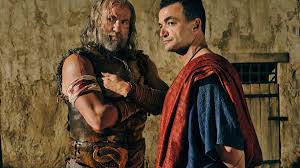
Patrick (Desmond Eastwood) was living in Roman Britain in 401 AD; he was Christian but lived a very secular life. But then he and others in his village were kidnapped and taken as slaves across the channel to Hibernia, which is now Ireland, where they work for a Hibernian tribal chief named Milchu (Patrick Bergin)
Patrick is a shepherd for Milchu, allowed to kill one sheep to feed himself per season, but Cronan (Brian Robinson), the soldier that took him back in Britain, takes the sheep for himself, telling him to survive on dried meat.
Patrick starts to become despondent, losing whatever faith he has, until he meets a girl (Matilda Gavin), who lives among the pagan forest dwellers. He saw that he could help them by providing what little food he had, making cheese from sheep’s milk and, ultimately, slaughtering a sheep for them to eat. His sense of awe and faith grew as the months passed.
When he faces a tragedy, though, he finds out how strong his bond with Jesus and God really is, and when he returns to Britain, he realizes he needs to spread the gospel. After a time at a monastery in Gaul, he returns to Hibernia, to the very village where he was a slave, to preach that gospel.
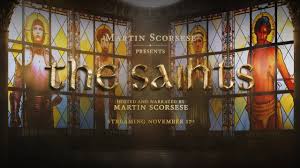
Like with the first season of The Saints, Scorsese is the narrator and executive producer, but the series was created by Matti Leshem (who directed the first episode) and written by Kent Jones. The episodes all conclude with a discussion Scorsese has with the show’s consultants, Fr. James Frey and authors Paul Elie and Mary Karr.
The first four episodes of the second season will examine the lives of Saint Patrick, Saint Peter, and Saint Thomas Becke. The fourth episode examines the life of first millennial saint, Saint Carlo Acutis, who spread the word via a website he created and died in 2006 at the age of 15; he was canonized in September (Scorsese’s daughter Francesca directs that episode).
The episodes are really more dramatic than anything else. What we noticed about the Patrick episode is that Scorsese’s narration fades a bit as the episode goes on, allowing Patrick’s spiritual journey to be shown instead of explained. As one of the consultants say in the discussion at the end of the episode, this episode is less dialogue-heavy than others because not only was Patrick often by himself, but he learned that contemplation, silent prayer and meditation was the key to making his relationship with God so strong.
What we appreciated is that the acting in this episode was much more nuanced than what we had seen during the first season. It helped that the number of characters in the episode were kept to a minimum and the more sparse dialogue provided less of a chance to see overly-hammy performances.
But what is also an interesting aspect of the Patrick episode, as well as the stories of the other saints that Scorsese and company explore, is that the saints’ very human existences are emphasized. In the Patrick episode, there’s nothing about what he’s best known for, the legend that he drove the snakes from Ireland; it talks bout his turning away from God when he was young, his blossoming faith as a slave, and then his borderline arrogant belief in his degree of faith when he was serving that monastery in Gaul.
Scorsese and company want to emphasize that these saints weren’t gods, and weren’t perfect, but that their faith was unwavering, and episodes like the one about Patrick demonstrate that well.