Love Is Blind: France Review 2025 Tv Show Series Cast Crew Online
Love Is Blind: France is Netflix’s latest addition to its growing international franchise, adapting the provocative social experiment that tests whether emotional connection can lead to love — and even marriage — without the physical first impressions. Premiering September 10, 2025, this French version is presented by Teddy Riner, the judo legend, alongside his partner Luthna Plocus. The format remains true to the original: singles meet in isolated “pods” or booths where they converse without seeing each other, build relationships, propose, then meet face‑to‑face, followed by the usual stages of romantic exposure — trips, dealing with friends/family, and finally weddings (or walking away).
From the outset, Love Is Blind: France stakes out its difference by merging the familiar tension and emotional stakes of the franchise with a French sensibility of romance and relationship expectations. There is a certain elegance and deliberation in how the participants converse in the pods: an emphasis on emotional honesty, sensibility, reflection, and often a more cautious approach than some of the faster‑moving U.S. or Brazilian versions. Yet the show doesn’t shy away from dramatic friction: once people meet in person, once expectations clash with reality, and when real life (family, culture, appearance, timing) intervenes, things grow complicated. What works well is that France seems to strike a balance between spectacle and sincerity: the pods give viewers the feel of the social experiment, while the social, cultural, and personal pressures the contestants face keep the stakes grounded.
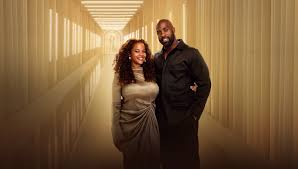
The hosts, Teddy Riner and Luthna Plocus, bring a warmth and authenticity that helps root the show in its French identity. Riner’s public persona — disciplined, serious but capable of humor — meshes nicely with Plocus’s communication and relations background; as a pair they give commentary or guidance that feels less performative and more intimate. They don’t dominate the proceedings; they serve more as sympathetic, guiding voices and sometimes sources of reflection, which allows the contestants to be center stage. Their presence helps soften some of the more manufactured moments of reality TV, giving the show a sense of cultural fidelity.
Production‑wise, Love Is Blind: France is polished. The settings are well chosen: the lofts or pods provide an aesthetic of minimalism and isolation, letting conversations take the foreground; the later luxury resort / honeymoon locales are visually pleasing yet still feel like part of a romantic fantasy rather than mere background decoration. There are moments where the lighting, music, and camera work conspire to heighten tension — the reveal‑moments, the awkward first meetings, the doubts and disagreements — and the editing tends to pace the storytelling in three weekly drops, which allows momentum to build without overwhelming. However, like many shows of this kind, it occasionally slips into predictable arcs: someone who seemed promising in the pods disappoints in real life, issues of appearance and expectation lead to misunderstanding, and there is always the looming question of whether participants are in this for love or for attention. These tropes haven’t been avoided.
In terms of casting, Love Is Blind: France offers a mix of backgrounds, age ranges, and professions, though information suggests many contestants come from relatively well‑established social or professional sectors. While that may limit the diversity of lived experience, it also lends seriousness to the emotional stakes: people are making significant life decisions, not just seeking drama. Nevertheless, some tension arises from the clash between French cultural norms around dating, courtship, family expectations, and the show’s more radical premise. These moments are among the show’s strongest, because they force contestants (and viewers) to confront assumptions about love, appearance, timeline, and what the idea of marrying someone unseen really means in practice.
One of the show’s strongest elements is how it uses the French context to deepen the emotional exploration. There is more attention paid to the roles of family, culture, and long‑term compatibility rather than purely romantic or physical chemistry. For instance, when engagements happen, there is immediate pressure: what will the first meeting be like? How will friends and family react? Can initial chemistry survive beyond the fantasy of voice‑only connection? These challenges are especially meaningful in a culture like France’s, where there is both romantic idealization and a strong tradition of social critique and realism. The show benefits from slowing down some of the process: giving contestants time to reflect, to struggle, to express doubt. The result is that when conflict arises, it often feels earned.
But there are weaknesses. Some portions of the pacing drag: conversations in pods, while often insightful, sometimes feel repetitive. The reveal episodes (meeting in person) carry predictable emotional beats, which sometimes dull their impact. There are also moments when the show’s structure feels like it forces participants into decisions before all doubts are resolved — the pressure of being on television, the looming wedding date, the expectation to commit — which can lead to emotional faltering, hurt feelings and occasionally what feels like a rushed resolution. Moreover, while the hosts bring credibility, the show at times leans into familiar reality TV posturing: confessional segments, heightened drama, editing cues that emphasize tension or conflict perhaps more than genuine connection. These are not fatal flaws, but they do dilute the more profound questions the show poses about intimacy, identity, and love.
In terms of emotional impact, Love Is Blind: France often delivers. There are moments of genuine vulnerability: people admitting fears, confronting insecurities, expressing doubts about physical attractiveness or compatibility. The emotional arc of those who struggle in the in‑person stage feels believable, and the conflict between romantic fantasy and reality is dramatic without being empty. When promises made in pods are challenged by real‑world logistics or emotional differences, the show earns its emotional weight. There are also hopeful moments: genuine connections, romance flourishing beyond appearances, and the possibility that love built without sight can grow strong. Even when proposals don’t lead to weddings, the journey matters.
What makes Love Is Blind: France interesting beyond the drama is the cultural reflections it inspires. Viewers are likely to see in it questions about how French society views romance, appearance, and authenticity. How much do looks matter? How much courage does it take to commit without seeing? What do families and social expectations demand in terms of transparency, of knowing each other? The series invites, overtly or subtly, reflections about these issues. And given its launch across Netflix, it participates in the trend of globalized reality formats, where familiar premises are reshaped by local sensibilities and mores.
Overall, Love Is Blind: France is a solid and emotionally engaging entry in the franchise. It doesn’t completely reinvent the formula, nor does it escape all of the pitfalls of reality dating shows, but it makes them more resonant in its environment. The show’s strengths lie in its ability to evoke genuine vulnerability, to hold emotional tension rooted in real expectations, and to use its hosts and production to ground the premise so it doesn’t devolve into pure spectacle. For those who have followed other versions, it offers both the comfort of the known structure and enough local flavor, emotional nuance, and romantic idealism to be more than just a re‑run of what’s already been done.
In sum, Love Is Blind: France is worth watching for its heartfelt moments, its authentic struggle between fantasy and reality, and its reflections on love itself — even if you sometimes see the cogs of reality TV turning. It’s not perfect, but for what it sets out to do, it does surprisingly well. It may not convert every skeptic, but it contributes meaningfully to the ongoing conversation about whether love can truly be “blind.”