Knife Edge: Chasing Michelin Stars Review 2025 Tv Show Series Cast Crew Online
“Knife Edge: Chasing Michelin Stars” is a glossy, high-stakes culinary docuseries that tries to straddle the line between reverential foodie spectacle and raw, behind-the-scenes drama. Executive produced by Gordon Ramsay and hosted by Jesse Burgess, the show follows restaurants in major gastronomic cities around the world as they vie for Michelin stars—either attempting to earn one for the first time, or fighting to retain one under intense pressure. Over eight episodes, the series traverses locales such as New York, Chicago, Italy, Mexico, the Nordics, and the U.K., offering glimpses into kitchens, dining rooms, staff dynamics, menu development, and the emotional toll of operating at the highest level.
The show’s most compelling strength lies in its access. For perhaps the first time in Michelin’s 125-year history, the docuseries secured permission to film the notoriously secretive inspection process—albeit under strict anonymity. Voice actors deliver the comments of inspectors, and in segments the series intersperses commentary from these masked voices, providing rare insight into what Michelin critics look for and how they operate undercover. Coupled with that, we see restaurants in transition: new openings, menus being fine-tuned, staff stress and interpersonal pressure, and the looming deadline of Michelin guide announcements. Those slices—when the series slows down enough to let the tension breathe—are its high watermark.
Yet that very ambition breeds some of the show’s most glaring shortcomings. One recurring criticism is that the show spreads itself too thin, hopping between multiple restaurants and cities without lingering long enough to deepen our understanding of the people behind the kitchens. As a reviewer at Reality Blurred notes, the show’s structure—shifting focus every episode and frequently recapping prior events—fragments the storytelling and minimizes character development.Many chefs and staff members are introduced only briefly, and after a few scenes, we lose sight of who they are beyond their professional role. Because of this, emotional moments sometimes feel hollow, the result of editing rather than organically earned arcs.
The host, Jesse Burgess, is a double-edged presence. On the one hand, he provides connective tissue among restaurants and regions, voices a genuine enthusiasm for gastronomy, and sometimes expresses empathy toward chefs under strain. On the other, critics have called his narration intrusive and underdeveloped, lamenting that he remains more of a guide than a fully fleshed-out presence in the narrative. In Pop Culture Maniacs, one critic argues that if not for his interjections, the show might more cleanly present itself as a “docudrama”—a hint that Burgess’s voice is superimposed rather than earned.
popculturemaniacs.com
The pacing and editing choices also contribute to moments of dissonance. Some episodes feel overly stylized, inserting dramatic montages, rapid cuts, and repetitive voiceover to simulate tension where it may not have existed. Reality Blurred points out that the show sometimes appears to be scrambling to build drama where natural tension is weak. Because the show does not always commit to following particular chefs or restaurants over the entire season, narrative momentum can falter: one moment you’re invested, the next you’re jolted into a new city with fresh characters.
Still, when the show aligns its elements—when access, conflict, and stakes converge—it really delivers. One of the most affecting segments comes from Chicago, where Chef Jacob Potashnick of Feld allows the cameras into every facet of his daily life: from staff meetings to banking errands, from tasting sessions to moments of doubt. In those scenes, Knife Edge lives up to its ambition: it gives you the fear, the weight of responsibility, the pride and desperation that ride in tandem when a small misstep could cost acclaim.
The show’s dramatic climax crescendos during Michelin star announcement episodes in each region. These are the moments where the tension feels genuine: chefs wait, often in public presentation rooms, heart in throat, until envelopes are opened and stars either gained, lost, or retained. That sense of communal anxiety—of dreams built on fragile standards—is what the show does best. These scenes feel cinematic, and the viewer is invested in their outcomes.
A recurrent theme the series returns to is the toll that striving for Michelin recognition takes—not just in hours, but in mental well-being, financial stability, and staff morale. Some chefs openly acknowledge the cost: personal sacrifice, fear of reputation loss, and uncertainty of whether the prize is worth it. In more than one case, chefs step away from the race entirely. Rolling Stone describes instances of abandonment, where chefs recognize that the process becomes too consuming before the results even land. The show doesn’t shy away from shots of exhaustion, tension between kitchen teams, frayed nerves, and sometimes tears.
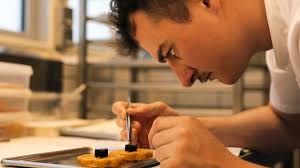
However, the show’s gloss sometimes dulls its edge. At times, the cinematography is so sleek and composed that it undercuts the gritty, messy reality of restaurant kitchens. Many critics observe that the series leans into food porn: slow pans of plated perfection, helium lighting, evocative close-ups. Decider calls the show “compelling” but warns that such indulgent visuals can sometimes feel disconnected from the turmoil behind the scenes. The tension between artifice and authenticity is most visible in how the show treats minor complaints, rejected dishes, or small mistakes: are we witnessing raw pressure, or is it dramatized to build suspense? It’s hard to tell where reality ends and editing begins. Reality Blurred suggests that some emotional beats are enhanced in post-production to create arcs or turning points.
reality blurred
A further critique lies in the voice of the Michelin inspectors themselves. While their anonymity is understandable, the show leans heavily on their commentary, inserting short, flavor-of-the-moment thoughts and tips. Their segments feel light and occasional, offering little deep methodological insight. Some passages feel truncated, perhaps because of constraints on revealing secrets. Reality Blurred describes their commentary as “lightweight” in the early episodes. And while the novelty of seeing Michelin’s machinery behind the curtain is exciting, the show might have benefitted from more in-depth discussion of the history, standards, and evolution of Michelin itself. Decider laments a lack of deeper historical or conceptual framing beyond the personal narratives.
Decider
Yet, sometimes the show’s weaknesses are also its identity: it is both a love letter to haute cuisine and a pressure cooker. Because it covers so many geographies and chefs, its ambition sometimes overwhelms its coherence. But that same ambition gives it flare and scope. For food lovers—especially those fascinated by the upper echelons of dining—“Knife Edge” has enough to provoke thought, provoke envy, and occasionally move. Its visuals, occasional emotional highs, and glimpses of creative obsession make it worthwhile, even if it stumbles in execution.
On the reception front, the show as of now has earned generally favorable reviews: Rotten Tomatoes lists it at 4/5 based on a handful of critic reviews. Some critics—such as Pop Culture Maniacs—praise the culinary spectacle and tension but criticize the show’s tone and the intrusiveness of its host. Meanwhile, Reality Blurred is more measured, calling it a “sporadically thrilling competition” with structural inconsistencies. On IMDb the reception is more polarized, with some viewers accusing it of being “contrived” or lacking depth.
In balancing strengths and flaws, “Knife Edge: Chasing Michelin Stars” often succeeds as an aspirational, high-end window into a world rarely seen. What it achieves best is capturing the disquieting tension that lives behind a perfectly plated dish: the breaths held, the hours behind the scenes, the gamble every chef makes when they send a plate to a table. When the cameras turn to kitchens in the hours before service, or to chefs pacing in waiting rooms before announcements, the show reminds you that for every shimmering restaurant façade, there is a fragile internal struggle.
That said, if you approach it hoping for a kitchen soap opera, or expecting deep personal arcs for all participants, you may come away unsatisfied. The show doesn’t always commit to intimacy, and its breadth sometimes comes at the cost of depth. The host occasionally feels like fanfare rather than perspective. And its visual polish can obscure the rawness that the subject matter demands.
Nevertheless, as a global gastronomic travelogue with real stakes, “Knife Edge” is entertaining and enlightening in equal measure. It offers a grand stage on which chefs gamble their reputations, staff, and creativity for recognition that is as elusive as it is coveted. Its moments of emotional vulnerability, its glimpses of brilliance, and its promise of revelation make it a series worth watching—warts and all—for anyone curious about the price of perfection in the world of fine dining.