Joachim and the Apocalypse 2025 Movie Review
“Joachim and the Apocalypse” is an ambitious attempt to blend historical drama, spiritual allegory and metaphysical fantasy, and while its visual ambition is striking and often hypnotic, the film’s underlying flaws prevent it from fully coalescing into a satisfying whole. Directed by Jordan River and shot in ultra-high resolution, the film explores the final visions and theological daring of the medieval mystic Joachim of Fiore, tracing his journey through prophecy, spiritual crisis, and a confrontation with the symbolic forces of apocalypse.
From the opening sequence, the film establishes a tone of reverence toward its subject. Joachim awakens from a nightmarish vision of cosmic ruin, and it is soon clear that this is not going to be a conventional period piece. Nature, silence, candlelit interiors and stark mountain landscapes dominate many frames, and the images often feel like meditative tableaux more than narrative stations. The cinematography, under Gianni Mammolotti, leans into deep contrasts, carefully balancing torchlight and shadow in the monastic interiors, and using naturalistic lighting to preserve a sense of organic presence even in its more stylized moments. he choice to shoot digitally in 12K is often defended by the creative team, not merely as a technological boast but as a way to preserve fine texture, color depth, and subtle tonal gradations.
The narrative, however, is far less confident. Joachim’s life is treated episodically: he wanders through frozen hills, meditates in abbeys, debates with disciples, travels to royal courts, and intermittently enters visionary states where dense symbolism overlays the “real” frame. The script, credited to Jordan River along with Michela Albanese, Andrea Tagliapietra, and Valeria De Fraja, aims for a poetic, quasi-mystical approach rather than strict historical fidelity. The sequence that pits Joachim in metaphorical battle with a seven-headed dragon becomes a visual capstone, fusing theology, inner turmoil and spectacle, but for all its visual ambition it also underscores the film’s central dilemma: the tension between cryptic, symbolic interiority and the demands of narrative clarity.
One of the more consistent criticisms from early reviewers—especially among Italian viewers who have seen it in its original release—is that the film’s emphasis on atmosphere often comes at the expense of character and dramatic momentum. On Letterboxd, numerous users remark that while the settings, the costumes and certain individual shots are evocative, the screenplay lacks the connective tissue to carry the viewer’s emotional investment. Reviews frequently point to awkward, stilted dialogue, and a protagonist who remains distant even as he utters profound meditations.One user writes: “L’idea di base è interessante, ma il prodotto finale risulta assai scadente sotto tanti punti di vista … ciò che rovina l’atmosfera e il coinvolgimento è la sceneggiatura” (“The basic idea is interesting, but the final product is very lacking on many levels … what ruins the atmosphere and engagement is the screenplay”). Another points out that “effect speciali e fotografia interessanti ma non adeguati al contesto … recitazione decisamente troppo impostata” (“special effects and cinematography interesting but not adequate to the context … acting decidedly too staged”) are elements that undercut the film’s ambitions.
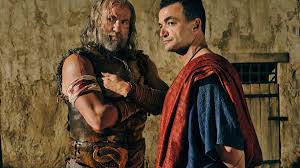
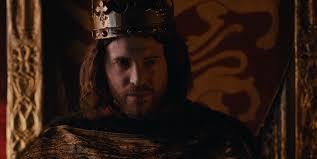
The performances do sometimes capture a sense of inner gravity, particularly Francesco Turbanti as Joachim. His physical presence—weathered, austere, occasionally tormented—anchors more than his words. But when the script leans heavily on expository dialogue or abstract theological argument, the distance between actor and audience becomes more felt than overcome. Supporting roles—whether as disciples, skeptical interlocutors, or regal figures—tend to hover at the margins, entering and exiting scenes often without enough contextual grounding to make their presence emotionally resonant. The metaphorical weight of the dragon sequence, for example, seems more like an invitation to meditate than a dramatised culmination of character arcs.
Visually and technically, the film is bolder and more successful. The filmmakers took pains to shoot in real medieval locations—Cistercian abbeys, remote hill villages, and forests in Calabria and Lazio—to lend authenticity and texture to the environment. In dim interiors, lighting is often restricted to torches and candles, maintaining an aesthetic coherence between artifice and tactile reality. The mountaineer sequences—especially when Joachim returns to the snowbound wilderness—evoke the immensity of nature and the isolation of his spiritual journey. In its post-production, the integration of VFX is handled through a unified pipeline (DaVinci Resolve + Fusion), and the dragon imagery, interplay of light and shadow, and symbolic overlays are visually arresting—even if sometimes more evocative than narratively meaningful.
Definition
Thematically, the film is clearly wrestling with questions of apocalypse, prophecy, and renewal. Joachim’s doctrine of the “Third Age” (an age of spiritual freedom beyond institutional constraint) is a central motif, and his dialogues about the seven-headed dragon, history, and eschatological transformation aim to bridge medieval mysticism and contemporary existential anxieties. There is a sense throughout that this is not just a historical meditation but a film reaching for relevance in a world full of crises. That ambition is admirable; there’s a certain high-mindedness to the project that, when it lands, can feel weighty and resonant. But often the film is content to linger in suggestion rather than clarification, inviting viewers into a contemplative space rather than a conventional dramatic arc.
The film’s moderate duration—around 85 minutes—limits how much connective tissue it can afford between its visionary interludes and narrative scaffolding.For a viewer wanting a more narrated, cause-effect account of Joachim’s life, politics, theological strain, and human conflict, the gaps may feel frustrating. Some critics have accused the film of being too obscure, leaning on too many dreamy pauses and symbolic tableaux at the cost of tension and forward momentum. But those who are open to a contemplative, slow-burning structural logic may find more value in what the film gestures toward than in what it explicitly shows.
One of the more striking aspects is the musical and sound design. The score, composed by Michele Josia, won a Gold Medal for Original Score at the Global Music Awards in 2024.The music shifts between Gregorian or chant-inflected motifs and more modern ambient textures, weaving a sonic fabric that often feels like an aural counterpart to Joachim’s inner visions. In quieter moments, the absence of sound—only wind, rustling leaves, clinking candle flame—becomes its own rhetorical device. The film seems to want us to hear emptiness as a kind of presence. But there are also moments when the score swells too insistently, reminding us we’re being guided rather than discovering. Still, in its better passages, the sound design and music enhance the film’s spiritual aspiration.
In terms of impact, “Joachim and the Apocalypse” is unlikely to be a broad commercial hit, especially outside niche circles of historical-spiritual cinema. On Rotten Tomatoes, the film currently holds no aggregated critic or audience scores (probably because of limited release)
and much of the public commentary comes from domestic Italian viewings or online circles. But the film has already earned several festival accolades: Best Film, Best Photography, Best Scenography and Best VFX at the Terni International Film Festival; Best Film at the 78th Salerno Festival; and awards for its script and visual craft. hese honors point to its technical and aesthetic gifts, even if some audiences balk at its spiritual opacity.
Given its ambitions and its missteps, what kind of viewer will “Joachim and the Apocalypse” satisfy? For those who welcome meditative cinema, works that favor moments and moods over plot mechanics, this film may offer a singular, immersive journey. The images can linger in memory: a candlelit monk in a cavern, a snow-white landscape under storm clouds, flames dancing on ancient stone walls, and a multiheaded dragon flickering in chiaroscuro. For viewers seeking more conventional dramatic arcs or emotional catharsis, the film may feel elusive, even frustrating.
In its totality, “Joachim and the Apocalypse” is a difficult but intriguing film. Its visual ambition and willingness to contemplate cosmic and theological themes in a cinematic idiom are commendable, even rare in contemporary film. Yet the very ambition that gives it a haunting quality also exposes its fragility: the lack of narrative anchoring, the gap between symbolic grandeur and human intimacy, and an often opaque screenplay mean it never fully converts its poetic impulses into emotional propulsion. But as a daring experiment, it has moments of real power, especially if watched with patience and a readiness for meditation rather than resolution.