Jay Kelly 2025 Movie Review
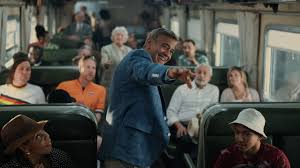
The first thing that I come to when pondering over Jay Kelly is Adam Sander’s Ron even before Clooney as the titular Jay Kelly (the Jay Kelly, you say? Oh, yes, indeedaroony). While Jay is the central focus, he is not necessarily the heart of the thing – or, one can simply note, since the story is about a character who has pretended for so long to be the role of JAY KELLY that he doesn’t know who he is that he has to get to rock bottom (ironically, yes we do say, during a tribute).
Ron, the “friend who takes 15%” and has been Jay Kelly’s number one for so long, is the one who has been like the emotional support animal for Jay and it has torn his own life apart at the seams (or this is more in like First World sort of terms, he and his wife and kids still seem to be in comfort – she played by Greta Gerwig, natche).
And what Baumbach does so well here in the script (along with… Emily Mortimer, sure, coolness, and she got a role too) is to show how so many years of being at Jay’s beckon and call is transforming Ron into someone he doesn’t truly want to be, which is… Jay Kelly the absentee dad of two who never was there and the dad who took his movie career from a more promising and naturally gifted young acror – which he got ala *Ethan Hawke and Explorers (or insert the “I got cast even though it really was *that* actor’s role” sort of story that populates Hollywood lore) – and only skates by from scandals because of him.
Sandler knows how to bring Baumbach’s sometimes dense verbiage to feel natural (so does Clooney, so does Laura Dern who also brings a plate of pathos to the party, though their roles are more straightforward comparatively), but it is his vulnerability that actually comes through. This is also a story about how people are remembered – Jay Kelly mentions memory to Ron at one point like it is a foreign concept and he responds sort of dumbfounded – and how that can bring moments of tragedy and contemplation but it can also be very funny.
That may be the other thing as well: his reactions to what Clooney does makes them one of the most unlikely and yet successful comedy teams in recent memory, playing off the Screwball-fast-delivery hyper-real style Baumbach is after…. and then in the third act when things blow up between them it is so deeply sad one almost can cry. It isn’t that Sandler is great on his own, as he always needs people in his films (Philip Seymour Hoffman, Eric Bogosian, uh that one guy in the basketball movie, Dustin Hoffman) to bring him to that Next Level, and Clooney does that, too. Really, they bring out the best in each other.
I bring all this up because this is a film that is very familiar to those who have been in the large pool of Movies About Moviemaking and/or Creative/Academic Persons Reflecting on things, and that is certainly by design (and while everyone will rightfully bring up Bergman and Strawberries, Fellini and 8 1/2 with Mastroianni’s photo even shown at one point, Woody Allen and Stardust Memories, throw in All That Jazz to a point, note how the opening elaborate tracking shot may be a not so subtle nod to Baumbach’s sorta mentor Brian de Palma).
On that level, the film is still successful as a comedy-dramatic, but it does take every single watt of Clooney’s not inconsiderable own star-wattage to power a character who may be the most deeply miserable Baumbach hero since Greenberg – and, therefore, it is the deeper bench of actors and some creative techniques that bring this up to being more special than it may have been on paper.
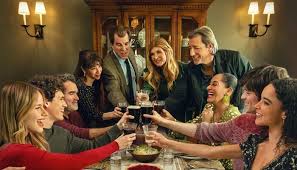
Take Riley Keough and Stacy Keach as one ot Jay’s daughters and father respectively; they are the types that we have seen before and surely will again, the “you were never there for me” woman who through much therapy has moved on but the scars are still there if somewhat healed, and the egotistical dad who passed all bad traits and did he have any good ones (well, he can gab and talk, that is a keen throughline that is seen at that dinner table). But the actors do come through and bring levels of heart and pain and hurt and this look to Jay like “seriously, cant you take a hint” that the film needs.
There are also parts for Patrick Wilson as Not Patrick Wilson (but maybe I am) and Billy Crudup as the adult version of the Actor That Wasn’t once friend of Jay’s (looking a bit in the hair like Baumbach himself if one sees photos side by side, maybe a coincidence maybe not), and all of this ads up to a film that is about an actor that highlights acting across the board and how much reality and memory intertwine. And the Central Question, in screenwriting terms, is clear and pointed: in the movies you can ask to do “go again, let me have one” like another take, and of course in life that is more complicated and the film does a good job of not answering it but exploring it.
There are also some on the nose metaphors (ie lost and running through a dark wooded forest where Jay cannot escape, or even the Cheesecake as this form of indulgence or escape he denies himself) and I can even see some parts that are so attached to the film references I mention that it could get suffocating. But in the end, Jay Kelly wins out not because of its influences but because Baumbach and his actors try to find honest ways of evaluating those ideas and what it means to grapple and reckon with memory and legacy in this story, not in those.