It: Welcome to Derry Review 2025 Tv Show Series Cast Crew Online
The arrival of It: Welcome to Derry feels like a bold return to the macabre underbelly of small-town terror. Set in 1962 in the cursed Maine town of Derry, the series treads the familiar stomping ground of Stephen King’s mythos—and yet aims to broaden it. The show is a prequel to the recent film adaptations of It (2017/2019) and explores events decades earlier, grounded in the novel’s “interlude” chapters and largely untold history of the town.
From the outset, the series leans into its ambition: expanding not just the story of the eponymous monstrous presence known as Pennywise, but also the destructive, institutionalised traumas of the era—racism, Cold War anxiety, generational fractures, and the idea that children’s fears often mirror the worst of adult failings. For fans of the King-universe who crave more than jump scares, It: Welcome to Derry offers plenty of thematic weight amid the horror. To take one example: in the first episode’s terrifying cold open a hitchhiking child meets a seemingly genuine family—but the situation rapidly distorts into something far darker than a simple lesson in stranger danger.
What works. The production design and atmosphere swiftly immerse the viewer in an era that should feel familiar but is twisted—grey New England towns, quiet facades, insidious whispers behind cheerful smiles. The creative team of Andy Muschietti, Barbara Muschietti and writer-showrunner Jason Fuchs show a clear love for the source material’s setting of Derry as a character in its own right: a town that seems benign, even welcoming, yet harbours unspeakable evil. Critics have praised this sense of place—how Derry’s dark history and the quiet acquiescence of its citizens mirror the supernatural threat.
The kids and adults in this story bring a strong mix of emotional stakes. While some of the younger cast — children discovering something wrong, unmoored from parents, hunted by forces they barely understand — come off as less finely drawn, the adult characters provide gravitas. Performances such as those by Taylour Paige, Jovan Adepo and others have been singled out for anchoring the show more deeply than mere horror-set pieces.
In this position the show distinguishes itself: it’s not simply The Losers’ Club revisited, it’s rather the town before them—the older generation, the adults whose decisions (and indecisions) become part of the nightmare. That inversion is welcome. The scale is broader, the stakes more systemic: for example, one of the major historical events around which the series is built is the burning of “The Black Spot,” a jazz-club-cum-social-space for Black soldiers and locals, attacked by white supremacists. That dynamic—society’s fear of the Other and of collective justice—becomes a feed for supernatural horror.
The horror itself is visceral. Early reviews remark on scenes that linger: a grotesque mutant baby, blood-soaked theatres, and sequences that feel less like a casual spooky ride and more like a descent into something deeply unsettling. The show does not shy away from body horror and bleak undertones, and this may appeal to viewers who expect more than mere jump scares. For example, the opener critiques note how the show shifts from an apparently innocent ride out of town into a brutal reveal—danger masquerading as sweetness.
The serial format offers advantages. Rather than cramming every bit of lore into a film’s two-hour window, the show can immerse us in the everyday dread of Derry, the slow unraveling of normalcy, and how the monster’s presence is entwined with human failures. A prequel series like this gives room to explore the wider community, the backstory of the town, the history of terror, rather than jumping straight to the big confrontation. Many fans had long felt the previous films under-explored Derry itself; this series promises to give the town its due.
Where it falters. Despite its many strengths, It: Welcome to Derry is not flawless. Critics point to several structural issues that dilute its impact. One is an over-stuffed narrative: with a large ensemble cast, multiple story threads (kids, adults, history, new characters, old tropes) the pacing sometimes suffers. The horror set pieces are strong, but some plot glides feel weighed down by exposition or “fan-service” business, rather than being naturally earned. Some reviewers felt the child characters lacked the depth and synergy the 2017 film achieved with its Losers’ Club, and the show occasionally drifts into predictable territory.
Additionally, a worry voiced by reputable commentary is that the series leans too heavily on what has gone before. One article argues that the show‘s “fatal flaw” is its handling of Pennywise—by inserting him (or the entity behind him) too early, or using familiar beats rather than truly fresh surprises, the series risks feeling derivative of the films.
For viewers less steeped in King lore or unfamiliar with the films, the sheer weight of back-history and lore may also be off-putting. A simple horror show they are not: there’s a sense of continuity, of myth-making, of echoing decades of dread, which may be more than casual watchers signed up for. The balance between horror spectacle and deeper thematic content may not always land evenly for all.
One of the more divisive aspects is the show’s attempt to merge period social commentary with supernatural horror. On paper, this is a strength—addressing racism in 1962 small-town America, the legacy of violence, forced assimilation, etc.—but in practice some critics feel these issues are handled unevenly, or feel grafted onto the horror rather than organically emerging from it. If the metaphor for fear becomes too on-the-nose, the subtlety of King’s best work can slip.
Despite the unevenness, the show offers sufficiently rich rewards. On the visual front, the design cues, the mise-en-scène of 1960s Derry, the sewer-grates, the balloons, the monstrous forms—these are executed with care. A horror show that takes time to build atmosphere is a rarity in modern streaming schedules wherein immediacy often wins. The series unfolds with a patient delay, letting dread accumulate rather than flinch into the next set piece. For committed fans of horror and/or King’s work, that is a welcome approach.
In terms of tone, It: Welcome to Derry manages a duality: the innocence of kids (bikes, summer nights, old-school Americana) juxtaposed with unspeakable horror. That contrast is one of King’s signature tools—childhood horror, adult guilt, monstrous metaphors masquerading as carnival freaks. The series leans into that dichotomy. The horror isn’t simply external; it’s the corruption of quiet suburban life, hidden complacency, the gullibility of bystanders. The monster is as much the town and its unwillingness to look away as the demonic force itself.
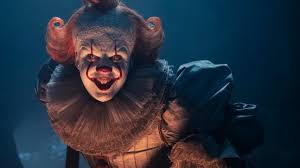
The show also benefits from revisiting the clown we love/hate: Pennywise — played again by Bill Skarsgård in this continuity. His return suggests that what we thought we knew about Pennywise might just be the tip of the iceberg. The promise of deeper origin, earlier cycles of terror, glimpses of past massacres—all of that builds anticipation. Critically, the series has earned around 77% on Rotten Tomatoes, indicating generally favorable reviews despite reservations.
Another point of interest: the show’s release timing. Launching in late October 2025 taps into the horror season perfectly, and with eight or nine episodes (depending on region) airing weekly, the pacing allows for appointment-viewing rather than marathon binging.
In terms of fan service vs. fresh ground, the series mostly leans into novelty. For instance, by digging into the history of Derry and earlier cycles of terror, the show offers territory that neither the films nor the novel fully explored onscreen. Moments such as the Black Spot burning event, the military base storyline, the introduction of new characters (while still threading connections to the familiar) suggest the creators aimed to legitimize the show’s reason-to-exist rather than simply cash-in.
And yet, for all its ambition, one can’t ignore that this is still a choral horror show. The sheer cast size risks dilution; multiple storylines compete for screen time. Keeping tension high across episodes is a challenge when you have to service both character development (kids and adults) and myth-building (town history, monster lore). Some early critiques emphasize that the show feels stronger when it focuses, rather than spreads. For instance, the adults’ arc is considered more compelling than the kids’ at this stage.
To summarise: It: Welcome to Derry succeeds in many areas—it’s chilling, well-designed, rich in atmosphere and ambition. For lovers of King’s mythos, it presents a genuinely new chapter and expands the world in meaningful ways. It carries weight, not just with blood and monsters, but with social commentary, historical resonance and the slow corrosion of innocence. If one were to nit-pick, the pacing unevenness, occasional over-familiarity (how many times have we seen kids on bikes pursued by supernatural terror?), and some weaker character threads are real concerns.
In the horror television landscape of 2025, where many series lean into fragmentation and spectacle, It: Welcome to Derry stands out for treating genre with seriousness: the monster matters, the town matters, the people matter. It doesn’t just want to scare you—it wants you to feel the weight of fear, the inevitability of cyclical horror, and the long shadow of trauma. It may not be perfect, and perhaps it will never eclipse the original novel’s power or the best of King’s film adaptations, but for what it sets out to do—turn the page on Derry’s history and dig into the roots of evil—it largely succeeds. Horror fans, especially ones attuned to myth-making and legacy narratives, will find much to admire.
In short: prepare to float again—and this time, the water might not just be in the sewer.