Heweliusz Review 2025 Tv Show Series Cast Crew Online
The Polish-language miniseries Heweliusz (2025), directed by Jan Holoubek and written by Kasper Bajon, immerses its viewers in one of Poland’s most tragic maritime disasters — the 1993 sinking of the ferry MS Jan Heweliusz — and the tangled aftermath of blame, grief and institutional failure. Released on Netflix on 5 November 2025, the series spans five episodes, each between roughly 49 and 81 minutes, and aims to blend disaster spectacle with courtroom-drama and human cost.
At its core, Heweliusz tracks two parallel threads: on one hand the onboard chaos as the ferry ploughs into a violent winter storm and capsizes, and on the other the lives ashore of families, company officials and investigators who must navigate what went wrong — and who should pay for it. The series opens with a visceral depiction of the stormy Baltic Ocean: the ship listing, rafts floundering in icy water, the desperation of passengers and crew clinging to life. From that point the narrative moves into a layered inquiry: we meet Piotr Binter (portrayed by Michał Żurawski), an off-duty former captain pulled into the investigation, and Jolanta Ułasiewicz (Magdalena Różczka), wife of the vessel’s on-duty captain accused in the aftermath. The official narrative seeks to pin blame on the captain and crew, while Binter and others begin unwrapping systemic issues of overloaded cargo, flawed repairs, weather warnings ignored and corporate inertia.
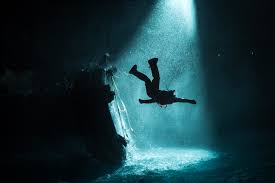
One of the strongest aspects of the series is its commitment to atmosphere and tension. The cinematography, according to multiple reviews, uses a cold, blue-green palette to underscore the sea’s void and the chill of both physical and emotional danger. The early episodes effectively convey the terror of being at sea in a storm — the helplessness of passengers, the destruction of rescue efforts, the brutality of nature. For viewers, there is an almost physical sense of dread and vertigo. This immersive approach gives the disaster weight beyond snooping into boardrooms: you feel the waves, the cold, the moment when hope evaporates.
Yet Heweliusz does not merely linger on disaster visuals; it invests in the human stories behind the headlines. The show slows to trace survivors’ guilt, families’ anguish, the crushing limbo of waiting for word, and the institutional deflection of blame. For example, the series observes how the company owning the ferry attempts to divert responsibility, how the governmental inquiry becomes politicised, and how victims’ families are left navigating opaque systems. Jolanta’s arc illustrates how the wife of a captain becomes collateral damage in the narrative shift — her attempt to preserve her husband’s reputation meets fierce public hostility and legal hurdles. In this sense, the series becomes not just a disaster story but also a critique of power, accountability and how institutions respond—or fail to respond—when catastrophe strikes.
However, the series is not without flaws. Several reviewers point out that its pacing can be inconsistent: the early disaster sequences are gripping and fast-moving, but once the story shifts fully into investigations, legal hearings and slower emotional beats, the momentum slows noticeably. Some cliff-hanger choices at the ends of episodes feel unsatisfying to certain viewers; one critic noted that while the visuals felt unflinching, the narrative sometimes leaves one stranded alongside grieving characters without a sense of resolution. Further, because the series employs a nonlinear structure — jumping between the night of the sinking, the days after, and the months of inquiry — it demands careful attention. While many will find this engaging, some may find it taxing or even disorienting.
On a thematic level, Heweliusz also challenges the idea of causality and blame. Rather than presenting a simplistic “captain at fault” story, the series layers multiple failures: technical issues with the ferry (overloaded trucks, potentially unrepaired doors, structural issues), meteorological warnings ignored, decisions made under commercial pressure, and the human cost of each. One review summarises this: “the captain played a part, but he was not the only one.” In that way, the series functions almost as a microcosm of how large-scale tragedies unfold: not as a single moment of error but as the confluence of many small mis-steps, each of which could perhaps have been addressed in isolation.
Performance-wise, the cast delivers with quiet dignity. Żurawski’s Binter is measured yet emotionally raw, Jolanta’s Różczka brings the lived trauma of a family torn apart by public scrutiny, and the supporting ensemble captures the chaos and sorrow of survivors, investigators and bureaucrats alike. Reviews suggest the characters feel grounded rather than melodramatic, which aids the emotional authenticity of the piece.
Heaven of Horror
In terms of production scale, Heweliusz is an impressive undertaking. According to Wikipedia, it was described as “the largest and most complex Polish television series production in recent years,” featuring over 120 named characters, more than 3,000 extras, and filming across multiple locations including Świnoujście, Szczecin, Gdynia, Wrocław and Brussels for water-stunt scenes. Such ambition pays off in the sense of scope: you feel the scale of the disaster, the sea’s indifference and the human network coming to grips with its consequences.
From a viewing-perspective, one of the strengths is how the story asks you to engage not simply as a witness, but as a participant in reflection. The series invites one to ask: What if the warnings had been heeded? What if institutional accountability had been stronger? What responsibility did the owners, regulators, crew and companies bear? And how do survivors and families live on when no full justice is achieved? The emotional weight is therefore substantial. One review comments: “You can’t help but be angry at how irresponsible everyone in the series is for allowing this situation to happen in the first place.”
On the flip side, because of this ambition the series sometimes sacrifices clarity for complexity. The jumble of characters, investigative threads and historical detail may make it harder for general viewers unfamiliar with the real-life event to track everything. And the deliberate pacing may test patience: where some moments feel chilling and necessary, others—especially the slower legal hearings—may feel inert or overly didactic. For an audience seeking uninterrupted action or immediate catharsis, this may pose a challenge.
In terms of emotional tone, the show is unrelenting. It wants the viewer to feel the devastation, the grief, the guilt and the rage. It doesn’t shy away from disturbing imagery: the fact that bodies are recovered with dismemberment, that survivors are left adrift in freezing water, that families wait and are ignored — all of this is portrayed with blunt realism. One of the early episodes is described as “grim,” which sets the tone for the remainder. The emotional burden is significant: this is not light entertainment but a serious drama about calamity and human failing.
Inevitably, festival-style touches and artistic choices make their mark. The cold hues, the occasional flashbacks, the quiet long takes of survivors processing trauma — all speak to a series less interested in spectacle than in empathy, reflection and moral inquiry. This means that while it may satisfy fans of high-end drama and historical reconstructions, it might feel heavy for viewers looking for escapism.
If I were to summarise my view: Heweliusz is a powerful, ambitious piece of television that tells an important story. It succeeds most when it shows the human cost of the disaster: the desperation of people in the water, the families in limbo, and the long shadows cast by mistakes and oversight. It is less successful when the pace slows and the investigative threads become dense without the same emotional pull. But overall, the series earns high marks for intent, scope, production design and for giving voice to victims and survivors in a way that many disaster dramas don’t.
For viewers outside Poland, the show has added value in presenting a non-Anglophone story of tragedy and accountability, reminding us that disaster does not care about nationality or language but about human vulnerability and institutional weakness. The fact that Netflix has backed this kind of production is encouraging for global storytelling: it brings a Polish event into the international eye, and does so with production values that match its ambition.
In the end, what resonates is not simply the sinking of a ship, but the sinking of trust — trust in the system, in those who are supposed to keep us safe, and in the idea that someone will be held responsible. Heweliusz asks: what does justice look like when the sea takes lives and memory becomes contested? It doesn’t offer neat answers, and perhaps it can’t. That is in itself part of its power. It refuses to close the book tightly, reminding us that for those who survived, and those who didn’t, closure is never quite complete.
If you’re willing to engage with something heavy, well-crafted and emotionally serious, then Heweliusz is worth your time. It may not offer relief, but it offers reckoning. Viewed through the lens of the real-life catastrophe it dramatizes, it becomes more than a TV drama—it becomes a memorial, a warning and a work of reflection.