Dr. Seuss’s the Sneetches 2025 Movie Review
The animated special Dr. Seuss’s The Sneetches, released on streaming in November 2025, takes the beloved concept from Dr. Seuss’s classic tale and re-imagines it for a new generation of viewers. What emerges is a vibrant, modernised adaptation with a strong message of inclusion and acceptance, though its departures from the original story leave room for debate about how effectively it engages with its themes. While its heart is in the right place and the visual execution is bright and engaging, the film’s changes and pacing mean that it doesn’t always reach the full emotional or philosophical depths of its source material.
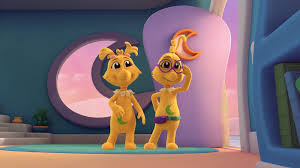
From the outset, The Sneetches is clearly designed with families and younger children in mind: the runtime is brisk (around 57 minutes according to listings). he story centres on Stella, a young Star-Belly Sneetch voiced by Amari McCoy, and her friendship with Pearl, a Moon-Belly Sneetch, in a world divided by long-standing tradition. The familiar elements are there: the idea of two classes of Sneetches based on whether they have stars on their bellies or not, and a social system that declares one type superior to another. However, the team behind this adaptation significantly expands the world-building: different biographies, different social codes, and layers of tradition, exclusion and challenge. As one review puts it, “Instead of just being star-bellied Sneetches, there are also moon-belly ones … the two live in very different biomes and subsequently have two fairly distinct societies with different values.”
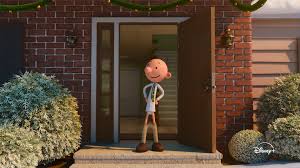
Visually, the adaptation is lively and colourful, embracing the whimsical flair of Seussian design while accommodating more contemporary animation styles. The film’s production lends itself to a dynamic palette: scenes of beach life, skies, machines, and the whimsical apparatus of tradition all feel vivid and appealing. Because it is made for streaming and targeted at younger viewers, the animation never becomes dark or overly complex—it stays bright, accessible, and friendly, which is a strength in its own right. The character designs of Stella, Pearl, and the supporting cast are charming, and the movement and music deliver an engaging experience, especially for children.
Where it excels most is in its thematic accessibility and its willingness to translate an abstract, moral-centric story into something children can latch onto. Parents and educational reviewers alike note that the film “gently introduces kids to the more complex ideas of prejudice and bigotry” using a non-threatening animated world. The choice to centre two female protagonists—Stella and Pearl—adds modern relevance, offering children role models who question norms and push boundaries in a positive way. The exploration of tradition (why things are the way they are), the courage to ask “why?”, and the friendship across divides all anchor the story in lessons that feel urgent and valuable. As one reviewer notes, “Stella pushes boundaries… she’s inventive, curious, and loves to ask questions.”
Yet for all these strengths, the adaptation is not without its compromises. Some critics have pointed out that in updating the story, the film’s stakes feel lighter and less challenging than the original. The classic Seuss tale of the Sneetches holds an enduring power because of its allegorical bite: it pointedly critiques discrimination, exclusion, and blind group-thinking. This newer version, while well-intentioned, sometimes flattens those edges into more generic children’s-media moralising. On the aggregator site Rotten Tomatoes the user rating sample shows a divide: one viewer praising it as “a wonderful movie with a positive message that is both relatable and authentic,” while another laments it as “a very watered-down adaptation that replaces the original, complex and important concept” with a more generic message. The consequence is that those who come into the film expecting something as sharp as the original may leave feeling a little under-wowed.
In more concrete terms, the pacing and the character arcs can feel rushed or lightly sketched. Because the runtime is relatively short and the target audience quite young, there’s less time to linger on inner conflict, societal consequences, or the deeper emotional toll of exclusion and prejudice. The film introduces the premise that Star-Bellies look down on Moon-Bellies, that traditions don’t always make sense, and that friendship can upend bigotry—but it doesn’t always show the weight of those themes. The children’s special genre means that the narrative arc stays light, safe, and generally optimistic. That is not necessarily a failing—children’s media needs a measure of hope—but it does mean that the film smothers some of the harder edges of the story in favour of accessibility.
Some reviewers take issue with certain characterisation choices. For example, the “quirky little girl” protags trope comes up in one medium review: “the two main characters suffer from the ‘quirky little girl syndrome’ and are pretty annoying,” even while acknowledging that “a strong recommendation” remains. The sense here is that in trying to make the film appealing and marketable to kids, some of the depth of character is sacrificed for charm and snappiness—moments of introspection or regret which might have made the story more memorable are skimmed over in favour of bright visuals and catchy music.
Speaking of music, the film uses song and rhythm to accentuate its themes and maintain the attention of younger viewers. The number of songs is enough to give the feature a musical-special feel rather than a straight non-musical narrative. That said, some critics feel the songs are serviceable but not especially memorable, and that the scoring does not always enhance emotional resonance the way it might in a more adult-oriented animation. Essentially, the music works for the age group, but it doesn’t reach the level of being a standout musical element in its own right.
On the subject of accessibility and age-appropriateness: this film does well. According to educational/parent-guidance sites like Common Sense Media, the film is rated for age 3+ and is fine in terms of language (there’s no profanity), violence is minimal (a mild peril when a monkey gets stuck in a ceiling fan is cited), and overall the message is positive. This makes the film an excellent choice for younger children—those who might not yet grasp the nuances of racism or discrimination but can learn through allegory that “differences” aren’t a reason for hierarchy. From that perspective, the film delivers admirably: it presents two groups, questions the logic of their division, introduces a friendship that crosses that divide, and culminates in a change of mind. That is a sound formula for children’s moral education and the film executes it with clarity.
However, for older children—pre‐teens and beyond—or adults revisiting the story, the film may feel too sanitized. The original Seuss story carried more of a sting: the trickster machine-seller McBean, the absurd shift from one status to another, the exhaustion of the Sneetches, and the final admission that “you can’t teach a Sneetch” all carry sharper commentary on how entrenched biases and social stratification work. The new film’s structure—emphasising friendship and personal growth rather than the systemic implications of class and exclusion—means that the commentary on prejudice becomes more of a generalized “we’re all the same” rather than a probing of how power, status, and hierarchy operate. One reviewer observes this dilution: “the original message … is more relevant to our children than ever before,” but is “replaced” by a more generic message in the new version.
Rotten Tomatoes
Another point of discussion is fidelity to the source. Fans of Seuss may note that the adaptation takes significant liberties: new characters (Stella and Pearl), new social dynamics, and expanded societies change the tone and scope of the story. Some of the whimsy and economy of the 1950s/60s Seuss style—its satirical bite, its lean storytelling, its oscillation between exaggeration and absurdity—is softened in favour of a more conventional modern children’s special. For example, one review points out that “this movie is not a direct adaptation … instead, it’s a wholly original story about two Sneetch friends … who teach everyone the equality lesson at the end.” That means that if one approaches The Sneetches expecting a reverent retelling of the book, one may feel a little disappointed; instead, one should regard it as a reinterpretation or re-imagining, with different priorities.
In terms of cultural relevance, though, the decision to modernise is defensible. The themes of division, exclusion, tradition, and friendship across divides remain pressing in 2025. The choice to rename and expand the story to two young female leads adds inclusive texture. The design of the two societies and the way they live separately and adhere to traditions of “star-belly vs moon-belly” echoes real-world dynamics of in-group vs out-group, privilege vs marginalisation. The fact that the film encourages children to ask: Why do we believe some groups are better than others? What happens when we stop believing that? — these are important questions, albeit addressed in a simplified form. The educational value thus remains clear, and for many parents and educators the film will provide a useful springboard for conversation about difference, fairness and empathy.
Yet the simplicity is at once a strength and a weakness. The film never fully challenges the structural roots of the Sneetches’ divisions: the tradition is presented and then questioned, but there is little depiction of the cost of maintaining the status quo, the ways privilege is perpetuated, nor the deeper emotional scars of exclusion. The transformation is rapid, neat, and tidy—even idealised. In contrast to the original’s subtly cynical wit (which ends with “You can’t teach a Sneetch”), this film offers a more optimistic resolution: friendship, invention, questioning and change lead to a better outcome. That is far from a bad message, but it is less provocative, less confrontational, and less layered than one might hope.
When it comes to target audience and how to enjoy the film: for younger children (ages 3–7 or so) who are being introduced to the idea of fairness, difference and acceptance, the film is excellent. The bright animation, friendly characters, simple arc, and clear moral make it accessible. Parents looking for a starting point for a conversation about difference or prejudice will find the film very usable. As a family-friendly streaming pick, the film succeeds. But for older viewers or those looking for a deeper, more enduring reflection on social division, it may leave them wanting. The film’s brevity and focus on accessibility mean that it doesn’t linger, dig or challenge.
In sum, Dr. Seuss’s The Sneetches is a visually cheerful, thematically sound adaptation that leans into the story’s core message of equality and friendship, while making changes to fit contemporary children’s media norms. Its accessible approach and friendly tone make it a reliable choice for younger audiences and a welcome addition to Seuss adaptations. At the same time, its simplifications, reduced thematic bite, and somewhat conventional characterisation mean that it doesn’t quite live up to the more sardonic, sharp-edged essence of the original Seuss tale. If the intention is to provoke deep reflection, this might not be the place; if the intention is to introduce the ideas of difference and empathy in a safe, fun, colourful way, then it fulfills that goal.
Ultimately, one suspects that this adaptation will stand as a competent and engaging children’s special that gets the job done—but not necessarily elevate itself into the kind of classic that the original story still holds. There is plenty to like: the friendships, the visuals, the message; and little to actively dislike except that the more adventurous or older viewer may feel the film plays it a little too safe. Still, in an era where children’s entertainment often shies from even touching on themes of difference or bias, it is commendable that The Sneetches takes that step, and does so with warmth, humour and heart.