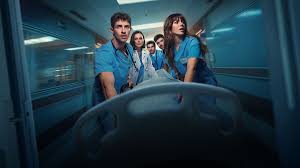
Breathless Season 2 Review 2025 Tv Show Series Cast Crew Online
Season 2 of this Spanish hospital drama takes place in the halls of the Hospital Joaquín Sorolla in Valencia, which now has transitioned from a public institution into a privately-managed facility.This shift becomes the engine driving much of the tension: how the values of public service, solidarity and medical ethics square off against profit-minded management, institutional restructuring, and personal ambitions of staff. The season consists of eight episodes (as did the first), each around 40-50 minutes long.
One of the key continuations from Season 1 is the character of Patricia (played by Najwa Nimri) who is undergoing a battle with cancer and whose story arc entwines personal fragility with professional identity.Her storyline is emblematic of the show’s willingness to combine high-stakes medical drama with deeply human vulnerabilities. At the same time, the younger generation of doctors (notably Biel, portrayed by Manu Ríos) and other returning characters like Jésica (Blanca Suárez) and Pilar (Aitana Sánchez‑Gijón) are all thrown into newly intensified ethical dilemmas, relationship conflicts, and institutional upheavals.
One of the strongest aspects of Season 2 is its thematic ambition. The show does not simply rest on familiar “save the patient” arcs but uses the hospital as a microcosm to explore broader socio-political issues. The privatization of the hospital opens up conflict lines around what the duty of care means when business interests are in play, and how the staff’s convictions are tested when the system they serve changes. This dimension gives the series more weight than many standard medical dramas and draws a credible picture of moral anxiety under pressure. Critics and promotional pieces emphasise that the season is “not just another hospital drama” but a “diagnosis of the human condition” wrapped in adrenaline.
In addition, the returning ensemble cast bring continuity and emotional investment. The characters feel familiar, their struggles ongoing, which means the audience carries history into the new season rather than starting from scratch. The reviewers note the shift in tone toward darker, more emotionally fraught storytelling (with the trailer itself showing “darker lighting” and quicker, more urgent cuts) which aligns with the narrative stakes.The production values remain strong—stylised enough to feel cinematic, yet grounded in the messiness of hospital corridors, emergencies and human error.
Finally, for viewers who engage with character-driven drama, the interactions among doctors, nurses, administrators and patients in Season 2 deliver a rich blend of professional tension, romantic conflict, personal trauma and institutional betrayal. For example, Jésica’s effort to regain her confidence while navigating a fraught love triangle, or Pilar dealing with her son’s addictions, add depth beyond mere medical cases.
However, as strong as many of the elements are, Season 2 is not without flaws—and some of them will matter depending on what the viewer is looking for. One issue is pacing and narrative ambition: while the thematic concerns are large, the season sometimes juggles too many threads (privatisation, cancer, romantic entanglements, addiction, power struggles) such that individual arcs lose sharpness or resolution. The risk with ensemble shows is always that the many characters dilute each other; here, the moral dilemmas sometimes feel more suggested than fully explored.
Another point is that, although the production is solid, the show still bears hallmarks of its genre. The hospital-setting allows for dramatic crisis after dramatic crisis, which can verge on over-saturation—episodes filled with emergencies, betrayals, life-or-death stakes and personal confessions. While some viewers find this addictive, others may see it as exhausting or overly melodramatic. Reddit commentary on the first season pointed out moments of unrealism in medical competence or dramatic convenience; it’s likely similar criticisms will apply to Season 2.
A further limitation is that although the social commentary is welcome, it sometimes lacks nuance. The privatization storyline raises important questions, but the show occasionally falls into binary oppositions (public good vs. private profit, heroic doctor vs. cynical admin) rather than fully exploring the complexity of such systems. Some of the character arcs lean heavily into tropes (the addicted child, the ambitious doctor, the corrupt manager) which risk feeling familiar.
If you watched Season 1, you’ll find Season 2 continues many of its strengths but tries to raise the stakes and deepen the tone. The first season introduced the setting and characters; Season 2 shifts the terrain by transforming the institution itself. That metamorphosis gives a fresh impetus. The change from public to private hospital management is a strong move which repositions the narrative stakes. It forces characters to rethink loyalties, values, and survival strategies. From an early promo: “we’ve heard sirens at the Joaquín Sorolla… that can only mean one thing: chaos is back on call.”That sense of escalation is real and allows the second season to be more urgent.
That said, if the first season won you over because it felt somewhat more contained, character-centred and novel (Spanish medical drama with social commentary), then you may find the second season occasionally leans more heavily into spectacle. The relational conflicts, hospital politics, and personal crises are amplified, which is great if you like high-intensity drama, but might feel less intimate if you preferred subtler storytelling. Also, because the second season arrives a year or more after the first, some of the freshness may have worn off—but if you’ve been waiting for the return, it largely delivers.
The show remains best suited to viewers who enjoy medical dramas, ensemble casts, and emotional-thematic weight rather than detective procedural simplicity. If you like shows that mix professional stakes with personal lives, ethical dilemmas, institutional critique and interpersonal tension, this will hit the mark. If you prefer highly realistic medical procedures, minimalist character arcs, or light-hearted tone, this may not be for you.
Be aware that the show contains strong language, bloody surgical scenes, sexual content and heavy topics such as cancer, addiction, suicide and institutionalised stress. The earlier season’s review from Common Sense Media noted these elements and recommended it for age 16+ and up.So it’s not light viewing.
In sum, Season 2 of Breathless is a worthy return. It builds thoughtfully on its first season by shifting the institution underneath the characters’ feet, forcing change, conflict and self-examination. The moral and professional tensions are elevated, the ensemble returns strong, the production values hold up, and if you are engaged in following these characters, you’re likely to feel the weight of this chapter. On the flip side, it occasionally falls into ensemble-drama excess, some arcs feel under-resolved or overly familiar, and the intensity of the storytelling may not suit all tastes.
If I were to give a broad estimate: for what it aims to do, it succeeds—delivering drama that’s emotionally charged, socially conscious, and compelling. I’d modestly rate it a strong 7.5 out of 10—maybe even an 8 for fans of medically-rooted drama with heart and grit. For casual viewers or those allergic to hospital melodrama, I’d temper expectations. But if you’re on board with the first season, you’ll likely find Season 2 a satisfying deepening of the story rather than a let-down.