Altered 2025 Movie Review
In 2025, revisiting Eduardo Sánchez’s 2006 sci-fi horror film Altered feels like opening a time capsule from a transitional era of genre cinema, a moment when filmmakers were shifting from the post-found-footage craze into more practical-effects-driven creature narratives, yet still experimenting with low-budget inventiveness that modern productions rarely attempt. Watching Altered today offers an unexpectedly fresh experience because it now stands out as a rare example of a contained alien-abduction revenge scenario that neither leans fully into camp nor pretends to be grander than its modest scope.
The film follows a group of men traumatized by a past alien encounter, who attempt to capture one of the extraterrestrials responsible for their suffering. It’s a simple premise, yet the emotional weight of the characters’ shared history, combined with the intimate setting of a rural home turned makeshift battleground, gives the movie a tense, almost claustrophobic energy that plays differently now than it did on release. In 2025, when sci-fi horror tends to gravitate toward either bloated franchise spectacles or ultra-meta indie projects, the straightforward earnestness of Altered feels like a strength rather than a limitation.
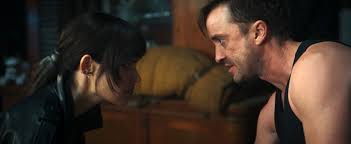
The dynamic among the central characters—Wyatt, Cody, Duke, and Otis—has aged surprisingly well because it avoids the polished banter that dominates much of today’s genre writing. These men are messy, angry, traumatized, resentful, and often self-destructive. Their roughness feels authentic, and their moral conflicts about what to do with the captured alien create a tension that mirrors later genre works exploring trauma but without the heavy thematic framing common today. What stands out most when rewatching the film in 2025 is how effectively its practical effects contribute to the atmosphere. The creature design, especially for a mid-2000s independent film, remains tactile, unnerving, and satisfyingly grotesque.
The alien’s physicality gives weight to moments of violence and desperation, grounding scenes that might otherwise feel too familiar. Modern digital effects have become impressively seamless, but the tangible, handcrafted quality of Altered’s creature work gives it a presence that still triggers the same visceral unease it did nearly two decades ago. The film benefits from Sánchez’s ability to create tension from minimal elements, a skill he carried over from The Blair Witch Project, though here he applies it in a more traditional narrative format. His direction keeps the characters enclosed in a pressure cooker where old grievances flare, loyalties shift, and the alien’s threat escalates from something physically dangerous to something psychologically destabilizing. In 2025, viewers accustomed to lore-heavy alien mythology might be surprised by how little exposition the film offers, but its restraint allows imagination to fill the gaps.
The alien’s intelligence, maliciousness, and strategic cruelty make it far more frightening than a creature explained in detail. In fact, the small hints about experiments and abductions are more disturbing because they remain ambiguous. The film’s pacing, once criticized for occasional sluggishness, now feels deliberate and grounded, giving room for character dynamics to breathe. One of the film’s lasting strengths is Wyatt, who evolves from a withdrawn survivor consumed by fear into someone forced to confront both the alien and his own sense of responsibility. His portrayal remains poignant because it portrays trauma not as cinematic spectacle but as a persistent, invasive shadow. Cody, Duke, and Otis each bring different shades of volatility, guilt, and bravado, making the group’s unraveling feel tragically inevitable. In an era where ensemble casts often rely on archetypes, Altered’s flawed, morally gray characters feel refreshingly human. When reflecting on the film in 2025, it also gains unexpected thematic resonance: the idea of a community haunted by an event no one else believes or understands mirrors modern discussions around collective trauma, making the narrative feel more contemporary than its 2006 roots might suggest.
The tension between believing you’ve been harmed and being dismissed as unstable or delusional now hits harder and carries social relevance that the film never explicitly anticipates. Its rural setting, once simply a practical choice, now reads as a commentary on isolation and the distrust of institutions, which makes the characters’ desperation more believable. The sound design, with its unsettling alien vocalizations and the creaking, oppressive quiet of the house, remains effective even by today’s standards. The score avoids over-dramatizing scenes, leaning instead on atmospheric unease. The cinematography, though constrained, uses shadows and tight framing to enhance the sense of danger lurking just outside the frame, a technique that has aged gracefully. In 2025, with audiences used to HDR clarity and hyper-smooth digital imagery, the grainy textures and low-light contrasts of Altered feel oddly immersive, almost nostalgic for an era when horror embraced imperfection.
While the film is not without flaws—its dialogue occasionally falters, some acting moments are awkward, and a few narrative beats feel rushed—the overall experience remains compelling because its sincerity outweighs its rough edges. It is a film that understands the value of tension over spectacle, character anxiety over lore dumps, and physical effects over digital gloss. Revisiting Altered now reveals just how ahead of its time it was in exploring trauma-driven sci-fi horror, a subgenre that would only become more prominent in the 2010s and 2020s. The film’s rawness, once seen as a sign of its limited budget, now reads as intentional texture, the kind that gives it longevity and a distinctive voice.
In an entertainment landscape filled with reboots and sequels, Altered stands as a reminder of what can be achieved with creativity, focus, and a willingness to let fear grow from character rather than world-building. Its exploration of vengeance, survival, and the psychological aftermath of unexplained terror continues to resonate, making it a film that deserves renewed appreciation in 2025. Even with nearly twenty years of genre evolution behind it, Altered remains gripping, unsettling, and strangely relevant, proving that sometimes the most enduring stories are the ones that lean into simplicity while trusting their audience to feel the fear without needing everything spelled out.