A Grammy Salute to Cyndi Lauper Review 2025 Tv Show Series Cast Crew Online
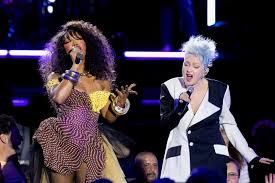
“A Grammy Salute to Cyndi Lauper” 2025 stands as one of the most heartfelt and vibrant tributes in the Grammy Salute series, a show that not only celebrates an artist’s legacy but also manages to capture the spirit of their individuality. Broadcast by CBS and produced in collaboration with the Recording Academy, this two-hour special honors the indelible mark Cyndi Lauper has left on pop music and culture over the past four decades. From her early days as the quirky, fearless voice behind “Girls Just Want to Have Fun” to her evolution into an advocate for human rights and a Broadway powerhouse, Lauper’s influence reaches far beyond her chart-topping hits. The 2025 event felt less like a ceremony and more like a joyous, glittering carnival — a reflection of the artist’s colorful personality and unfiltered authenticity. With a star-studded lineup of performers, candid interviews, and emotionally charged moments, it managed to celebrate both the pop icon and the human being behind the neon hair and rebellious style.
The show opened with a bang — a kaleidoscopic medley of Lauper’s greatest hits performed by a dynamic ensemble of today’s pop stars. Dua Lipa’s reinterpretation of “Girls Just Want to Have Fun” kicked things off with infectious energy, blending her sleek disco-pop sensibility with the song’s timeless message of freedom and individuality. Her version stayed true to the fun and playfulness of the original but added a modern feminist edge, setting the tone for an evening that celebrated empowerment and self-expression. Following her, Miley Cyrus delivered a fiery rendition of “She Bop,” embracing the song’s controversial roots and transforming it into an anthem of confidence and unapologetic self-love. Her stage presence and raw vocal power perfectly mirrored the rebellious energy Lauper embodied in the 1980s, drawing roaring applause from the audience that included Lauper herself, smiling and teary-eyed in the front row.
Between performances, the show featured a series of archival clips and interviews chronicling Lauper’s rise to fame and her journey through decades of change in the music industry. Narrated by Billy Porter, who shares Lauper’s flair for theatricality and advocacy, these interludes offered both nostalgia and depth. Viewers were reminded of her humble beginnings in Queens, her early struggles with band failures, and her eventual breakthrough with the 1983 album She’s So Unusual, which redefined pop music. The montage of her MTV-era visuals—her candy-colored hair, mismatched outfits, and contagious laughter—brought a wave of nostalgia. But beyond the vibrant aesthetics, the show emphasized her artistry: her distinctive voice, her songwriting prowess, and her role as one of the first women in pop to truly own her eccentricity.
One of the evening’s most moving moments came when Kelly Clarkson performed “Time After Time.” Stripped down and heartfelt, Clarkson’s rendition was intimate, showcasing the song’s emotional resonance beyond its romantic context. With minimal instrumentation and soft lighting, the performance highlighted the timeless vulnerability in Lauper’s lyrics. As cameras cut to Lauper, visibly emotional, the connection between artist and legacy was palpable. This performance encapsulated what the show did best—showing how Lauper’s songs transcend generations and genres, remaining deeply personal to both artists and listeners.
The show also honored Lauper’s social activism, which has been as groundbreaking as her music. Over the years, she has become a passionate advocate for LGBTQ+ rights and homelessness awareness. The segment on her True Colors Fund, narrated by Elton John, brought to light her decades-long efforts to fight youth homelessness, particularly among LGBTQ+ individuals. Elton’s tribute was both heartfelt and humorous, as he reminisced about their friendship and mutual admiration. He then took to the stage with a surprise duet of “True Colors” alongside Lauper herself—a simple, stunning performance that silenced the crowd. The emotion in their voices, the quiet strength of the lyrics, and the shared moment between two musical legends underscored the heart of the night: authenticity, compassion, and connection.
Another highlight came when Billie Eilish and Finneas delivered a hauntingly beautiful reimagining of “All Through the Night.” The sibling duo infused the 1980s ballad with minimalist production and ethereal harmonies, proving the timelessness of Lauper’s songwriting. The audience’s rapt silence spoke volumes, and even younger viewers, perhaps less familiar with Lauper’s catalog, were introduced to her music’s emotional depth. Later, Janelle Monáe turned “Money Changes Everything” into a funky, futuristic performance, complete with bold visuals and a live brass section that electrified the room. It was a fitting reminder of how Lauper’s work has always been about reinvention—embracing change while staying true to oneself.
In a segment that balanced humor and admiration, comedian and host Billy Porter invited a series of guest speakers to share their favorite “Cyndi moments.” Cher sent in a recorded message calling Lauper “a true original—someone who never tried to be anyone else,” while Madonna appeared in a rare cameo via video, recalling their early days navigating fame in the same era. Their mutual respect was palpable, as Madonna admitted, “We might have been compared endlessly, but there’s only one Cyndi Lauper.” These reflections painted a vivid picture of how Lauper’s fearlessness helped shape the identity of female pop stars who followed her.
The Grammy Salute also featured Lauper’s influence on Broadway. A segment dedicated to her Tony Award-winning musical Kinky Boots showcased performances by the original cast, including Billy Porter reprising his role as Lola for a show-stopping number of “Raise You Up/Just Be.” This portion of the evening emphasized how Lauper’s creative energy extended far beyond pop music—her songwriting for theater proved her ability to capture human stories in all their joy, pain, and resilience. Her influence on musical theater, often overshadowed by her pop legacy, was rightfully celebrated as an extension of her boundless artistry.
The evening’s production design mirrored Lauper’s aesthetic: bold, colorful, and unapologetically eclectic. The stage shimmered with neon lights, graffiti-inspired backdrops, and whimsical set pieces that evoked the 1980s New York art scene. The transitions between performances were seamless, with visual nods to Lauper’s iconic music videos and fashion sense. Costume designer Zaldy infused the night with layers of nostalgia and glamour—performers donned outfits inspired by Lauper’s eccentric style, from punk-infused tutus to metallic jackets, paying homage without parody. The direction by Ken Ehrlich ensured that the pacing never lagged; the show flowed like a concert interwoven with documentary storytelling, maintaining energy while grounding it in emotion.
Perhaps the most touching moment came near the end when Lauper herself took the stage. After receiving a standing ovation that lasted nearly two minutes, she performed “Shine,” one of her more recent songs, reminding everyone that her creative fire is far from dimmed. Her voice, still rich and emotive, carried the weight of experience but retained the youthful spark that made her a star. She followed it with an exuberant reprise of “Girls Just Want to Have Fun,” joined by all the night’s performers. The performance turned into a jubilant singalong—an explosion of color, confetti, and unrestrained joy that perfectly encapsulated her enduring message of self-expression and freedom.
In its entirety, “A Grammy Salute to Cyndi Lauper” succeeded not just as a tribute but as a celebration of individuality, resilience, and the power of music to inspire change. It reminded audiences that Lauper’s career has never been about fitting into molds but about breaking them—about embracing differences and turning them into strengths. For longtime fans, the special offered nostalgia wrapped in renewed appreciation; for younger viewers, it served as a powerful introduction to an artist who paved the way for today’s genre-defying performers.
The show’s emotional depth, combined with its dazzling performances, made it one of the most memorable Grammy Salute specials in years. It showcased the many facets of Lauper’s career: the pop sensation, the songwriter, the activist, the Broadway composer, and above all, the woman who never stopped being herself. By the time the closing credits rolled, it was clear that the tribute had achieved what few can—it not only honored Cyndi Lauper’s past but celebrated her ongoing influence in shaping the sound and spirit of modern pop culture. “A Grammy Salute to Cyndi Lauper” wasn’t merely a look back at an extraordinary career; it was a love letter to authenticity, a reminder that fun, compassion, and rebellion can coexist beautifully in one voice. For anyone who has ever felt different, bold, or misunderstood, this show reaffirmed what Lauper has been telling the world for over forty years: don’t just fit in—shine in your own true colors.