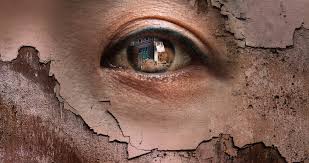
The Echoes of Survivors: Inside Korea’s Tragedies Review 2025 Tv Show Series Cast Crew Online
The Echoes of Survivors: Inside Korea’s Tragedies emerges as a haunting, unflinching docuseries that demands to be seen—not as spectacle, but as witness, empathy, and civic reckoning, tracing its lineage back to In the Name of God: A Holy Betrayal (2023) while expanding its scope to probe four devastating, systemic scars in recent Korean history—Brothers’ Home, the JMS cult, the Chijon Family murders, and the Sampoong Department Store collapse—all delivered in eight hour-long episodes that feel more like four expansive documentaries in one From the opening scenes, the tone is deliberately confronting: survivors of Brothers’ Home—an internment facility masquerading as a welfare institution in Busan—recount the horrors of forced labor, abuse, and death while donned in the same track suits worn during their imprisonment, set against recreated facades that evoke the clang of confinement; this aesthetic choice casts an immediate moral shadow, suggesting a commitment to survivor testimony but opening questions about emotional harm veering toward the theatrical The series does not shy away from institutional failure or cruelty; those who ran Brothers’ Home—Park In‑geun and relatives—face survivors in visits that are as emotionally raw as they are narratively righteous, though the criminal accountability they ultimately bore was limited to embezzlement, leaving human rights abuses juridically unpunished The docuseries then revisits the JMS cult, extending the investigation begun in its predecessor by expanding on the role of Jung Jo‑eun and the complicity of officials and police in shielding cult leader Jeong Myeong‑seok—a reflection of how power, in religious and institutional veins, can be weaponized to obscure truth In shifting to the Chijon Family murders, the series pivots to the chilling testimony of Lee Jeong‑su, the lone survivor compelled to reenact atrocity—the harrowing psychological imprints are unignorable—but the narrative here raises a tension: does the focus on visceral reenactments and sensational media imagery overshadow deeper socio-economic analysis of class-driven violent rebellion? Critics say yes Finally, the Sampoong Department Store collapse—South Korea’s deadliest peacetime disaster—is rendered in detail: structural negligence, greed-driven design shortcuts, ignored warning signs, catastrophic collapse—all brought to life through survivor recollections, archival footage, and reporting that trace how regulatory decay cost 502 lives and changed construction oversight forever—but the series also reminds us that memorialization remains contested, with the collapse site replaced by luxury living rather than a public monument Through each segment, Echoes of Survivors thematically threads its episodes with a critique of a society entranced by accumulation—of wealth, control, placation—and how that obsession corrodes accountability, empathy, and public memory
Stylistically, the series blends survivor testimony, archival footage, dramatic reenactments, and investigative confrontation; this provides emotional immediacy but risks tipping into sensationalism—Leisurebyte called it “heartbreaking,” “raw, unfiltered, and impactful,” but acknowledged that reenactments often feel “a bit much and … cringy” Other critics note the docuseries occasionally edges into trauma porn—especially when survivors are costumed to recreate past abuse—raising ethical quandaries even as the series situates these stories within Korea’s ongoing cultural traditions of remembrance, ritual mourning, and the civic imperative to remember, collective grief transformed into shared historical legacy Yet, beyond the discomfort, there is a clear gesture toward honoring resilience: survivors are portrayed not as broken or silenced but as voices demanding recognition and justice, a design reflected in scenes where they confront perpetrators or their families, especially in Brothers’ Home follow-ups Stylistically unrelenting, morally resonant, and structurally bold, the series refuses easy detachment—forcing viewers out of complacency and into empathy, even if that empathy is pounding and difficult.
Contextually significant too, the series arrives at a moment when South Korea is increasingly engaging with its overdue reckonings—from President Lee Jae Myung’s recent initiatives into Itaewon’s crowd crush aftermath to broader institutional reforms; Echoes of Survivors plugs into this national moment by positioning these tragedies as flashpoints in a continuing conversation about safety, power, and the politics of visibility Moreover, efforts by JMS to block the series’ release were dismissed by Seoul courts, affirming its journalistic and cultural significance
In sum, The Echoes of Survivors: Inside Korea’s Tragedies is not comfortable viewing—and rightly so. It reanimates haunted pasts with the urgency of “must-not-forget” storytelling, illuminating how greed, bureaucracy, and ideological entrenchment warp humanity, but it also raises tough questions about documentary ethics, survivor agency, and the line between remembrance and spectacle. For viewers prepared to endure its intensity, it’s more than a docuseries—it’s a call to sit with national grief, remember through witness, and demand that our collective future learns from what we’ve so often failed to honor. Let me know if you’d like a more concise version, specific focus on any of the four stories, or a shift in tone!