Providence Falls Review 2025 Tv Show Series Cast Crew Online
The Hallmark Channel’s Providence Falls trilogy, adapted from Jude Deveraux and Tara Sheets’s novels, debuted during the “Summer Nights” event in August 2025. Featuring three installments—Chance of a Lifetime (Aug 2), An Impossible Promise (Aug 9), and Thief of Fate (Aug 16)—this ambitious series blends romance, mystery, fantasy, and police procedural into a cohesive yet multi‑tonal narrative At the center is Liam O’Conner (Lachlan Quarmby), a charming 19th‑century Irish rogue, and Cora McLeod (Katie Stevens), his reincarnated love now serving as a rookie detective in present‑day Providence Falls, Oregon Tasked by celestial “Angels of Destiny” with steering Cora toward her destined partner, Finn Walsh (Evan Roderick), Liam must suppress his own enduring love—while solving a modern murder case intertwined with echoes of their 1844 past
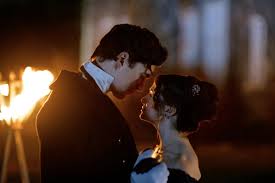
From the opening moments of Chance of a Lifetime, the series establishes its dual‑era structure with grace. The 1844 scenes are lush, atmospheric, and romantically charged—a pastoral Ireland full of misty moors and genteel intrigue. The modern day sequences shift into crisp, LED‑lit police station settings in Oregon, balancing genre tropes of detective work with emotional undercurrents as Cora and Liam form an uneasy partnership Stephanie Stevens’s performance as both the sheltered aristocrat of 1844 and the sharp, confident cop in the present is nuanced. She conveys Cora’s evolution convincingly: in the past, shy but impassioned; in the present, quietly competent yet subconsciously haunted by a love she can’t place
Quarmby’s Liam feels like a slightly familiar archetype—the roguish time‑traveler with hidden stakes—but he brings emotional depth through subtle despair, fierce conviction, and genuine chemistry with Stevens’s Cora. Their scenes crackle with tension, particularly when gratitude or guilt tempt Liam to reveal too much too soon. Evan Roderick as Finn Walsh plays the warm, steady foil to Liam’s intensity. While Finn embodies the destined soulmate archetype, scenes with him and Cora often feel stilted, by design; the romantic friction is with Liam, whose presence constantly undermines Finn’s orbit
What sets Providence Falls apart is how it indulges in multiple genre frameworks without losing coherence. In An Impossible Promise, the focus shifts more heavily toward the murder investigation—modern day crime procedural elements reminiscent of Law & Order—while undercurrents of fate and supernatural pressure intensify. Viewers get clues, red herrings, and suspect interviews, all while Liam fights his increasing attraction to Cora, aware that surrendering to it could doom souls across centuries Each time the past and present narratives intersect—especially when Cora uncovers historical echoes of the case—the storytelling achieves elegant symmetry.
Visually, the trilogy benefits from high production values: sweeping shots of old‑world Ireland filmed on location lend authenticity, while Vancouver doubles as present‑day Oregon with charming small‑town Americana sets and well‑lit interiors Costume design merits special mention: the 1844 clothing is richly layered and historically textured, while contemporary wardrobes reinforce Cora’s no‑nonsense persona and Liam’s outsider status. The direction by Lucie Guest and Siobhan Devine strikes a balance between cinematic polish and grounded performances, preventing the narrative from edging into soap‑opera territory despite its fantastical premise common criticism of Hallmark’s recent offerings has been formulaic plotting; Providence Falls breaks that mold by weaving fate, romance, detective work, and even metaphysical stakes into a layered experience
Fans of Hallmark’s The Way Home—itself a time‑travel drama—will find familiar emotional fibers here, but with a stronger mystery focus and less overt fantasy mechanics. Liam himself notes that the show offers “a cop show, there’s a period piece, and pretty much a whodunnit wrapped up in the whole thing”
The writing by Teresa Kale and adapting screenwriters respects the source material’s dramatic stakes while trimming excess. The pacing holds well: each episode deepens the emotional stakes and advances the mystery while steadily ratcheting tension about Liam’s impending celestial judgment and Cora’s growing feelings toward him. When Thief of Fate arrives, the murder is nearly solved, alliances shift, and Cora begins to sense deeper truths about her connection to Liam and Finn, culminating in a satisfying, bittersweet conclusion that honors themes of destiny, choice, and sacrifice
Some viewers may find the balance between romance and procedural uneven—fans who prefer undiluted period romances may feel short‑changed by the modern murder subplot’s weight, and vice versa. Cora’s engagement to Finn at the outset can feel underexplained emotionally, relying on the destiny trope more than character chemistry. A few dialogue moments lean toward exposition—particularly when Liam recounts the past or the angels remind him of celestial deadlines—but these feel necessary rather than cumbersome, given the story’s complexity.
The show’s mechanics of reincarnation and divine intervention occasionally strain credibility, especially for viewers less inclined to spiritual or metaphysical plot devices. But within the rules the series establishes—angels of destiny, celestial bargains, reincarnation cycles—the internal logic remains consistent. Performances by the main trio hold it together emotionally, lending gravitas to otherwise high‑concept moments.
Stevens, Quarmby, and Roderick form a credible love triangle without falling into clichés. Cora is allowed to choose—not simply react—and the ending doesn’t rely on gimmickry. Instead, the resolution emerges organically from character decisions, augmented by the show’s fantasy framing.
From a thematic perspective, Providence Falls invites reflection on how choices echo across lifetimes. Should destiny be immutable, or can true love rewrite that script? The show leans toward redemption through conscious agency: Liam’s mission is assigned by celestial powers, but his eventual willingness to diverge marks his emotional growth. Cora, in turn, embodies modern independence—strong, decisive, and unmoored from her past by design—yet open to the possibility of fate. Their interaction critiques the idea of predetermined love by showing how two strong individuals must grapple with external and internal pull factors before arriving at their own truth.
Ultimately, Providence Falls offers more than typical summer‑night comfort viewing. Its blending of genres creates a fresh tonal chemistry that keeps viewers invested week‑to‑week. The romance is earnest and layered, the mystery provides suspense, the fantasy stakes raise philosophical undertones, and the period setting brings visual richness. Fans of Hallmark’s signature warmth will find it here, but so will viewers craving more genre variety.
If there’s a weakness, it’s that secondary characters—especially fellow detectives and small‑town locals—occasionally feel underwritten. Their presence is functional rather than emotionally resonant. A deeper exploration of the town itself or of Finn’s background might have added further texture. But steering focus toward the central trio keeps the narrative streamlined across the trilogy’s short runtime.
In summary, Providence Falls (2025) is Hallmark at its most cinematic, ambitious, and emotionally grounded. A love story that spans centuries and genres, it offers introspection and entertainment in nearly equal measure. Katie Stevens delivers a dual‑era performance that carries the emotional core; Lachlan Quarmby brings vulnerability and heartbreak to the role of a time‑burdened lover; Evan Roderick anchors the destined soulmate and provides the necessary counterbalance. With high production values, solid direction, and a script that respects its source without becoming weighed down, the trilogy stands out as one of Hallmark’s most memorable special events to date.
If you enjoy romance with a mystery twist—or time‑travel paired with murder intrigue—and don’t mind angels meddling in fate, this trilogy is a rare Hallmark effort that reaches for something genre‑crossing and succeeds.