The Winning Try Review 2025 Tv Show Series Cast Crew Online
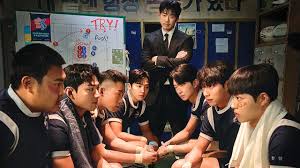
The Winning Try, the 2025 South Korean sports drama series released through a co-production between Netflix and SBS, is a heartfelt, grounded, and quietly intense story of redemption, second chances, and the transformative power of team spirit. Eschewing the glossy tropes often found in sports dramas, it delivers a richly layered and emotionally resonant narrative centered on a high school rugby team that everyone, including the school administration, has long given up on. At the heart of the series is Ju Ga-ram, played with raw vulnerability and restrained power by Yoon Kye-sang, a disgraced former rugby star whose promising career ended in scandal after a doping charge years ago. Now reduced to the fringes of both society and the sport he once loved, he is unexpectedly recruited to coach the failing rugby team at a struggling high school—less as an opportunity and more as an institutional afterthought.
Ga-ram’s arrival is met with cold indifference and outright disdain by students and staff alike. His past haunts him, his confidence is fractured, and his reasons for accepting the job are murky even to himself. The school’s rugby team, once a source of pride, is now a skeleton crew of disinterested and dysfunctional boys, most of whom have personal reasons to be anywhere but on the field. From the beginning, the show paints a grim but honest picture of apathy, trauma, and failure—both personal and systemic. Rather than rushing into a comeback arc, the series takes its time exploring the emotional terrain of its characters, showing how defeat can become a way of life when no one believes in you, not even yourself.
Each player has a unique and difficult backstory that slowly unfolds: there’s Yun Seong-jun (played by Kim Yo-han), a talented but angry student who masks his pain with sarcasm and violence; Kim Jin-woo, a quiet and overweight player ridiculed for his physique but harboring a deep yearning to be taken seriously; and Min Jae-hyuk, who’s under constant academic pressure and uses rugby as his only escape from an abusive home life. Ga-ram doesn’t come in with rousing speeches or inspiring locker room pep talks. In fact, he barely speaks at first, preferring action over rhetoric. He lets the team fail repeatedly, watching them crumble in practice, knowing that only by confronting their own disillusionment will they begin to understand what they want from the game—and from themselves. His coaching style is abrasive, unpredictable, sometimes even reckless, but it’s deeply authentic, grounded in lived experience and emotional bruises that mirror those of his players.
The rugby scenes are filmed with raw energy and deliberate chaos. There are no clean-cut slow-motion touchdowns or miraculous underdog wins in early episodes. Matches are scrappy, clumsy, and often painful to watch, reflecting the players’ lack of cohesion and belief in one another. Mud-slicked fields, breathless collisions, and aching silences dominate the visual tone, reinforcing the show’s commitment to authenticity. The cinematography uses handheld cameras and natural lighting to place viewers inside the action, not as spectators of a polished drama, but as observers of something messy, imperfect, and painfully real. What sets The Winning Try apart is not its focus on sportsmanship or competition but its nuanced exploration of masculinity, shame, and identity in the lives of young men. Rugby becomes a metaphor for emotional endurance—for choosing to push forward even when it hurts, even when the world tells you it’s pointless.
There’s a recurring motif of physical impact: tackles, scrums, falls. But it’s never just about the game—it’s about life’s hits and whether one can get back up. This is mirrored in Ga-ram’s own journey, which is as much about re-entering life as it is about reclaiming his role in the sport. His relationship with Bae I-ji (Im Se-mi), a shooting coach at the same school and his former girlfriend, is one of the show’s emotional cores. Their past is fraught with unspoken pain and unresolved tension, but their interactions are subtle, never overwrought. I-ji is Ga-ram’s foil—calm, principled, and still deeply hurt by his past choices. She doesn’t immediately forgive him, nor does she romanticize his return. Their conversations are often clipped, strained, full of unfinished sentences and sidelong glances. This emotional minimalism gives their dynamic a weight that feels earned and lived-in. As the episodes progress, the team’s evolution is slow but satisfying. They begin to train with purpose, not because they believe they can win, but because they start to believe they matter.
Ga-ram earns their trust not through charisma but through consistency—he shows up every day, no matter how poorly they perform, no matter how badly they treat him. He becomes a kind of surrogate father figure, albeit a deeply flawed one, whose belief in effort over talent starts to seep into their consciousness. The turning point comes midway through the series, not with a win, but with a narrow loss where the team finally plays as a unit. It’s in this match that they begin to see each other not as misfits thrown together, but as teammates with shared struggles and goals. Their improvement isn’t presented as miraculous or sudden; it’s hard-won, rooted in pain, sweat, and compromise. There are injuries, benchings, and arguments—sometimes with Ga-ram, sometimes with each other—but every moment feels earned. The show does an excellent job portraying the behind-the-scenes work that goes into even the most modest athletic progress. Weight training, tactical breakdowns, emotional breakdowns—everything is shown with raw honesty. The writing avoids clichés by refusing easy victories. Even when the team starts winning matches, they remain underdogs, constantly battling prejudice, budget cuts, and internal conflict. The school administration continues to view them as a liability, and rival teams mock them mercilessly. But by this point, the audience is deeply invested in their progress—not just as athletes, but as people trying to build something in a world that has written them off. Yoon Kye-sang’s performance is a revelation.
He balances Ga-ram’s abrasiveness with a quiet tenderness that peeks through in rare but powerful moments—a hand on a shoulder, a look of concern, a whispered piece of advice. His portrayal of a man who doesn’t believe in redemption but keeps showing up anyway is both heartbreaking and inspiring. Kim Yo-han also delivers a breakout performance as Seong-jun, bringing both fire and fragility to a role that could have easily veered into stereotype. His scenes with Ga-ram are electric, often wordless but emotionally charged, showing the slow build of trust between two people who see too much of themselves in each other. The supporting cast also shines, especially the young actors playing the rest of the team. Each character is distinct, with their own arc and growth, and the show takes care to give them time and space to breathe. Their camaraderie feels authentic, forged not through forced bonding scenes, but through shared effort and hardship. There’s a sense of lived-in authenticity in how they joke, fight, and support each other, which makes their eventual unity all the more moving. The series does have some structural pacing issues. Some viewers may find the first few episodes slow, especially if they come in expecting a traditional sports drama full of inspirational montages and dramatic turnarounds. But The Winning Try is not interested in shortcuts. It demands patience from its audience, rewarding them with a deeper, more meaningful emotional payoff.
The writing occasionally veers into melodrama, especially when dealing with some of the players’ backstories, but it never loses its emotional honesty. The dialogue is naturalistic, often underwritten in a way that trusts the actors to convey subtext through expression and silence rather than exposition. The direction is similarly understated. There are no sweeping crane shots or rousing orchestral cues. Instead, the show relies on stillness, close-ups, and ambient sound to build its emotional world. The soundtrack is used sparingly but effectively, with a mix of acoustic guitar, minimalist piano, and atmospheric synths that underscore rather than overwhelm. The climax of the season—avoiding spoilers—strikes a perfect balance between tension and catharsis. It’s not a conventional victory, but it’s a deeply earned emotional one.
The final scenes underscore the show’s core message: winning isn’t always about the scoreboard. Sometimes, it’s about standing up after being knocked down, about choosing to keep going when everything tells you to quit. The Winning Try ends not with a triumphant roar, but with a quiet, defiant breath—a team walking off the field bruised but unbroken, a coach looking up instead of down, and a group of young men who’ve found something worth fighting for. In a TV landscape often saturated with fast-paced dramas and exaggerated emotions, The Winning Try stands out for its authenticity, emotional depth, and grounded storytelling. It’s a slow burn, but one that leaves a lasting impression. It’s about rugby, yes, but it’s also about failure, resilience, and the healing power of persistence. It’s about how we treat people when they fall, and how we help them rise again—not as heroes, but as human beings. This is one of 2025’s most affecting and well-crafted dramas, not just for sports fans, but for anyone who’s ever tried—and failed—and tried again anyway.