Nocturne Review 2026 Tv Show Series Cast Crew Online
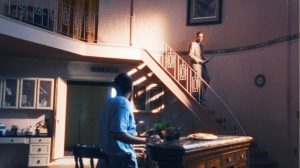
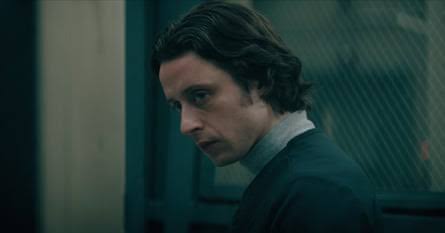
Apple TV’s Nocturne is a dark psychological crime thriller that explores the disturbing influence of a serial killer and the emotional damage left behind by his crimes. Starring Liev Schreiber, Zazie Beetz, and Stephen Graham, the series combines a missing-person investigation with psychological tension, family tragedy, and a battle of minds between a determined detective and a dangerously manipulative criminal. Based on the bestselling novels The Sandman and Lazarus by Lars Kepler, the show brings a Scandinavian crime-story atmosphere into an American setting. Its central mystery is compelling, its performances are strong, and its unsettling atmosphere makes it an interesting addition to the crime-thriller genre.
The story follows Jonah Lynn, played by Liev Schreiber, a former Philadelphia homicide detective who has moved to a small town in western Pennsylvania in the hope of leaving his painful past behind. Jonah is not an ordinary investigator looking for another case. He is a troubled man carrying personal losses and professional regrets. His attempt to build a quieter life is interrupted when a boy who disappeared three years earlier suddenly returns. The child had been believed to be a victim of notorious serial killer Jurek Walter, but his unexpected appearance raises new questions about what happened to his missing sister. Jonah is pulled back into the investigation, reopening a case that has haunted him for years.
The opening premise creates an effective sense of mystery. A missing child returning after years of uncertainty is disturbing enough, but the fact that another child remains unaccounted for gives the investigation an emotional urgency. The story does not simply ask who committed the crimes. It also explores whether the original investigation missed something important and whether the person responsible still has the power to influence events. This creates a strong foundation for a thriller in which the past refuses to remain buried.
Liev Schreiber delivers a controlled and convincing performance as Jonah Lynn. His character is experienced, determined, and deeply affected by personal tragedy. Schreiber does not portray him as an invincible detective who can solve every problem through intelligence and physical strength. Instead, Jonah appears emotionally exhausted, carrying memories that influence almost every decision he makes. His determination to find the missing girl is mixed with guilt and a need to correct the mistakes of the past. This gives the character a human quality that makes his investigation more engaging.
Schreiber is particularly effective in quieter scenes. His expressions often reveal more than the dialogue, especially when Jonah encounters information connected to the original case. There is a constant tension between his professional instincts and personal emotions. He wants to remain rational, but the investigation keeps bringing him closer to memories he has tried to escape. The performance gives the series a grounded centre, even when the story moves into increasingly disturbing territory.
Stephen Graham is arguably the show’s biggest attraction. He plays Jurek Walter, a serial killer whose influence extends far beyond the walls of the secure psychiatric facility where he is imprisoned. Graham creates a frightening character without relying on constant shouting, exaggerated violence, or theatrical behaviour. His performance is controlled, unsettling, and unpredictable. Jurek can appear calm and almost polite, but there is something deeply threatening beneath that surface. His ability to manipulate people through conversation makes him especially disturbing.
What makes Jurek interesting is that physical confinement does not seem to limit his power. Even behind locked doors, he finds ways to influence people outside the facility. His greatest weapon is not necessarily physical strength but his understanding of human weakness. He observes others carefully, identifies their fears, and uses their emotions against them. Graham plays these moments with remarkable precision, making even an ordinary conversation feel dangerous. His unusual voice, facial expressions, and controlled movements create an antagonist who remains difficult to read.
The character inevitably recalls some of the most memorable fictional serial killers from crime cinema and television. However, Graham gives Jurek his own personality rather than simply copying familiar screen villains. He is not constantly trying to appear frightening. In fact, his calmness often makes him more disturbing. The audience knows that something terrible may happen, but the uncertainty surrounding his intentions creates much of the tension. His scenes are among the strongest in the series.
Zazie Beetz brings another important dimension to the story as Saga Bauer, an FBI agent who shares a close personal connection with Jonah. Saga is the daughter of Jonah’s late police partner and has become something of a surrogate daughter to him. Their relationship adds emotional complexity to the investigation. Jonah wants to protect her, but Saga is an experienced professional who believes she must take risks to uncover the truth. Their differing approaches create tension without making either character seem unreasonable.
Saga’s decision to go undercover inside the psychiatric facility is one of the show’s most suspenseful developments. She hopes to learn more about Jurek by getting closer to him, but the decision places her in an environment where ordinary investigative methods may not be enough. Her personal history and professional confidence make her an interesting character, although the undercover storyline occasionally asks viewers to accept some questionable decisions. Beetz handles the role with determination and emotional control, giving Saga a strong presence even when the plot becomes complicated.
The supporting cast also helps establish the atmosphere of the fictional town and its troubled history. Bill Camp plays Chief Dave Ellison, a police figure dealing with the renewed investigation and its consequences. Rory Culkin appears as Karl Anders, while Chrissy Metz plays Ida Frost, whose family is directly affected by the disappearance of the children. Poorna Jagannathan adds another layer to the investigation as FBI agent Alexandra Quinn. These characters help show that the crimes have consequences beyond the detective and the killer.
One of the series’ strongest elements is its atmosphere. Nocturne creates a world filled with emotional unease, quiet dread, and the feeling that danger may be present even when nothing appears to be happening. The small-town setting provides an effective contrast to the disturbing events at the centre of the story. Rather than relying entirely on action or sudden shocks, the series builds tension through conversations, unanswered questions, and the possibility that someone is being manipulated without realizing it.
The psychiatric facility is particularly effective as a setting. Its controlled environment, restricted movement, and institutional routines create a feeling of confinement. Jurek’s presence makes the location even more uncomfortable because he seems capable of turning ordinary interactions into psychological confrontations. The facility is supposed to contain him, but the series gradually suggests that the people working and living around him may be more vulnerable than they believe.
The direction uses this environment to create a slow-burning sense of danger. The opening episodes take time to establish the characters and the history of the case, which may test the patience of viewers expecting immediate action. However, this slower approach allows the mystery to develop gradually. The series is more interested in psychological pressure than in delivering a major twist every few minutes. Its quieter moments are often more effective than its more dramatic sequences.
The storytelling draws on familiar crime-thriller ideas, particularly the dangerous relationship between an imprisoned serial killer and the investigators who believe they can understand him. Jurek’s ability to influence events from behind bars creates an engaging central conflict, but it also means that some developments may feel familiar to experienced thriller viewers. The series occasionally resembles earlier stories about manipulative killers who use their conversations with detectives as another form of control.
This familiarity is one of the show’s main weaknesses. Some plot developments are predictable, and certain characters make decisions that seem designed to move the story toward a dramatic confrontation rather than reflecting the most practical response to the situation. The investigation also involves several personal histories and emotional complications, which can make the narrative feel crowded. Although these details give the characters depth, they sometimes compete with the central mystery.
The adaptation of Lars Kepler’s novels provides the series with a strong literary foundation. The books are known for their dark atmosphere and intricate crime plots, and Nocturne attempts to bring that sensibility to television. The American setting gives the story a different identity while preserving its interest in psychological manipulation and the consequences of violent crime.
However, translating a complex crime novel into a television series requires careful control of pacing and character development. Nocturne occasionally struggles to balance its different storylines. Jonah’s personal tragedy, Saga’s undercover investigation, Jurek’s psychological games, and the search for the missing girl all demand attention. When these elements work together, the series becomes gripping. When they compete, the narrative loses some of its momentum.
The show also has a strong emotional foundation. The disappearance of the children is not treated as a simple mystery designed to give the detectives something to investigate. It represents years of uncertainty and suffering for the people left behind. The family members are forced to live with unanswered questions, while the investigators carry the burden of a case that may never have been properly resolved. This emotional dimension helps distinguish Nocturne from crime dramas that focus almost entirely on solving puzzles.
At the same time, the series could have explored the wider impact of Jurek’s crimes more deeply. The focus remains largely on the detectives and their relationship with the killer, leaving some of the victims’ experiences and the community’s suffering less developed than they could have been. More attention to those affected by the crimes might have given the mystery an even stronger emotional foundation.
The sound design and musical atmosphere contribute significantly to the suspense. The score often creates an uncomfortable mood, signalling that something is wrong even when the characters appear safe. However, the music can occasionally become too forceful, making certain scenes feel more dramatic than their storytelling requires. A little more restraint would have allowed the performances and atmosphere to create tension naturally.
The series premiered globally on Apple TV on October 30, 2026, with its first two episodes, followed by weekly releases. It is planned as a ten-episode drama, so the story is still unfolding as of November 4, 2026. This means the complete season’s final impact cannot yet be judged. The opening episodes establish the central mystery and introduce the major characters, while leaving several important questions unanswered.
Despite its familiar plot elements, Nocturne remains worth watching for its performances. Stephen Graham gives the series a genuinely unsettling antagonist, while Liev Schreiber provides a believable portrait of a detective struggling with his past. Zazie Beetz adds strength and emotional complexity as Saga, creating a central trio whose conflicting motivations keep the investigation interesting. The supporting cast further strengthens the show’s small-town atmosphere.
Overall, Nocturne is a stylish and engaging crime thriller with an excellent central performance from Stephen Graham. Its story sometimes relies too heavily on familiar serial-killer conventions, and its multiple plotlines can make the pacing uneven. Nevertheless, the mystery has enough emotional weight and psychological tension to keep crime-drama fans interested. The show’s greatest achievement is its portrayal of Jurek Walter as a villain whose influence seems to grow even when he is physically powerless.
Nocturne may not reinvent the serial-killer genre, but it offers a dark atmosphere, strong acting, and a mystery that develops through psychological tension rather than constant action. Stephen Graham is the standout, Liev Schreiber gives the story emotional stability, and Zazie Beetz brings energy to the investigation. With more episodes still to come, the series has the opportunity to turn its promising opening into a satisfying crime drama. For viewers who enjoy slow-burning mysteries, disturbing villains, and character-focused thrillers, Nocturne is a compelling watch.