Godzilla Minus Zero 2026 Movie Review
Godzilla Minus Zero returns to the devastated world of postwar Japan with a sequel that attempts to expand the emotional and cinematic impact of Godzilla Minus One. Directed, written, and overseen in visual effects by Takashi Yamazaki, the film continues the story of a nation struggling to rebuild after war, only to face another terrifying calamity when Godzilla returns. Set in 1949, two years after the events of the previous film, the story follows former kamikaze pilot Kōichi Shikishima, his wife Noriko, and their young daughter Akiko as they try to protect the fragile life they have managed to create. The sequel raises the stakes with a new monster threat, but its central interest remains the same: how ordinary people endure extraordinary suffering and find reasons to keep living.
Ryunosuke Kamiki returns as Kōichi Shikishima, whose journey remains the emotional foundation of the franchise. In the previous film, Kōichi was haunted by guilt and trauma after surviving the war, and his encounter with Godzilla forced him to confront the consequences of his own fear and decisions. The sequel places him in a different stage of life. He is no longer simply trying to survive; he is attempting to build a family and reclaim a sense of peace. That change gives the character a new emotional challenge. The life he has worked to create is now something he must protect, and the return of Godzilla threatens to reopen wounds that never fully healed.
Kamiki’s performance continues to bring a human vulnerability to the story. Kōichi is not a traditional action hero who welcomes danger or feels comfortable in combat. His experience has left him deeply affected by violence, and his reluctance to return to the fight is part of what makes him compelling. The character’s struggle is not simply about overcoming fear. It is about deciding whether he can accept responsibility for protecting others without allowing the past to consume him. That emotional conflict gives the monster story a personal dimension that distinguishes it from a straightforward destruction spectacle.
Minami Hamabe returns as Noriko Ōishi, whose survival after Godzilla’s first attack left her with an uncertain future. Her relationship with Kōichi remains central to the family’s emotional story. The sequel explores the difficult balance between hope and fear as the couple tries to protect their daughter while living in a world where safety can never be guaranteed. Noriko’s presence gives Kōichi a reason to fight, but the strongest version of their relationship is one in which she is more than a source of motivation for him. Her own experiences and emotional responses help establish the cost of living under the shadow of Godzilla.
Sae Nagatani returns as Akiko, the young daughter whose presence gives the Shikishima family a glimpse of the future they are trying to preserve. Akiko represents the possibility of a generation growing up beyond the immediate experience of war, but the return of Godzilla threatens to destroy that hope. The film’s emotional stakes are heightened by the contrast between the innocence of family life and the enormous violence unfolding around it. The threat is no longer only about the survival of a nation; it is about whether a child can have a future in a world repeatedly devastated by forces beyond her control.
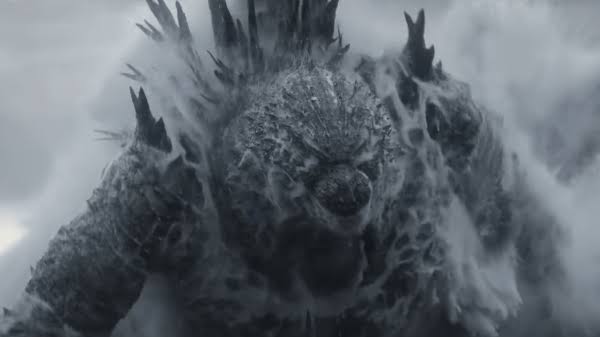
Godzilla remains the central source of terror, but the sequel’s official synopsis emphasizes the fragile recovery of Japan before the new threat strikes. The monster’s return is designed to make the progress achieved since the previous film feel painfully vulnerable. The country has begun rebuilding its homes, infrastructure, and sense of normality, yet the possibility of another catastrophe remains. This premise gives the film a powerful thematic foundation: recovery is not the same as security, and peace can be destroyed before people have fully learned how to live within it.
The film’s new kaiju threat expands the scale of the story and creates a fresh challenge for the characters. The trailers and official material suggest a larger monster conflict, while published reviews identify King Ghidorah as the opposing creature. The addition of another legendary monster gives the sequel an opportunity to explore a different kind of fear: not only the terror of Godzilla’s overwhelming power, but the possibility that humanity may be caught between forces too immense to control.
Yamazaki’s approach to the monster action remains grounded in the human experience. Godzilla is not simply a creature that appears to provide a sequence of destruction. His presence changes the lives of people who must respond to the disaster with limited resources, incomplete information, and conflicting responsibilities. This perspective helps the film preserve the emotional identity of Godzilla Minus One. The monster’s size makes the spectacle impressive, but the fear becomes meaningful because the audience understands what his arrival threatens to take away.
The visual effects are among the sequel’s most significant strengths. Godzilla Minus Zero was filmed entirely in Japan and is the first Japanese production shot entirely for IMAX, with imagery and sound optimized for the format. Yamazaki’s work as both director and visual-effects supervisor gives the film a unified approach to its spectacle. The scale of Godzilla’s movements, the destruction of buildings, and the contrast between the monster and the human environment are designed to create an overwhelming theatrical experience.
The effects are most effective when they communicate Godzilla’s weight and physical presence. A monster of this scale should not feel like an ordinary digital creature moving through a miniature world. The surrounding environment must respond to his movement, and the destruction should feel like a consequence of his existence rather than a collection of isolated visual effects. The sequel’s IMAX presentation appears particularly well suited to this approach, allowing the monster’s scale to dominate the screen while maintaining the detail of the period setting.
The film’s postwar atmosphere is another important part of its identity. Japan in 1949 remains a country shaped by the destruction of World War II, and the struggle to rebuild provides a meaningful backdrop for the monster’s return. The streets, homes, workplaces, and public spaces are not merely decorative period details. They represent the effort of ordinary people to reclaim a sense of normal life after catastrophe. Godzilla’s arrival threatens not only buildings but also the hope that the country can finally move beyond its recent suffering.
Yamazaki’s direction creates a strong contrast between moments of quiet human drama and sequences of large-scale destruction. The film’s most effective scenes are likely to be those in which the characters’ ordinary routines are interrupted by the possibility of disaster. A family conversation, a moment of reassurance, or an attempt to plan for the future can become emotionally charged when the audience knows how fragile that peace is. This contrast gives the monster’s appearances greater dramatic force.
The supporting cast adds further dimension to the story. Hidetaka Yoshioka returns as Kenji Noda, while other familiar figures from the previous film contribute to the effort to confront Godzilla. The sequel also introduces new characters, including a weather forecaster whose work becomes relevant to the disaster response. The broader ensemble gives the story a wider view of how people attempt to understand and respond to a threat that cannot be handled by one individual alone.
The film’s score, composed by Naoki Satō, plays an important role in sustaining its emotional and dramatic atmosphere. Music in a Godzilla film must accomplish two different tasks: it needs to give the monster a sense of overwhelming power, while also supporting the quieter scenes involving the human characters. A memorable score can make the difference between a visually impressive sequence and one that feels genuinely frightening or tragic. The music is especially important in a story where the emotional consequences of destruction matter as much as the destruction itself.
One of the sequel’s major themes is the difficulty of recovering from trauma. Kōichi’s experiences during the war and the first Godzilla attack have shaped his sense of responsibility and his ability to imagine a peaceful future. The return of the monster threatens to force him back into the role he hoped to leave behind. His journey becomes a question of whether confronting the past is necessary to protect the future. The film’s strongest emotional moments emerge when that question is connected to his family rather than treated as an abstract idea.
The story also continues the franchise’s reflection on the legacy of war and nuclear destruction. Godzilla has always represented more than a physical threat within the Japanese series, and Minus Zero retains that historical and emotional context. The monster’s return reminds the characters that the consequences of catastrophe do not disappear simply because the immediate danger has passed. The country’s recovery is fragile, and the people who survived the first disaster must confront the possibility of another. This connection gives the film’s spectacle a deeper meaning than a conventional monster-versus-monster conflict.
However, the sequel’s ambition also creates challenges. With a larger story and additional monster conflict, the film must balance the human drama with the demand for spectacle. Published reviews have praised its visual effects, period atmosphere, score, and some action sequences, while criticizing aspects of the human storytelling, pacing, and character development. These concerns point to a familiar difficulty in large-scale genre filmmaking: when the story expands, the emotional focus can become less concentrated.
The human drama may also feel overextended in places. The Shikishima family remains the heart of the film, but a sequel must find new ways to develop characters whose central emotional conflicts were already established in the previous installment. Kōichi’s trauma and Noriko’s survival provide meaningful starting points, yet the story needs to show how those experiences have changed them rather than simply repeating the same emotional beats. The strongest scenes are those that reveal new dimensions of their relationship and the different ways they respond to danger.
The expanded monster conflict creates another challenge. Godzilla’s appearances are a major attraction, but the film must use them carefully to maintain suspense. If the monster is shown too frequently, the sense of overwhelming terror may diminish; if he appears too rarely, viewers may feel that the film is withholding its central spectacle. The sequel’s success depends on how effectively it builds anticipation and connects each major encounter to the human story. The most memorable Godzilla films understand that fear is created not only by what the monster does, but by what people imagine he might do next.
Despite these potential weaknesses, Godzilla Minus Zero has a strong foundation in the emotional world established by its predecessor. Kōichi’s attempt to build a family after surviving war gives the sequel a personal reason to exist. The new threat challenges not only Japan’s recovery but also the possibility that the characters can escape the emotional consequences of their earlier experiences. The story’s most important question is not simply whether humanity can defeat Godzilla, but whether people can preserve their hope and compassion in a world where destruction repeatedly returns.
Overall, Godzilla Minus Zero is an ambitious sequel that expands the scale of the franchise while continuing its focus on trauma, recovery, and the human cost of catastrophe. Takashi Yamazaki’s direction and visual-effects work create an impressive theatrical experience, and the return of Ryunosuke Kamiki and Minami Hamabe gives the story an emotional connection to Godzilla Minus One. The postwar setting remains rich with meaning, while the new monster conflict offers a larger challenge for the characters. Although the human drama and pacing may not always match the spectacle’s intensity, the film continues to explore why Godzilla remains such a powerful cinematic symbol. For fans of Japanese kaiju films and emotionally grounded monster stories, it offers a major theatrical event that is most rewarding when its destruction is connected to the lives and hopes of the people caught beneath it.