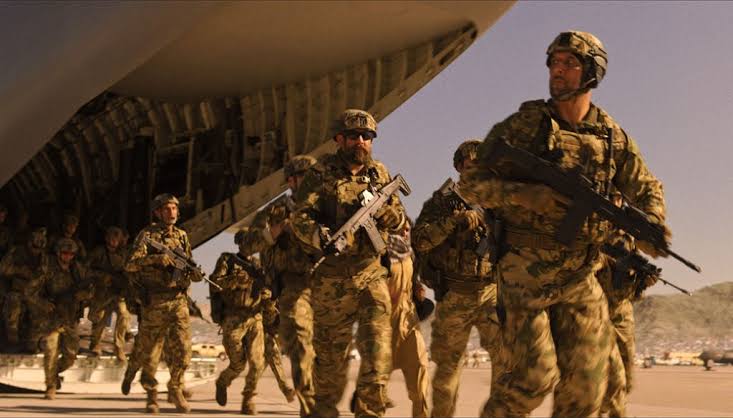
Operation Kabul 2026 Movie Review
Operation Kabul is a tense and emotionally charged war thriller that revisits one of the most chaotic moments in recent history: the evacuation of civilians from Afghanistan during the Taliban’s return to power in August 2021. Directed by Zsombor Dyga, the Hungarian film focuses on a military unit caught between its official mission and the human lives that make every decision painfully complicated. Rather than presenting the evacuation as a straightforward military operation, the film emphasizes the confusion, urgency, and moral pressure surrounding the soldiers as they attempt to bring people to safety. Its strongest quality is the way it transforms a large historical crisis into a personal story about duty, sacrifice, and the limits of what even capable people can accomplish in an unfolding disaster.
The story follows Lieutenant Bálint Kerekes, a Hungarian soldier whose unit arrives in Kabul during the final days of the international withdrawal. The mission appears clear on paper: locate and evacuate designated civilians before the situation becomes impossible. In reality, the airport is overwhelmed by desperate people, security is fragile, and every delay increases the danger. The soldiers must follow their orders while confronting the painful knowledge that many people seeking help cannot be accommodated. This conflict gives the film its emotional foundation. The military objective may be specific, but the human emergency surrounding it is far larger than the unit can control.
Gábor Jászberényi plays Bálint with a restrained, grounded performance that suits the character’s military background. He is not portrayed as a fearless action hero who always knows the right answer. Instead, he is a professional soldier attempting to maintain control in circumstances that constantly threaten to overwhelm him. His experience and discipline make him capable, but they do not protect him from uncertainty or emotional strain. Jászberényi’s controlled approach helps the film avoid excessive melodrama, allowing the character’s choices and reactions to communicate the weight of his responsibilities.
Bálint’s mission becomes more personal when he learns that Eszter, a Hungarian doctor he met during an earlier deployment, has been captured in Kabul. Blanka Mészáros plays Eszter, whose medical work has brought her into direct contact with the people most vulnerable to the city’s collapse. Their past connection adds an emotional dimension to the military operation, but the film also establishes that Eszter has her own commitments and motivations. She is not simply a romantic figure waiting to be rescued. Her work as a physician and her concern for her patients give her a distinct identity within the story.
The film uses flashbacks to reveal Bálint and Eszter’s earlier encounters, gradually explaining why her name carries such significance for him. These scenes provide a quieter contrast to the urgency of the evacuation. They show the characters in a different environment, when their connection could develop through conversation and mutual respect rather than the immediate threat of violence. The flashbacks are useful because they give Bálint a personal reason to take risks while also reminding viewers that the events in Kabul affect people with histories, relationships, and lives beyond the immediate crisis.
The central rescue mission creates a familiar war-thriller structure, but the historical setting gives it a sobering context. Bálint must decide whether to lead his soldiers beyond the relative security of the airport to reach Eszter. The operation is dangerous not only because of the Taliban presence but also because the city’s situation is rapidly changing. Every movement requires judgment, coordination, and a willingness to accept consequences that cannot be fully predicted. The film’s suspense comes from the uncertainty of the mission rather than from action alone.
One of the movie’s most effective elements is its portrayal of the airport as a place where safety is visible but not necessarily accessible. For the soldiers, the gates represent a controlled entry point and a difficult responsibility. For the civilians outside, they represent a possible escape from danger. The difference between being close to safety and actually reaching it becomes a source of sustained tension. The soldiers must identify the people they are assigned to evacuate, manage the crowd, and make decisions that can have life-or-death consequences. The film captures the emotional pressure of those choices without pretending that every problem can be solved through courage or quick thinking.
The supporting characters help illustrate the different pressures within the unit. Officers must maintain discipline and protect the mission, while individual soldiers are confronted with people whose suffering makes strict procedures difficult to follow. The film explores the tension between following orders and responding to immediate human need. These moments are especially powerful when they focus on small, specific actions rather than broad speeches about heroism. A soldier helping a frightened child or reacting to a crowd in distress can communicate the moral complexity of the situation more effectively than a dramatic declaration.
The film’s depiction of civilians is also important. The evacuation is not simply a backdrop for the soldiers’ bravery; it is a humanitarian crisis involving people with different fears, responsibilities, and hopes. The crowd at the airport represents a wide range of individual stories, even when the film cannot explore each one in depth. The soldiers’ inability to help everyone becomes one of the story’s most painful realities. Their mission may save lives, but it cannot undo the larger catastrophe unfolding around them.
Zsombor Dyga’s direction gives the film a strong sense of physical tension. The airport sequences emphasize crowded spaces, limited movement, and the constant possibility that a situation can deteriorate without warning. When the action moves into the city, the atmosphere changes. The soldiers are no longer operating within a relatively defined perimeter; they are exposed to a more unpredictable environment where visibility, information, and security are all uncertain. This shift helps the film maintain suspense while giving the rescue mission a distinct visual and dramatic identity.
Cinematographer Tamás Dobos contributes to the film’s grounded atmosphere through close framing and carefully controlled visual perspective. The camera often stays near the soldiers, limiting the audience’s view of what lies ahead. This approach makes the action feel immediate and uncertain. Instead of watching events unfold from a distant, all-knowing perspective, viewers experience the danger alongside characters who must make decisions with incomplete information. The technique is particularly effective during the nighttime mission, where darkness and restricted visibility increase the sense of vulnerability.
The action sequences are intense without losing sight of the film’s emotional stakes. Combat is presented as dangerous, confusing, and exhausting rather than as a polished display of military skill. The soldiers depend on one another, and their survival is tied to coordination and trust. This emphasis on teamwork makes the action more convincing. Bálint may be the central character, but the mission cannot succeed through individual determination alone. Every member of the unit contributes to the outcome, even when the screenplay gives some supporting soldiers less personal development than the lead.
The film’s Hungarian perspective gives it a distinctive place among stories about the 2021 evacuation. Large international events are often portrayed through the decisions of major political leaders or through the experiences of the most powerful military forces. Operation Kabul instead narrows its focus to a specific unit with a limited assignment. This perspective allows the film to explore the practical and emotional consequences of a mission without attempting to explain every geopolitical factor behind the withdrawal. Its emphasis remains on the people trying to carry out their responsibilities while history moves around them.
That focus is also one of the film’s limitations. Some supporting soldiers remain more defined by their roles in the operation than by their individual personalities. The story gives Bálint and Eszter a meaningful emotional history, but other characters receive less time to develop their own experiences and motivations. A deeper exploration of the entire unit could have made the collective danger feel even more personal. Still, the film’s concentration on the central rescue story helps maintain momentum and prevents the narrative from becoming too diffuse.
Another challenge is the balance between the broader evacuation and the personal rescue mission. The film begins with the overwhelming scale of the crisis, where hundreds of civilians need help and the soldiers are forced to make difficult choices. As the story progresses, Bálint’s effort to save Eszter becomes the main dramatic focus. This shift is understandable within the structure of a war thriller, but it occasionally narrows the perspective of a story whose most powerful theme is the impossibility of helping everyone. The personal mission gives the film emotional direction, while the larger humanitarian crisis provides its moral weight.
The ending aims to deliver a sense of resolution while acknowledging the bitter reality of the events. The rescue mission reaches its conclusion, but the surrounding tragedy cannot be neatly resolved. The film’s final movement may feel abrupt to some viewers, particularly because the emotional consequences of the wider catastrophe are so immense. Yet that discomfort is also connected to the subject matter. A military evacuation does not produce a perfect ending; it creates moments of survival within a much larger experience of loss, fear, and displacement.
Operation Kabul is most compelling when it allows the audience to sit with uncertainty. The soldiers are not given simple choices, and their courage does not eliminate the consequences of those choices. The film recognizes that duty can conflict with compassion, that personal loyalty can complicate professional responsibility, and that a successful mission can still leave people haunted by what they could not do. These ideas give the movie more substance than a conventional action thriller focused only on the mechanics of a rescue.
Overall, Operation Kabul is a gripping and serious war thriller that combines historical urgency with a personal story of duty and sacrifice. Gábor Jászberényi anchors the film with a controlled performance, while Blanka Mészáros gives Eszter a strong sense of purpose beyond her role in the rescue plot. Zsombor Dyga’s direction and Tamás Dobos’s cinematography create tense, grounded sequences that make the airport and nighttime mission feel dangerous and immediate. Although some supporting characters could have been developed further and the ending moves quickly through its emotional resolution, the film succeeds in conveying the pressure and moral complexity of the evacuation. It is a worthwhile watch for audiences interested in realistic military dramas, historical war thrillers, and stories about people trying to preserve humanity in the middle of chaos.