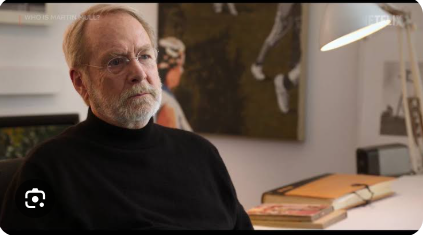
Who Is Martin Mull? 2026 Movie Review
Who Is Martin Mull? (2026) is a warm, funny, and deeply personal documentary that celebrates the life of Martin Mull, the American comedian, actor, musician, and painter whose extraordinary talent made him one of entertainment’s most distinctive personalities. Directed by Bob Saget and Neil Berkeley, the 94-minute film explores Mull’s remarkable journey through comedy clubs, television, music, and the visual arts, revealing a creative individual who never wanted to be defined by just one profession. Released on Netflix on October 7, 2026, the documentary offers an intimate look at a performer who became widely recognised for his memorable screen appearances while maintaining a deep commitment to painting. Rather than presenting a conventional biography that simply lists achievements and famous roles, the film allows Mull and the people who knew him to tell a more personal story about ambition, identity, friendship, and the passage of time. Its greatest achievement is showing that Martin Mull was much more than a familiar face from television. He was an artist whose curiosity, intelligence, and unusual sense of humour shaped almost everything he did.
The documentary begins by exploring the question at the centre of its title: who was Martin Mull beyond the characters audiences saw on screen? For many viewers, Mull is best remembered for his roles in popular television shows and films, including Roseanne, Sabrina the Teenage Witch, Arrested Development, and Clue. His performances often involved dry humour, exaggerated confidence, and a distinctive delivery that could make even an ordinary line unexpectedly funny. However, the documentary quickly reveals that acting was only one part of his creative identity. Mull had a longstanding passion for painting and music, and he frequently regarded these pursuits as more central to his ambitions than his success as a television performer. This contrast creates an interesting foundation for the film. It challenges audiences to reconsider an entertainer they may believe they already know and invites them to discover the artistic interests that existed beyond his most recognisable roles. The result is an engaging introduction to a complicated and unusually versatile personality.
One of the documentary’s strongest features is its use of archival footage. Instead of relying entirely on interviews in which people describe Mull’s personality, the film allows viewers to experience his humour directly. Old performances, television appearances, musical moments, and conversations demonstrate how naturally he could combine comedy with music and unconventional observations. His comedic style was distinctive because it did not always depend on an obvious punchline. Sometimes the humour came from a pause, an unexpected comment, or the confidence with which he delivered something completely absurd. This approach made his performances feel different from more conventional stand-up routines. The documentary gives these moments room to breathe, allowing audiences to appreciate the timing and intelligence behind the jokes. For longtime fans, the archival material offers a nostalgic opportunity to revisit a talented performer. For younger viewers who know him mainly from supporting roles, it provides a valuable introduction to the breadth of his earlier work.
The film also explores Mull’s early ambitions and the circumstances that shaped his creative development. His path was not simply a straightforward journey toward Hollywood success. He initially pursued interests in music and painting before finding opportunities in comedy and entertainment. His ability to move between these different fields became one of the defining features of his career. Rather than abandoning one interest whenever another became successful, he continued exploring new forms of expression. This willingness to experiment gives the documentary an appealing message about creativity. Mull did not fit neatly into a single professional category, and his career demonstrates that artistic identity can develop through curiosity rather than a rigid plan. The film suggests that his success was not necessarily the result of pursuing fame as an ultimate goal. Instead, he followed the opportunities that interested him, discovering that his unusual perspective could connect with audiences in several different ways.
Mull’s work in television receives considerable attention, particularly his contribution to Fernwood 2 Night, the satirical talk show that helped establish his reputation as an unconventional comic performer. Working alongside Fred Willard, Mull helped create a comic world in which awkward interviews, exaggerated personalities, and deliberately artificial television conventions became the source of humour. The documentary demonstrates why this work was important to his development as a performer. Rather than relying solely on traditional joke structures, the programme used character-based comedy and carefully maintained absurdity to create something that felt fresh. Mull’s deadpan delivery was particularly effective in this environment because he could treat ridiculous situations as though they were entirely ordinary. The film’s examination of this period is one of its most entertaining sections, showing how his creative instincts helped him become more than a talented supporting actor. He was a distinctive comic voice who could influence the tone and structure of the projects in which he participated.
The documentary becomes especially engaging when it explores Mull’s relationship with his fellow entertainers. Interviews and conversations featuring figures such as Steve Martin, Tom Waits, David Alan Grier, and other colleagues help establish the respect he earned among people who understood the demands of creative work. These contributions are valuable because they do not simply present Mull as a universally admired celebrity. Instead, they offer different perspectives on his humour, personality, and artistic independence. The conversations also reveal a sense of camaraderie among performers who developed their careers during periods when comedy was evolving in unusual and exciting directions. Steve Martin’s presence is particularly appropriate because he shared a creative era with Mull and understood the possibilities of unconventional performance. The film benefits from these personal recollections, which add context to the archival material and help explain why Mull’s work remained memorable to the people who encountered it.
Bob Saget’s involvement gives the documentary an additional emotional dimension. Saget began developing the project in 2018 because he admired Mull and considered him an important comic influence. However, Saget died in 2022 before the film could be completed, and Mull himself died in 2024 at the age of 80. Neil Berkeley subsequently took over the project and completed it using the original footage and interviews. This history gives the finished film an unusual sense of loss. The audience is not simply watching a tribute to a late performer; it is also seeing conversations preserved from a creative friendship whose participants are no longer alive. Saget’s affection for Mull comes through in their interactions, making the interviews feel personal rather than merely informational. Berkeley’s completion of the project ensures that those conversations can reach audiences, although the knowledge of what happened to both men inevitably changes how viewers experience them.
The treatment of Mull’s personal life is another important aspect of the film. While the documentary celebrates his professional achievements, it does not entirely avoid the difficult experiences that shaped him. His childhood and complicated relationship with his father are touched upon, suggesting that his early life contained painful experiences alongside the support he received from his mother. The film does not turn these subjects into sensational revelations, which is a strength, although some viewers may wish it explored them more deeply. There is a sense that Mull’s humour and independence were connected to a broader effort to establish his own identity. Nevertheless, the documentary remains primarily a tribute rather than an exhaustive psychological investigation. It offers glimpses into the person behind the public image without pretending that a collection of interviews can fully explain the experiences that shaped an entire life.
Painting is arguably the documentary’s most revealing subject. Mull spent much of his life creating visual art, and he wanted to be recognised as a painter rather than remembered exclusively as a comedian or actor. The film gives this passion meaningful attention, showing why painting was not merely a hobby pursued between entertainment projects. It was a central part of his artistic identity. His work demonstrates a visual imagination that existed alongside his comedic instincts, although painting allowed him to communicate in a different way. The documentary encourages audiences to look at his artwork with the same seriousness they might bring to his performances. This is an important distinction because celebrity documentaries sometimes treat a subject’s secondary interests as entertaining footnotes. Here, painting becomes essential to understanding Mull’s priorities. His story suggests that professional success does not always reveal what a person values most, and that the activity bringing someone public recognition may not be the one they consider their greatest achievement.
The film also touches on the challenges Mull faced during his life, including his struggles with alcoholism and the difficulty of being recognised primarily for a particular type of role. These moments add necessary complexity to the portrait. It would have been easy to create a documentary in which every experience reinforced a simple narrative of talent, success, and universal affection. Instead, the film acknowledges that a fulfilling creative life can include personal struggles and unresolved ambitions. Mull’s preference for painting over acting also suggests that external recognition does not always align with internal satisfaction. He could appreciate the opportunities entertainment provided while still feeling that his deepest artistic interests lay elsewhere. This tension makes his story more relatable because it reflects a common human experience: discovering that the identity other people assign to us may not match the identity we most want to express.
One of the documentary’s most moving elements is its exploration of Mull’s marriage to Wendy Haas. Their relationship provides an intimate counterpoint to the stories about television appearances, artistic achievements, and professional friendships. The film presents their bond as a significant source of love and stability throughout his life. These moments are particularly affecting because they shift the focus away from the public figure and toward the person who shared his everyday experiences. Rather than measuring Mull’s life only through his career, the documentary considers the importance of companionship, family, and the relationships that endure beyond professional success. His reflections on ageing and the passage of time also become more poignant in light of his death. The film does not need to manufacture a dramatic emotional climax; the knowledge that these conversations preserve moments from the final years of his life provides much of their power.
From a filmmaking perspective, Who Is Martin Mull? is effective because it understands the value of letting its subject speak for himself. The archival footage and personal conversations create a natural rhythm, moving between comedy, reflection, and sadness without forcing every moment into a rigid biographical structure. The direction by Saget and Berkeley places emphasis on personality rather than spectacle. There are no elaborate attempts to turn Mull’s life into a mystery or manufacture conflict where none is needed. Instead, the film gradually builds an understanding of his character through the things he said, the work he created, and the relationships he maintained. The approach makes the documentary accessible to casual viewers while offering enough context for those interested in comedy history. However, the film’s relaxed structure can occasionally make it feel less comprehensive than a more rigorously chronological biography. Some periods and subjects receive greater attention than others, leaving certain aspects of Mull’s professional and personal development relatively unexplored.
The documentary’s greatest weakness is therefore not a lack of affection but a limited depth in certain areas. Because the film is built around conversations and memories, it sometimes favours warm anecdotes over more detailed analysis of Mull’s artistic influence. Viewers seeking a comprehensive history of his painting career or a deeper examination of the technical aspects of his comedy may find themselves wanting additional context. The supporting interviews also occasionally create the feeling of a reunion among friends rather than a fully critical investigation of a public figure. Yet this approach is understandable given the film’s origins and its purpose. The documentary is most interested in capturing the person its participants knew and admired, rather than producing an academic assessment of his entire body of work. Its emotional honesty ultimately matters more than exhaustive coverage, even if a few subjects deserve further exploration.
In conclusion, Who Is Martin Mull? (2026) is a heartfelt, entertaining, and unexpectedly moving documentary that introduces audiences to the many sides of a remarkable creative life. It celebrates Mull’s sharp humour, memorable acting performances, musical experiments, and lifelong devotion to painting while acknowledging the struggles and uncertainties that accompanied his journey. The archival footage is consistently entertaining, the interviews provide warmth and perspective, and the involvement of Bob Saget adds a poignant layer of friendship and remembrance. Although the film occasionally sacrifices comprehensive analysis for personal storytelling, its relaxed approach allows Mull’s personality to remain at the centre of the experience. Most importantly, it challenges viewers to reconsider what it means to be successful and how easily a person’s public identity can overshadow their private ambitions. The documentary leaves audiences with a deeper appreciation of a performer whose creativity extended far beyond the roles for which he became famous. Final rating: 4 out of 5 stars. It is highly recommended for fans of Martin Mull, lovers of classic comedy, and anyone interested in the relationship between artistic ambition, personal identity, and the legacy people leave behind.