Plastic Beauty Review 2026 Tv Show Series Cast Crew Online
Plastic Beauty is a Japanese psychological drama that takes a fascinating and uncomfortable look at cosmetic surgery, beauty standards, personal insecurity, and the complicated question of whether changing your appearance can genuinely change the way you feel about yourself. Released globally on Netflix on September 17, 2026, the eight-episode series stars Mayu Matsuoka as Fumi Numata, a gifted surgeon whose career takes an unexpected turn, and Riisa Naka as Rin Tohyama, a celebrity cosmetic surgeon with a very different philosophy about beauty and medicine. Rather than treating plastic surgery simply as either a positive form of self-expression or a dangerous obsession, Plastic Beauty tries to occupy the complicated middle ground between those two ideas. That makes the series more interesting than its title might initially suggest. At its heart, this is not really a show about surgical procedures; it is a drama about why people want to change, who decides what is beautiful, and how much of a person’s identity can become tied to their appearance.
The story revolves around Fumi, whose understanding of medicine has been shaped by emergency surgery. For her, the purpose of medicine is fundamentally connected to saving lives and treating illness. Cosmetic surgery initially appears almost opposite to everything she believes in because the patients seeking procedures may not be physically ill in the conventional sense. Her worldview is challenged when circumstances lead her into the world of aesthetic medicine and into the orbit of Rin Tohyama. Rin has built a successful career around cosmetic surgery and believes that beauty can have a genuine emotional and psychological value. Their disagreement provides the series with its central dramatic conflict. Fumi questions why someone would reject the face or body they were born with, while Rin sees emotional suffering and dissatisfaction with one’s appearance as problems that can also deserve attention. Netflix describes this clash as a confrontation between two doctors who hold opposing views about medicine and beauty, and that conflict gives the show its strongest thematic foundation.
What makes Plastic Beauty compelling is that neither side is presented as a completely simple answer to the problem. The series understands that cosmetic surgery can be empowering for one person and emotionally complicated for another. Someone may undergo a procedure because they genuinely want to make a personal change, while another person may feel pressured by social expectations, criticism, comparison, or an unrealistic image of perfection. The show repeatedly explores that uncomfortable space between personal choice and social pressure. Netflix says the production team conducted extensive research into Japan’s modern cosmetic surgery industry, and the subject matter reflects an attempt to look beyond the glamorous image often associated with aesthetic medicine. This gives the drama a more serious foundation than a conventional medical series in which surgery exists primarily to create suspense.
Mayu Matsuoka is particularly effective as Fumi because the character is not designed as a perfect moral hero. Netflix’s production material describes Fumi as someone who can be prejudiced, harsh, selfish, and stubborn while still being fiercely determined to protect the people she cares about. Those contradictions make her considerably more interesting. She can be difficult to sympathize with in certain situations, but her certainty is gradually tested by the people she encounters. Matsuoka plays that internal conflict with restraint, allowing Fumi’s changing perspective to develop through actions and confrontations rather than turning every emotional moment into melodrama. Her performance is one of the main reasons the series works as a character study as well as a social drama.
Riisa Naka provides a strong contrast as Rin Tohyama. Rin is confident, successful, glamorous, and surrounded by the commercial machinery of the beauty industry, but the series does not allow her to remain simply the stereotypical doctor who wants to make money from people’s insecurities. There is an emotional philosophy behind her work. She believes that changing someone’s appearance can sometimes change their relationship with themselves, and the show takes that belief seriously even when it questions the consequences of it. Naka brings a combination of confidence and vulnerability to the role, making Rin more complicated as the story progresses. The contrast between the two women is particularly effective because they are not merely arguing about surgery; they are arguing about what it means to care for another human being.
The medical setting also gives Plastic Beauty an opportunity to explore the business side of beauty. Behind the polished clinics, expensive treatments, celebrity doctors, and promises of transformation is an industry influenced by money, reputation, desire, and competition. Netflix’s promotional material explicitly describes the series as examining the greed and desire beneath the glamour. The show is at its best when it reveals how easily a deeply personal insecurity can become part of a commercial transaction. A person walks into a clinic carrying years of dissatisfaction, and suddenly that dissatisfaction has a price. Plastic Beauty does not need to argue that every cosmetic procedure is exploitative to make this point. Instead, it asks viewers to consider where genuine choice ends and commercial pressure begins.
Another strength is the attention given to the patients. Although Fumi and Rin remain the primary characters, the patients help demonstrate that there is no single reason people seek cosmetic procedures. Some are motivated by insecurity, some by personal circumstances, some by social expectations, and others by the desire to regain confidence or feel comfortable in their own bodies. This prevents the series from becoming an abstract debate about beauty. The consequences of the doctors’ philosophies are attached to real people with complicated emotional histories. The show’s focus on both doctors and patients was also part of the creators’ stated approach, with the production emphasizing the emotional struggles between what can be changed and what cannot.
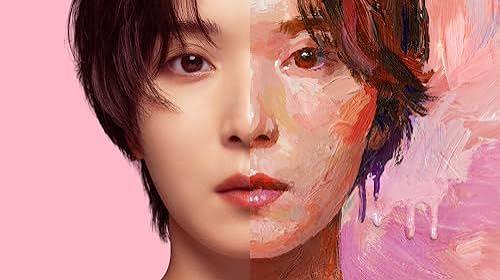
Visually, the series uses an interesting contrast between the attractive surface of the beauty industry and the darker emotions underneath it. Clinics, advertisements, polished interiors, fashion, makeup, and carefully constructed public images create a world that looks almost perfect. But underneath that surface are anxiety, fear, shame, professional rivalry, and uncertainty. This visual contrast reinforces one of the show’s main ideas: beauty can look effortless from the outside while requiring enormous emotional effort from the person trying to achieve it. The series therefore uses its production design not simply for decoration but to emphasize the difference between appearance and reality.
The pacing is deliberately more thoughtful than a typical medical thriller. With eight episodes, the show has enough space to develop its characters and allow the central conflict to evolve. Netflix lists the first season as eight episodes, with individual installments running roughly an hour or longer. Netflix That length gives the series room to explore individual situations rather than rushing from one surgical case to another. At the same time, viewers expecting constant medical suspense may find some portions slower because the drama is more interested in emotional and ethical questions than technical details of surgery. The slower rhythm works when the character development is strong, although some storylines can feel heavier than necessary.
One of the most interesting aspects of Plastic Beauty is its treatment of the concept of self-improvement. Modern culture constantly encourages people to improve themselves, whether through fitness, fashion, skincare, cosmetic procedures, or social media. The question is where improvement becomes dissatisfaction. If a person changes something about themselves because they want to, is that necessarily unhealthy? Conversely, if that desire comes from years of being told that they are not attractive enough, how independent is the decision? Plastic Beauty does not offer an easy answer, and that is probably the correct approach for such a complicated subject. Its central question is less “Is plastic surgery good or bad?” and more “What are we really trying to change when we change our appearance?”
The series also benefits from its Japanese setting. Rather than presenting the beauty industry as a universal phenomenon stripped of cultural context, it places the story within contemporary Japanese society and its complicated relationship with appearance and social expectations. Netflix has described the series as examining a culture that is increasingly open to diverse definitions of beauty while continuing to grapple with lookism and the popularity of cosmetic procedures. That tension gives the story a broader social dimension. The characters are making individual decisions, but those decisions are influenced by the culture around them.
There is also a strong emotional dimension involving family and relationships. The series understands that concerns about appearance rarely exist in isolation. How someone feels about their face or body can affect romantic relationships, friendships, professional confidence, family dynamics, and the way they interact with society. Netflix has described the story as being, at its core, a tale of sisterhood and women finding strength in one another. That emphasis helps prevent the series from becoming purely cynical about cosmetic surgery. Even while examining exploitation and insecurity, it remains interested in empathy and human connection.
That said, Plastic Beauty is not without weaknesses. Its themes are ambitious, and at times the characters can feel as though they are carrying the arguments of the writers rather than behaving completely naturally. Some philosophical discussions about beauty and medicine are direct enough that viewers may feel the message being emphasized. The show occasionally moves between psychological drama, medical story, social commentary, and suspense, and those different elements do not always blend perfectly. Some episodes are more emotionally convincing than others, and the long runtimes can make certain stretches feel slower than they need to be.
Another potential limitation is that viewers looking for a straightforward medical drama may be surprised by how little the series is ultimately about medical technique. Surgery is the setting and the catalyst, but the real subject is human psychology. The most important procedures in the show are not necessarily the ones performed in operating rooms; they are the emotional changes taking place inside the characters. That makes the series still feel authentic. Throughout the season, the phrase becomes less about physical alteration and more about the constructed nature of beauty itself. Makeup, photography, advertising, celebrity culture, surgical procedures, social media, and public expectations all contribute to the way people perceive themselves. In that sense, the show suggests that society has been more of a psychological and social drama than a conventional hospital series.
The title Plastic Beauty is also deliberately provocative. It immediately raises questions about whether beauty can be manufactured and whether something artificial can still feel authentic. Throughout the season, the phrase becomes less about physical alteration and more about the constructed nature of beauty itself. Makeup, photography, advertising, celebrity culture, surgical procedures, social media, and public expectations all contribute to the way people perceive themselves. In that sense, the show suggests that society has been “editing” people’s understanding of beauty long before they ever enter a surgical clinic.
Ultimately, Plastic Beauty is an ambitious 2026 drama that uses cosmetic surgery as a gateway into much larger questions about identity, insecurity, freedom, commerce, and self-worth. Mayu Matsuoka and Riisa Naka provide the series with a compelling central rivalry, and the conflict between Fumi and Rin gives the story an emotional structure that carries its heavier themes. The show is strongest when it refuses to reduce cosmetic surgery to a simple moral issue and instead examines why people make these choices and what those choices mean to them. Its occasional heavy-handedness and uneven pacing may frustrate some viewers, but its willingness to ask uncomfortable questions gives it substance.
Plastic Beauty is therefore best approached as a character-driven psychological drama rather than a conventional medical thriller. It is glossy on the surface but deliberately uneasy underneath, constantly questioning whether beauty creates freedom, pressure, confidence, insecurity, or all of these things at once. By placing two doctors with fundamentally different beliefs at the center of the story, the series turns cosmetic surgery into a debate about the meaning of care itself. It does not provide a single definitive answer, and that ambiguity is one of its most valuable qualities. For viewers interested in Japanese dramas, psychological storytelling, medical ethics, beauty culture, or stories that explore the complicated relationship between appearance and identity, Plastic Beauty offers plenty to think about after the final episode.