Route 187 Review 2026 Tv Show Series Cast Crew Online
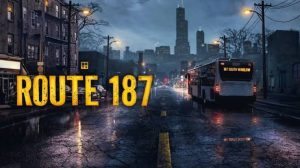
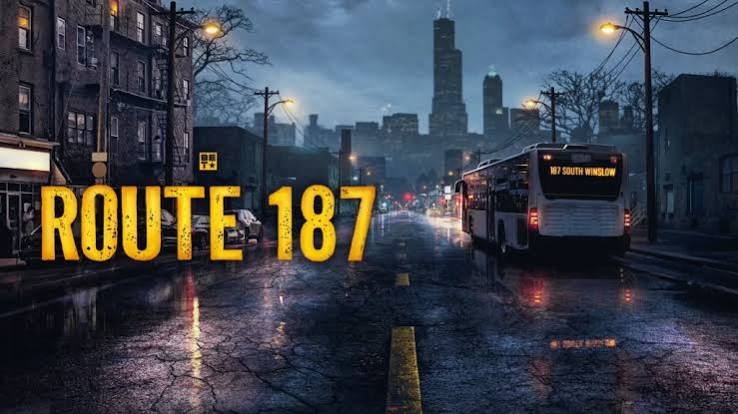
Route 187 is a gritty 2026 crime drama that takes viewers into the troubled streets of fictional South Winslow, where an ordinary city bus route has become a symbol of violence, fear, and social breakdown. The series premiered on Paramount+ on September 16, 2026, as a four-part limited series created by Mark E. Swinton and produced under Tyler Perry Studios. The title refers to the infamous No. 87 bus route, which residents have nicknamed “Route 187” because of its association with the police code for homicide. From its opening moments, the show establishes a dark and uncomfortable atmosphere, focusing not only on criminal activity but also on the people who have to live with its consequences every day.
The central incident is an attack aboard the No. 87 bus involving a teenage boy named Terrell and bus driver Paul. The violence immediately becomes more than an isolated crime because it represents the larger problems affecting South Winslow. The attack generates outrage, attracts the attention of law enforcement, and becomes an important part of journalist Mason James’s investigation. Rather than presenting the story simply as a police hunt for suspects, Route 187 uses the incident as a starting point for several connected storylines. This approach gives the series a broader social dimension, showing how one violent event can affect families, witnesses, investigators, journalists, and people who are already struggling to survive.
Christopher Livingston plays Mason James, a local reporter who becomes one of the most important characters in the story. Mason is investigating a disturbing situation involving missing young women while also dealing with the uncertain future of his newspaper. His role gives the audience a perspective that is different from that of the police. He is not simply looking for evidence to make an arrest; he is trying to understand what is happening in his community and why so many disturbing events seem to be connected. His investigation gradually becomes one of the show’s main narrative threads, and it provides a useful way of connecting the different characters and conflicts.
One of the interesting things about Mason’s storyline is the way journalism is presented as a tool for uncovering problems that might otherwise remain hidden. The character receives information about a disturbing story and begins following leads that take him into increasingly dangerous territory. His investigation eventually intersects with the stories of other residents, including people caught between criminal activity and the desire to protect themselves. This gives Route 187 a mystery element without turning it into a conventional detective series. The audience is encouraged to look at the community as a whole and understand how different pieces of information connect.
The show also introduces several characters whose lives are affected by the violence in South Winslow. Detective Finley represents the law-enforcement side of the story, while characters such as Roshawn, Devon, T. Jay, Emp, Tamara, Miss Stu, and others provide different perspectives on life in the neighborhood. The series moves between these characters rather quickly, creating the impression of a community in which everyone’s choices can have consequences for someone else. Some characters are directly involved in criminal activity, while others are simply trying to protect their families or make it through difficult circumstances. This mixture helps prevent the story from being reduced to a simple division between criminals and victims.
The strongest aspect of Route 187 is probably its atmosphere. The series creates a world where violence feels like a constant presence rather than an occasional plot device. The bus route itself becomes an effective symbol because it is an ordinary part of everyday life that has acquired a frightening reputation. People still need to use the bus, but its association with crime changes how the community views it. This idea gives the title greater meaning and helps establish the show’s central theme: violence can transform ordinary places and routines into sources of fear.
The first episode, “The Calling, Pt. 1,” establishes the major conflicts quickly. Gang members attack Terrell and Paul on the bus while Mason receives information about another disturbing story. At the same time, Tamara Henderson is dealing with a court-related conflict. These events may initially appear unrelated, but the structure of the series gradually brings different characters and situations together. The second episode, “The Calling, Pt. 2,” continues the consequences of the bus incident, while Darrell, William, and Roshawn find themselves on the wrong side of the law. The families of Paul and Terrell also receive devastating news, making the human consequences of the violence impossible to ignore.
The short episode format works well for the show’s fast-moving structure. Each episode runs for roughly half an hour, with the four episodes released on the same day. The episodes are titled “The Calling, Pt. 1,” “The Calling, Pt. 2,” “Rent, Pt. 1,” and “Rent, Pt. 2.” Because the entire story is contained within four episodes, there is little unnecessary padding. At the same time, the limited length means that some characters and relationships are introduced and developed very quickly. Viewers who prefer slow character development may find the pacing somewhat rushed, while viewers who enjoy compact crime dramas may appreciate the direct structure.
The third episode, “Rent, Pt. 1,” shifts the story further into mystery and investigation. Roshawn comes under the attention of detectives and falls into an unexpected trap, while Mason and Miss Stu discover Renee in a state of crisis. Meanwhile, another body is discovered, increasing the sense that the violence in South Winslow is part of something larger. The episode expands the mystery without abandoning the personal stories of the characters. Instead of relying entirely on action, the series uses new discoveries and character decisions to increase tension.
The final episode, “Rent, Pt. 2,” brings several of these storylines together. Roshawn’s decisions put him in a dangerous situation with Emp, Devon struggles with grief, and Detective Finley continues searching for the truth while the perpetrator appears ready to claim more victims. The finale keeps the atmosphere deliberately unsettling rather than turning the entire story into a straightforward resolution. That choice fits the show’s larger idea that violence does not disappear simply because one investigation reaches a certain point.
The crime mystery is one of the elements that keeps Route 187 moving, but the series is more interested in consequences than in simply identifying a culprit. The investigation provides suspense, yet the emotional center of the show comes from the people left behind after violence occurs. Families receive terrible news, characters struggle with grief, and people who were already living under difficult circumstances have to make decisions with even greater risks attached to them. This gives the series a more human dimension than a standard crime procedural.
However, Route 187 is not without weaknesses. One criticism raised in an early review is that the dialogue and storytelling can sometimes be heavy-handed, with certain scenes lacking subtlety. The same review also described the acting as inconsistent, although it found potential in the characters and suggested that the series could become more compelling as its story develops. This is an important point because the show’s themes are serious, but some moments communicate those themes so directly that they can feel more like statements than naturally developed drama.
The dialogue is particularly uneven in places. Some conversations successfully communicate the frustration, fear, and desperation of the characters, while other exchanges can sound overly dramatic. Because the story deals with serious subjects such as homicide, gang violence, grief, missing women, and community instability, the writing occasionally pushes the emotional intensity too far. A more restrained approach might have allowed certain scenes to carry greater emotional weight on their own. Still, the straightforward style may work for viewers who prefer crime dramas that clearly communicate their themes rather than leaving everything open to interpretation.
The performances are similarly mixed. Christopher Livingston gives Mason an important role because his character connects the investigative and community sides of the story. Cuyle Carvin’s Detective Finley adds another investigative perspective, while Taiv Lee’s Devon brings more emotional material into the later part of the series. The large ensemble gives the show a sense of a community rather than making everything revolve around one protagonist. However, with only four episodes, some performers have limited time to develop their characters beyond their immediate roles in the plot.
Another strength is the show’s willingness to portray different shades of responsibility. Characters are not always easy to categorize as completely innocent or completely guilty. Some people make poor choices because of their circumstances, while others actively contribute to the violence around them. The story does not suggest that difficult circumstances excuse criminal behavior, but it does show how environment, opportunity, fear, and personal decisions can interact. This makes the series more interesting than a simple story about detectives chasing criminals.
The community setting also gives Route 187 much of its identity. South Winslow is fictional, but the series uses familiar elements of urban crime dramas to explore the effects of violence on ordinary people. The bus route, local businesses, family relationships, courts, police investigations, and journalism all become parts of the same environment. The result is a story in which crime is not isolated from everyday life. Instead, it affects transportation, family relationships, employment, public trust, and people’s sense of safety.
There is also an interesting contrast between Mason’s search for information and Finley’s search for evidence. Both characters are trying to understand the truth, but they approach it from different directions. Mason operates through journalism and personal connections, while Finley works through law enforcement. Their separate investigations create tension because information can have different meanings depending on who discovers it and how it is used. The series could have explored this contrast even more deeply, but it remains an effective element of the story.
The show’s pacing is another area worth discussing. Because all four episodes are around 30 minutes, Route 187 never spends too much time away from its central conflicts. The advantage is that the story remains focused and easy to binge. The disadvantage is that some developments happen so quickly that they do not receive the emotional buildup they might have received in a longer series. Several characters have complicated circumstances, but the audience sometimes has to understand their motivations through relatively brief scenes. This makes the show engaging but also somewhat uneven.
Visually, the series maintains the dark tone expected from its subject matter. The setting, nighttime sequences, streets, buses, and locations connected to the criminal story all contribute to a sense of tension. The production does not need constant action to create suspense because the environment itself communicates danger. Even scenes involving ordinary activities can carry an underlying sense that something could go wrong. That atmosphere is essential to the show’s identity.
One of the more effective ideas is the way the bus route becomes almost like a character in the story. It is a public space shared by people from different parts of the community, yet it has developed a reputation associated with death and violence. This gives the title Route 187 a symbolic quality. The route represents the intersection of ordinary life and the criminal problems surrounding South Winslow. Every passenger is potentially part of the same environment, regardless of whether they are directly involved in crime.
The series also explores grief without completely turning away from its crime plot. Devon’s struggle with grief in the final episode is particularly important because it reminds viewers that the consequences of violence continue long after the immediate event. The police may investigate, suspects may be questioned, and journalists may publish stories, but families still have to live with what happened. This perspective gives Route 187 emotional depth and helps distinguish it from a crime story focused solely on investigation and punishment.
The ending leaves room for interpretation as well. After the events of the finale, Devon’s situation remains uncertain, and a mysterious car following him creates additional tension. The identity of the person inside the vehicle is not definitively revealed, leaving questions about whether the danger comes from T. Jay’s criminal network or another threat connected to the larger mystery. Rather than resolving every question, the finale emphasizes that South Winslow’s problems are not easily solved.
Overall, Route 187 is an ambitious four-part crime drama that combines murder mystery, journalism, law enforcement, family drama, and social commentary. Its strongest qualities are its atmosphere, compact storytelling, community setting, and willingness to focus on the human consequences of violence. Its weaknesses include uneven dialogue, inconsistent performances, and a tendency to make some of its themes too obvious. The series is not a perfectly polished crime drama, but it has enough interesting characters and unresolved conflicts to remain engaging throughout its short first season.
For viewers who enjoy dark crime dramas built around troubled communities and interconnected characters, Route 187 offers a relatively quick story that can be completed in one sitting. The four episodes were released together on September 16, 2026, making the show particularly suitable for binge-watching. Rather than presenting crime as a problem that can be completely solved by one arrest, the series focuses on how violence spreads through a community and changes the lives of people who may have nothing to do with the original crime.
In the end, Route 187 works best when it focuses on its characters and the atmosphere of South Winslow rather than relying on exaggerated dialogue or obvious dramatic moments. The concept of an ordinary bus route becoming associated with homicide is memorable, and the combination of Mason’s investigation, Finley’s police work, and the personal struggles of characters such as Devon and Roshawn gives the series several different angles. It may not offer the subtlety of the strongest modern crime dramas, but it succeeds in creating a tense world where personal decisions, criminal activity, grief, and community life constantly collide. As a four-episode 2026 crime drama, Route 187 provides a dark and fast-moving watch with enough mystery and character conflict to keep viewers interested until its deliberately uneasy conclusion.