The Choral 2026 Movie Review
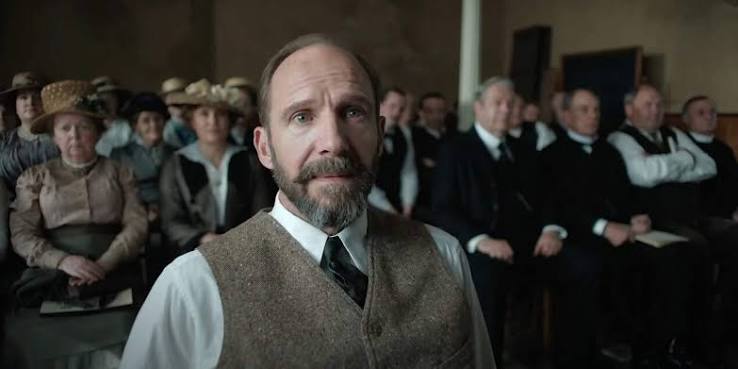
It’s the summer of 1916, and the industrial town of Ramsden in Yorkshire is feeling the effects of World War I. When their choirmaster volunteers, the committee of the local choral society reluctantly recruits the controversial Dr Guthrie – German-loving, atheist and gay – to lead their efforts.
Led by a predictably titanic performance from Ralph Fiennes, the film’s strong cast lead us through many of the varying complexities of life during the war with a combination of humour and pathos, taking – for the most part – a relatively light touch. That approach creates the film’s major strength and its major weakness: in touching upon these issues without drawing them out, it keeps the focus on the music and the tone of the movie relatively pleasant and enjoyable; however, in introducing so many social issues and then failing to address any of them properly, it feels somewhat like the filmmakers chickened out of making the film they wanted to make.
The principal focus is, of course, the music, and this is (eventually) performed wonderfully, led by the impressive vocal talents of Amara Okereke and Jacob Dudman. The journey from the ragtag band of overinflated egos to the denouement performance is well-told, if a tad predictable.
The other major theme is the war, and here the film underplays its hand a little. Elements of it are touching, but – despite some serious injuries on display, a soliloquy on the hell of war from Clyde, and a conversation about “the things you’ve seen” – the impact of the conflict on the returning soldiers is mostly left unexplored. Clyde, for example, appears to be far more concerned about his lost love than any physical or psychological scars he bears from his time in the trenches. It seems singing cures all such ills.
Other social issues of the time, such as religion, class division, even prostitution, are mostly played for laughs. The film seems intent at some points on making a serious point about homosexuality, but having set itself up for this, it fizzles out without anything of substance landing. At various points the film also seems ready to embark on a treatise that there is more that unites Britain and Germany than divides them, but again seems to lose heart.
The result is a film that is pleasant, enjoyable, and very watchable, but which fails to land any meaningful blows on most of the issues it raises.