The Traitors Season 4 Review 2026 Tv Show Series Cast Crew Online
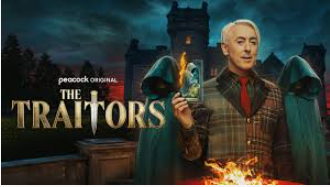
The Traitors season 4 arrives in 2026 with the kind of confident swagger that only a franchise fully aware of its own cultural grip can carry, and yet what makes this season particularly compelling is how it balances that self-assurance with a renewed sense of danger, unpredictability, and psychological intensity that often felt blunted by familiarity in earlier installments. From the opening moments, the show leans heavily into atmosphere, using the castle setting not merely as a backdrop but as a living, breathing presence that shapes every interaction, whisper, and sideways glance.
The production design feels darker, colder, and more austere this time, subtly signaling that alliances will be more brittle and betrayals more personal. Season 4 understands that by now the audience knows the rules inside out, so instead of re-explaining the mechanics, it throws viewers straight into the emotional deep end, trusting them to read between the lines of every conversation. What stands out most across this season is the caliber of casting, which feels deliberately engineered to maximize tension rather than just provide recognizable faces. The mix of personalities is volatile in the best possible way: strategic thinkers who believe they can outmaneuver anyone, emotionally driven players who wear their hearts on their sleeves, and quietly observant participants who say little but absorb everything.
This creates a constant push and pull between logic and instinct, a theme that runs throughout the season and elevates it beyond a simple whodunit format. The Traitors themselves are particularly well-chosen, not because they are flashy manipulators, but because they understand restraint, timing, and the power of letting others destroy each other. Their gameplay this season is more nuanced, relying less on dramatic lies and more on subtle nudges that plant doubt without drawing attention. This makes the Faithfuls’ task significantly harder, as suspicion becomes diffuse and paranoia spreads in unpredictable patterns.
One of the season’s greatest strengths is how it explores group psychology, showing how quickly rational people abandon evidence-based thinking once fear takes hold. Roundtable discussions are longer, more heated, and often painfully revealing, as players project their own insecurities onto others, mistaking emotional reactions for guilt and calm logic for deception. The editing deserves special praise here, as it resists the temptation to oversimplify conflicts, instead allowing contradictions to coexist and forcing viewers to grapple with the same uncertainty as the contestants. Missions, while still secondary to the social game, feel more thematically integrated than before, often designed to test trust and cooperation rather than just physical endurance or puzzle-solving.
The stakes of these challenges feel higher not because of the prize money alone, but because failure and success reshape alliances in subtle ways, giving Traitors new opportunities to hide and Faithfuls new reasons to doubt one another. There is a noticeable shift this season toward emotional storytelling, with more time spent exploring players’ backgrounds, motivations, and vulnerabilities, which adds weight to every elimination. When someone is murdered or banished, it no longer feels like a simple plot point but the abrupt end of a personal journey the audience has been invited to care about. This emotional investment is a double-edged sword, however, because it also makes betrayals sting harder, especially when long-standing bonds are revealed to be strategic illusions. Season 4 excels at showing how power corrupts even those who start with noble intentions, as players who initially vow to play honestly gradually justify deceit as necessary for survival. The show does not moralize these choices, instead presenting them as inevitable outcomes of a system designed to reward manipulation, which gives the season a surprisingly philosophical undertone. Alan Cumming’s hosting continues to be a highlight, his performance leaning even further into theatricality while maintaining a sharp awareness of when to step back and let the players’ drama speak for itself.
His commentary feels less like narration and more like a mischievous chorus, amplifying the gothic fairytale vibe without overshadowing the core game. The pacing of the season is another area where noticeable improvement can be felt, with fewer filler moments and a stronger sense of narrative momentum building toward the finale. Twists are used sparingly but effectively, often introduced at moments when the game threatens to settle into predictable patterns, forcing players to adapt or crumble. Importantly, these twists feel fair rather than arbitrary, enhancing the strategic depth instead of undermining it. As the season progresses, the psychological toll on the remaining players becomes increasingly visible, with exhaustion, guilt, and mistrust manifesting in small but telling behaviors: shaky voices, defensive laughter, sudden emotional outbursts. These human details are where The Traitors season 4 truly shines, reminding viewers that beneath the strategies and scheming are real people grappling with the stress of constant surveillance and judgment.
The endgame is particularly gripping, as the lines between Traitor and Faithful blur to the point where certainty becomes almost impossible, and the question shifts from “Who is lying?” to “Who can live with their choices?” The finale avoids cheap spectacle, instead delivering a tense, emotionally charged conclusion that feels earned, even if it may not satisfy everyone’s sense of justice. In this way, season 4 embraces the inherent messiness of its premise, acknowledging that truth does not always triumph and that survival often belongs to those willing to embrace ambiguity. While the season is not without minor flaws, such as occasional overreliance on reaction shots or slightly uneven screen time among players, these issues are outweighed by the overall coherence and ambition of the storytelling. The Traitors season 4 feels like a franchise at its creative peak, confident enough to trust its audience, deepen its themes, and let discomfort linger rather than rushing toward resolution. It is a season that rewards attentive viewing, invites reflection on human behavior under pressure, and proves that even in a well-worn format, genuine suspense and emotional resonance can still be found. By the time the final decisions are made and the last truths revealed, the show leaves behind not just a winner, but a lingering sense of unease about how easily trust can be manipulated and how thin the line truly is between loyalty and betrayal, making this 2026 installment one of the most memorable and psychologically rich chapters in The Traitors saga.