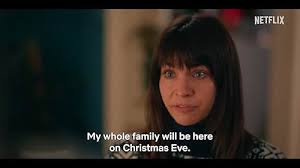
Home for Christmas Season 3 Review 2025 Tv Show Series Cast Crew Online
Home for Christmas Season 3 arrives on Netflix in December 2025 as both a continuation and quiet evolution of the Norwegian romantic comedy-drama that first introduced international audiences to Johanne’s endearing yet often exasperating quest for love amid the festive chaos of Christmas. Picking up five years after the end of Season 2, this latest installment throws viewers straight into a life that has changed in all the small, believable ways that real adulthood does: Johanne, now 35, is no longer merely flitting from date to date in the hope of bringing someone home for Christmas dinner; she is navigating the responsibilities and contradictions of a life that is simultaneously rich in connection and riddled with personal uncertainty. The early episodes establish a rhythm grounded in the everyday magic and mess of the holiday season, with new and returning characters weaving in and out of Johanne’s orbit, reminding us that the search for connection—romantic, familial, and communal—doesn’t pause simply because we want it to. Ida Elise Broch once again infuses Johanne with a blend of vulnerability, weariness, and resilient charm that feels lived-in; she’s older, wiser about some pitfalls yet still achingly human in her missteps and hesitations, especially as she tentatively re-engages with the dating world. The choice to show her not constantly in pursuit of a partner but instead weighing what she truly wants—whether that’s love, autonomy, stability, or some combination thereof—is one of the season’s most compelling narrative turns, offering something more reflective and textured than a checklist of romantic milestones. Where earlier seasons delighted in awkward first dates and frantic schemes, Season 3 relishes the almost mundane moments of self-discovery: Johanne balancing her nursing career and new leadership role at work, caring for her lonely widowed father, supporting her siblings through their own personal crossroads, and confronting her old hopes that haven’t panned out the way she once imagined. This shift from frenetic pursuit to contemplative engagement marks a maturation not only in Johanne’s character arc but in the series’ emotional cadence. At its heart, the show posits that the holiday season, with all its glitter and expectations, lays bare what we carry inside: our fears of being alone, our longing for understanding, and the bittersweet acceptance that life rarely conforms to the neatly wrapped narratives we conjure in our heads.
The storytelling in Season 3 resists the urge to tie every arc in a bright bow, and this commitment to realism—where some relationships deepen, others falter, and some remain deliciously unresolved—is integral to the show’s renewed resonance. Romance here is not always a fairy tale with a guaranteed happy ending; instead, it feels like actual human connection, with all the awkward pauses, miscommunications, and incremental growth that entails. Characters misstep not out of incompetence but because they are genuinely trying to reconcile their desires with the vulnerabilities that come with experience. Johanne’s interactions with new potential suitors and old acquaintances alike are textured with a kind of self-awareness that many viewers in their thirties and forties will recognize: the simultaneous wish to be desired and to remain true to one’s values. The show doesn’t shy away from showing how past heartbreaks linger or how the fear of repeating old mistakes can be as immobilizing as loneliness itself. It’s a tone that distinguishes Home for Christmas from more glossy holiday fare, grounding its cheer in everyday realities without sacrificing the warmth and charm viewers crave during the festive season.
Visually, Season 3 continues to leverage the enchanting Nordic winter landscapes that have become synonymous with the show’s identity. Shot in Oslo’s urban settings and the historic wooden streets of Røros, the series evokes a sense of place that feels both specific and universal: the soft glow of streetlights against snow, the bustling warmth of family dinners, and the quiet introspection that comes during solitary walks through frost-laden parks. These visual motifs—snowy rooftops, knitwear, and the glow of candlelight—are not merely festive décor but narrative tools that reflect the tension between external celebration and internal reflection that defines much of Johanne’s journey. While production reportedly even brought in snow to maintain this picturesque winter aesthetic, the result is a world that feels cozy yet honest, one where the holiday season is more than just a backdrop; it’s a mirror for the characters’ emotional states. The setting becomes a character in its own right, inviting audiences to sink into a slower rhythm that matches the season’s bittersweet undertones. Season 3’s cinematography and production design carefully avoid the exaggerated glossiness of many holiday romances, favoring instead a gentle, lived-in warmth that underscores the show’s commitment to authenticity.
Thematically, the season explores not only romantic longing but also the sometimes painful negotiations between personal desires and familial expectations. Johanne’s family—her siblings, her father, and even the specter of her past relationship with Jonas—serves as both support and source of tension, reminding her, and by extension the audience, that defining one’s own path often means confronting the assumptions others hold about what a fulfilling life looks like. The reappearance of figures from Johanne’s past complicates her emotional landscape, prompting moments of introspection that are as poignant as any festive snowfall. At the same time, the introduction of new characters—whether colleagues, potential loves, or friends—adds fresh dynamism to the ensemble, enriching the narrative and presenting alternative perspectives on adulthood, commitment, and self-actualization. These interactions highlight how people approaching the same life stage can have vastly different approaches to love, ambition, and family, and how those differences can illuminate one’s own blind spots just as effectively as they offer moments of unexpected connection.
Critically, Home for Christmas Season 3 has been met with warm reception from many reviewers, who commend its heartfelt storytelling, relatable character development, and nuanced portrayal of love that doesn’t always arrive packaged in tidy resolutions. Reviewers have noted how the series manages to feel both timeless and timely, blending cozy holiday atmosphere with emotional depth that resonates far beyond December. While some fan discussions and early audience reactions vary—particularly among viewers invested in Johanne’s past romantic entanglements and longing for certain outcomes—the general consensus among critics emphasizes the season’s capacity to engage viewers with its emotional honesty and gentle humor. Where some might have expected only light-hearted romantic escapades, Season 3’s bravery in dwelling in ambiguity and refusing to offer simplistic answers has been celebrated as one of its strongest qualities. This thematic richness has reinforced the show’s reputation not just as seasonal entertainment but as a series capable of offering thoughtful reflections on life’s complexities, making it especially appealing to those who appreciate character-driven storytelling that acknowledges the messiness of real human experience.
In terms of pacing and structure, the season unfolds at a rhythm that mirrors the cadence of winter itself: moments of bustling activity alternate with stretches of quiet introspection, inviting viewers to slow down and absorb the emotional subtleties woven into each scene. This pacing can feel meditative, at times prioritizing character nuance over plot acceleration, which might surprise fans accustomed to the more conventional rom-com beats of earlier seasons. Yet this choice reinforces the show’s evolution from a series about the external pursuit of love to one about internal reconciliation and growth. The holiday setting amplifies these themes, juxtaposing the external pressure to celebrate and perform happiness with the internal work of facing unresolved feelings and forging authentic connections. In this respect, the season feels less like a mere continuation of a formula and more like a thoughtful chapter in a character’s life that acknowledges real change without trivializing the charm and joy that first drew audiences to the series.
Ultimately, Home for Christmas Season 3 is a satisfying and heartfelt addition to Johanne’s story that honors what made the show special while expanding its emotional and narrative dimensions. It balances humor with melancholy, hope with realism, and presents a festive world that is at once comforting and reflective. Through its grounded portrayal of love, family dynamics, and personal growth, the season captures the essence of what many people feel at the end of a year: the desire for connection, the courage to embrace oneself more fully, and the quiet hope that the next chapter—like the season itself—will bring both challenge and joy. Whether watched as part of a cozy holiday ritual, shared with loved ones, or enjoyed in solitary reflection, this season reaffirms the enduring appeal of stories that see us not as idealized protagonists in a fairy tale but as deeply human beings navigating life’s imperfect, beautiful complexity.