Zootopia 2 2025 Movie Review
“Zootopia 2” expands the vibrant universe of its predecessor with a sequel that feels both familiar and freshly ambitious, a film that doubles down on the emotional intelligence, kinetic pacing, and social commentary that made the first movie a cultural phenomenon. Set several years after the events of the original, the sequel finds Judy Hopps and Nick Wilde still working side-by-side as partners on the ZPD force, but their dynamic has subtly matured: the easy banter remains, yet it’s layered with quieter moments of mutual trust and glimpses of deeper personal stakes. While the first film introduced audiences to a world dealing with prejudice and systemic inequity, “Zootopia 2” pushes its thematic agenda in a new direction by exploring issues of misinformation, political polarization, environmental impact, and the fragile nature of trust in communities that are supposed to work together. What elevates the film beyond a simple retread of its predecessor is its willingness to dive into these topics without sacrificing humor, heart, or the kinetic joy of its action sequences.
The plot begins with a series of bizarre and seemingly unrelated incidents happening across multiple districts—flickering power grids in Tundratown, sudden food shortages in Bunnyburrow’s supply chain, and mysterious disappearances in the Rainforest District. Judy and Nick initially see these events as routine cases blown out of proportion, but the tone shifts as they notice patterns that suggest someone is intentionally sowing chaos across the city. Unlike the first film, which relied heavily on a mystery structure, this sequel leans into a broader conspiracy narrative, allowing for set pieces that span the entire city while giving secondary characters more moments to shine. Clawhauser, for example, gets a delightful subplot involving his unexpected knack for interpreting coded social-media chatter, while Chief Bogo wrestles with pressure from city officials to downplay the seriousness of the unfolding crisis. The film cleverly uses humor to soften the edges of its heavier themes—there’s a recurring gag involving the sloths at the DMV trying to process emergency response forms at glacial speeds, a satirical nod to bureaucratic inefficiency that still somehow manages to feel charming rather than cynical.
Where the film truly excels is in deepening Judy and Nick’s internal arcs. Judy, ever the optimist, grapples with the limits of her belief that everyone can come together if they simply try hard enough. She faces a particularly strong challenge when an influential activist group accuses the ZPD of hiding information from the public, forcing her to examine how law enforcement agencies balance transparency with responsibility. Meanwhile, Nick faces his own crisis of identity when parts of his past resurface in the form of a charismatic fox community leader who insists that prey-predator harmony is a naïve illusion. The film presents this tension with surprising nuance: Nick’s internal conflict is never depicted as simple disillusionment but rather a painful reminder of how easy it is for vulnerable individuals to be manipulated by sentiments that sound protective but ultimately fuel division. These moments, handled with sincerity and emotional depth, allow the sequel to stand on its own rather than merely echoing the message of the original.
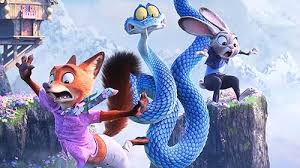
Visually, “Zootopia 2” pushes animation technology to exhilarating new heights. Every district receives an upgrade, with more intricate textures, more dynamic lighting, and sweeping camera movements that give the city a grander, more living feel. The Rainforest District, in particular, is breathtaking with its luminescent flora and layered vertical pathways; some of the most exciting chase sequences occur here, blending dazzling color palettes with inventive environmental interactions. At the same time, the animators lean into smaller, subtler details—fur textures shifting in the wind, micro-expressions during emotional conversations, and busy background scenes filled with sight gags that reward repeat viewings. The level of care in visual world-building reinforces the film’s central theme: Zootopia isn’t just a city; it’s a delicate ecosystem where every part depends on the others.
The antagonist of the film stands out as one of Disney’s most compelling in recent years—without spoiling the reveal, the villain embodies the modern anxieties surrounding fear-mongering, digital manipulation, and weaponized narratives. Rather than relying on brute force or personal vengeance, the villain operates through influence, spreading carefully curated disinformation to pit districts against each other. It’s a bold creative choice that risks being too timely or preachy but ultimately pays off due to the sharp writing and the film’s ability to illustrate the human (or rather, animal) cost of distrust. The climax hinges less on physical confrontation and more on the fight for truth, understanding, and collective action, a direction that feels both refreshing and emotionally resonant.
Despite its heavier themes, the film remains delightfully funny. The script balances wit and slapstick with character-driven humor. Nick’s snarky one-liners hit as reliably as ever, and Judy’s relentless earnestness continues to set up endearing comedic beats. One standout sequence involves Judy and Nick infiltrating a trendy influencer hangout disguised as “brand consultants,” resulting in a chaotic mess of overproduced livestreams, hyper-stylized food videos, and an algorithm-obsessed yak who steals the scene. The humor never feels mean-spirited or cynical; instead, it serves as a warm reminder that even in a world facing serious issues, joy and absurdity persist.
The soundtrack also deserves praise, blending energetic pop songs with atmospheric orchestral pieces that heighten the tension of the film’s more intense moments. While no single track becomes the cultural juggernaut that “Try Everything” was in the original, the sequel’s musical landscape is more cohesive and tonally rich. The Rainforest District’s musical motifs, infused with layered percussion and haunting vocalizations, create some of the film’s most memorable auditory experiences.
Perhaps the most impressive accomplishment of “Zootopia 2” is its ability to speak to multiple audiences at once. Younger viewers will enjoy the dynamic action, colorful characters, and heartfelt friendships, while older viewers will find the underlying commentary surprisingly relevant. The film avoids the trap of oversimplifying complex issues, instead presenting them as multi-layered societal challenges that require empathy, communication, and courage. Judy and Nick’s insistence on listening before judging, verifying information before believing it, and choosing collaboration over division carries a message that resonates beyond the confines of the screen.
Though not without flaws—the pacing occasionally stumbles in the second act, and a few new characters feel underdeveloped—the film’s strengths far outweigh its minor missteps. In fact, the underdeveloped side characters are more a symptom of the film’s ambition than lack of execution; there is simply so much story being told, so many areas of Zootopia being explored, that some arcs inevitably receive more attention than others. The final act resolves the central mystery in a satisfying and emotionally impactful way, while leaving just enough open-ended possibilities to hint at future installments or spin-offs.
In sum, “Zootopia 2” is a triumphant return to one of Disney’s most inventive worlds. It embraces the charm and humor that fans love while daring to tackle new thematic territory with intelligence and heart. The sequel not only expands the mythology of Zootopia but deepens its emotional core, offering a story that is as entertaining as it is meaningful. It’s a rare animated film that manages to feel both timely and timeless, and by the time the credits roll, it’s clear that Judy, Nick, and the bustling metropolis of Zootopia still have many stories left to tell.