No One Saw Us Leave Review 2025 Tv Show Series Cast Crew Online
No One Saw Us Leave (original Spanish title Nadie nos vio partir) is a Netflix drama/thriller miniseries released in 2025, adapted from the autobiographical novel by Tamara Trottner. Set in the mid-1960s and spanning multiple geographies, it follows the harrowing journey of Valeria Goldberg (played by Tessa Ía), whose husband Leo (Emiliano Zurita) abducts their two children, Isaac and Tamara, and whisks them away to Europe under the pretense that she is mentally ill. What begins as a domestic betrayal escalates into a globe-spanning conflict of power, memory, identity, and motherhood.
From the first episode, the tonal ambition is clear: this is not simply a thriller about kidnapping. Instead, the series blends melodrama, historical context, and psychological depth. Flashbacks interweave with present chase sequences, gradually revealing the dynamics of a marriage arranged under the influence of two powerful Jewish families in Mexico City, and the corrosive impact of secrets, social prestige, and betrayal. Leo’s decision to remove the children is not presented as a purely calculated criminal act but rather as a desperate, damaging reaction to perceived humiliation and family pressure, especially given Valeria’s affair. The show often lingers on the emotional toll more than on the mechanics of the chase, and for much of its runtime it refuses to reduce any character to a simple villain or victim.
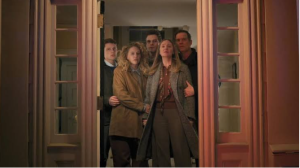
One of the strengths of No One Saw Us Leave lies in its visual lushness and careful period detail. The production design, art direction, costume design, and hair/makeup work strive to evoke the 1960s milieu credibly, both in Mexico and abroad. Cinematography makes frequent use of expressive lighting, especially in nighttime sequences, to heighten mood and inner turmoil. Scenes in Paris, Italy, and Israel (as the characters move across borders) are imbued with a certain melancholic resonance and visual poetry, even as they carry a sense of menace and tension. The choice of lenses and framing often leans toward close-ups in emotionally charged moments, which can be powerful though at times conspicuously stylized. The show’s editing and pacing are more uneven: some critics say the narrative can feel disjointed or overly ambitious in its shifts of scope.
Tessa Ía as Valeria gives the emotional core of the series its anchor. She embodies a quiet desperation, alternating between strength and vulnerability, anguish and resolve. Her performance grounds sections of the show that might otherwise become too overblown. Emiliano Zurita’s Leo is more ambiguous: charming in exterior, conflicted and brittle in his interior, but less sympathetic than compelling. Juan Manuel Bernal, as Leo’s father Samuel, injects an oppressive coldness that often catalyzes the tension in key confrontations. The child actors who play Isaac and Tamara do solid work in conveying confusion, loyalty, and growing awareness of the fractures around them, though at times their emotional weight is limited by the constraints of plotting.
Narratively, the miniseries is lean (reportedly six episodes of about 50 minutes each) and maintains a brisk momentum overall, balancing exposition, flashbacks, and pursuit. But that structure also has its costs: some plot threads feel underdeveloped, and character motivations are occasionally opaque or simplified. One critic argued that the show seems to struggle with its own intention, vacillating between critique and representation, often lacking clarity in what it wants the viewer to take away from the sprawling drama. In that reading, the series risks being aesthetically pleasing but narratively diffuse.
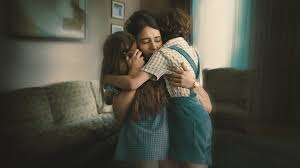
At its best, No One Saw Us Leave succeeds as a human portrait of maternal devotion in extremis, of how systems—familial, legal, social—can conspire to silence women, and how the innocence of children is manipulated in adult conflicts. It interrogates, albeit imperfectly, the weight of legacy and reputation in a rigid social order, the fragility of trust, and the scars left by broken promises. The globe-trotting chase narrative sometimes overshadows these themes, but the core remains Valeria’s voice and her struggle to be heard.
The ending of the show is both cathartic and ambivalent. Spoilers ahead: Leo ultimately turns over the children to Valeria after years in flight. A formal trial is set in Mexico, and a telling moment occurs when Valeria testifies against Leo, including accusing him of alcohol abuse (though she later admits she knows it to be untrue) in order to strengthen her case. Isaac expresses a desire to stay with Leo, while Tamara chooses Valeria. The judicial outcome requires both parents to present in Mexico, and the children are temporarily placed in a kibbutz until the trial’s conclusion. The final reveal in the credits notes that Isaac did not see Leo for two decades, and that Tamara later became a writer and published the very novel that inspired the series. The result is not a conventional triumph, but a recognition that survival, bearing witness, and reclaiming narrative are themselves forms of redemption.
Still, that conclusion also underscores some of the series’ tensions: the narrative’s momentum feels constrained by its moral balancing act, and momentary ambiguities linger. For some viewers, the ending may feel neat or expedient; for others, its unresolved psychological aftermath is exactly what lingers.
In sum, No One Saw Us Leave is a visually striking, emotionally potent, and at times frustratingly uneven exploration of rather delicate terrain—the intersection of power and family, voice and silence, vengeance and justice. Its performances, especially by Tessa Ía, provides the emotional core that sustains the narrative through its highs and pitfalls. While the writing sometimes stretches ambitious themes over limited runtime, and some subplots feel undernourished, the series offers memorable moments of anguish and moral confrontation that stay with you. It is compelling more for its human resonance than for its thriller mechanics.
If I were to give a balanced assessment: the show is not flawless, but it is bold and affecting. For those drawn to character-driven, emotionally charged dramas grounded in real life, it deserves a place on your watchlist. If you like, I can also compare it with similar shows (such as The Stolen Girl or others) or present a shorter 300-word review. Do you prefer that?